
24 New and Upcoming Historical Novels To Look Forward To In 2026
Medieval apothecaries, doomed samurai, gothic heroines, and jaded romantics
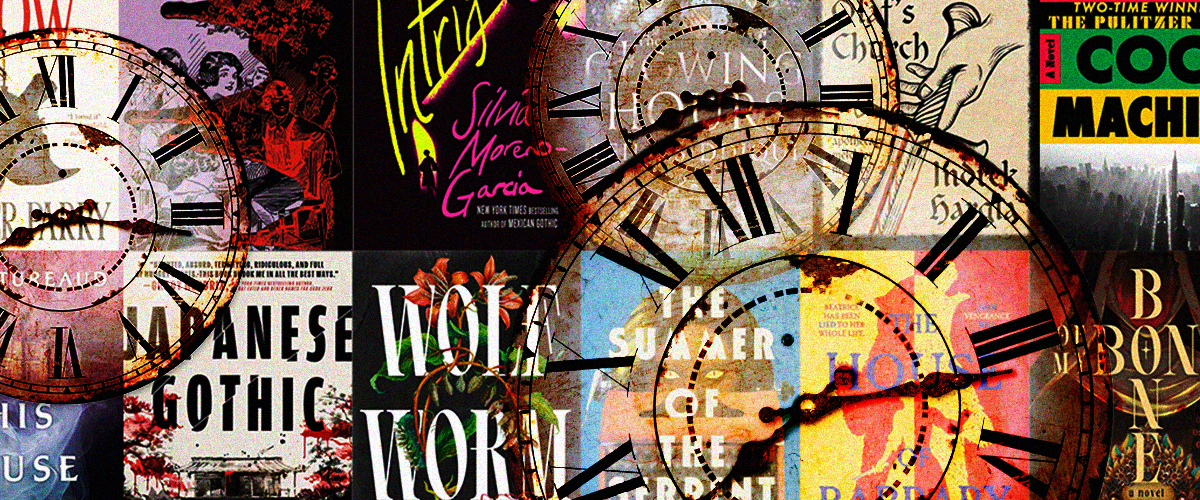
As we continue to relive the Gilded Age and the Age of Imperialism, it’s no surprise to see a host of 19th century settings represented on the list below; the 20th century also has a strong showing, particularly the 1970s and 80s. There are also two early modern mysteries to round things out, both set against the backdrop of the Thirty Years War, plus a cleverly crafted tale of the late Middle Ages and one rather nasty take on the 18th century. Enjoy, and remember the golden rule of historical fiction: the more you can relate, the worse things have been going. And, if the horrors of history aren’t enough for you, keep an eye out for our speculative fiction preview, or as I like to think of it, the horrors of the future.
All blurbs are by yours truly unless otherwise noted.
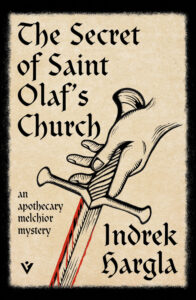
Indrek Hargla, The Secret of Saint Olaf’s Church
Translated by Adam Cullen
(Pushkin Press)
Setting: 15th Century Latvia
Indrek Hargla’s tale of a crime-solving apothecary is based in obscure, and very real, history; the mystery unraveled by the amateur sleuth takes its jumping off point from a mysterious note in Latvian historical records, for a richly detailed and vividly imagined take on a high-water mark in Latvia’s regional influence. In The Secret of Saint Olaf’s Church, the murder of an aging knight leads a city luminary towards a horrifying secret with deep implications for the city’s fragile economic status and unstable power structure.
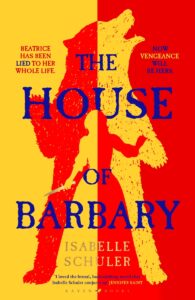
Isabelle Schuler, The House of Barbary
(Raven Books)
Setting: 17th Century Switzerland
The House of Barbary is a clever reimagining of the Bluebeard fairytale, set against the backdrop of the Thirty Years War, in Bern, Switzerland, where the women are powerless, the poor are oppressed, and the city’s elites are profiting mightily from the neighboring conflict. In Schuler’s tale, a young woman raised to believe in scientific reasoning decides to investigate her father’s murder, only to find herself facing the kind of depravity that challenges even the most logical of minds. Also, there are bears! And they are, not to spoil too much, Chekhov’s bears…

Johanna Van Veen, Bone of My Bone
(Poisoned Pen Press)
Setting: 17th Century Germany
Hot off the heels of her well-received debut, Blood on the Tongue, Johanna Van Veen is back with another queer historical horror, this one set in the midst of the Thirty Years War (just like the previous item on this list, although this one takes place at the center of the conflict). In Bone of My Bone, two refugee women, a Catholic and a Protestant, try to smuggle the skull of a saint to safety while slowly falling in love.
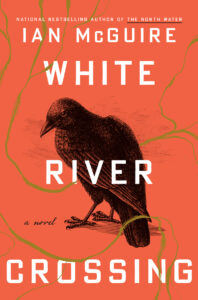
Ian McGuire, White River Crossing
(Knopf)
Setting: Far North Canada, 1766
In the mid-eighteenth century, a ragged trader shows up at a remote fort with a bag full of gold and promises of more. A doomed expedition sets out too close to winter and with too few level heads, setting in motion disastrous events. A brutally rendered work of historical lyricism, just as I would expect from the author of The North Water, another epic journey into the Canadian colonial past.
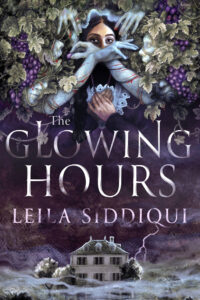
Leila Siddiqui, The Glowing Hours
(Hell’s Hundred)
Setting: Geneva, 1816
There’s been quite a few takes on that rainy summer when Mary Shelley wrote Frankenstein in a Swiss villa, but The Glowing Hours catapults this historical moment into supernatural territory for my favorite version yet. Siddiqui’s narrator is a disgruntled Indian aristocrat, fallen on hard times and abandoned by her family, who finds employment as maid to the Shelley family just in time to accompany them on their writing jaunt to Switzerland, where Lord Byron awaits the party in a leaky chateau. Misery envelopes the travelers immediately, with bad weather, substandard accommodations, supernatural visitors, and the most horrifying of all: Lord Byron being a complete asshole.
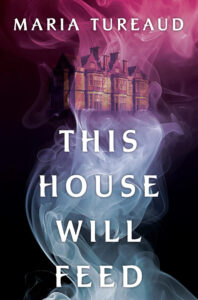
Maria Tureaud, This House Will Feed
(Kensington)
Setting: Ireland, 1848
While there have been plenty of horror novels featuring cannibalism lately, none are so harrowing as Maria Tureaud’s bleak, visceral portrait of the Great Famine, and the enormity of suffering and sacrifice contained therein. In This House Will Feed, a young woman in the throes of starvation is rescued from her workhouse prison at the peak of the Irish famine and taken to live on an estate mysteriously marked not by want, but by plenty. What is the manor’s secret to their outlier status? And what shall be sacrificed to ensure their prosperity continues? This House Will Feed is a major tearjerker with a brutally realistic setting and an intensely satisfying finale.
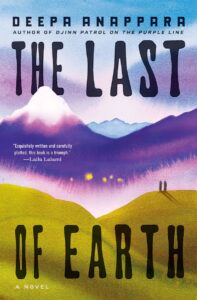
Deepa Anappara, The Last of Earth
(Random House)
Setting: Tibet, mid-19th Century
Set in the mid-19th century, soon after the Indian Mutiny, The Last of Earth follows two groups of travelers as they cross the Himalayas and go deep into the forbidden-to-the-British territory of Tibet. One group seeks naturalist glory through a search for a river’s headwaters; the other finds purpose in Buddhist philosophy and landmarks. Outlaws, spies, explorers, and colonialists all collide for a work as epic as its mountainous setting (and just as breath-taking).
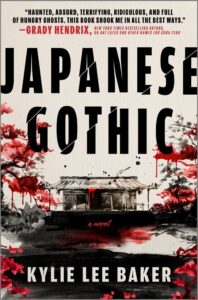
Kylie Lee Baker, Japanese Gothic
(Hanover Square)
Setting: Japan, 1877 and 2026
Kylie Lee Baker’s last novel, Bat Eater and Other Names for Cora Zeng, stuck out for its visceral intensity and righteous fury, and her new novel is just as powerful, showing the author’s versatility with its slower build and more intricate plotting. In Japanese Gothic, a modern-day college student hides out with his distant father on a remote country estate, while a century and a half in the past, in the same house, the daughter of one of Japan’s last samurais prepares to confront the imperial forces with the remnants of her father’s comrades. When the two begin to see glimpses of each other, time and space fold in on themselves, and their storylines enter into a collision course that will threaten reality itself. Japanese Gothic is both great historical fiction and an excellent speculative thriller, and I can’t recommend it enough.
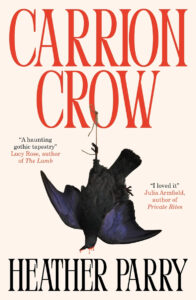
Heather Parry, Carrion Crow
(Pushkin Press)
Setting: Victorian London
What a truly disturbing tale! Heather Parry’s Carrion Crow is based on an infamous French case that you’ll recognize instantly if you, like me, are on Wikipedia late at night looking through the most messed-up crimes in history. At the start of the novel, Parry’s locked-in-the-attic heroine remains cheerful, despite her circumstances—she’s only up there to get a little paler, to lose a little weight, to make sure her morganatic marriage to a struggling solicitor has the highest chance possible of success. As she stays in the attic longer and longer, getting weaker and weaker, she begins to think her mother has lured her up the rickety stairs for a more nefarious purpose, one involving not rest and preparation, but captivity and abandonment. Check out Parry’s previous novel, Orpheus Builds a Girl, for more feminist body horror with a historical twist!

T. Kingfisher, Wolf Worm
(Tor)
Setting: North Carolina, 1899
T. Kingfisher’s upcoming historical horror novel is truly disgusting, and not for the faint of heart. Wolf Worm features a botanical illustrator hired to document the life cycles of flesh-eating insects in meticulously detailed drawings by a man hiding such sinister deeds as can’t possibly be imagined before reading the final pages of the book. If you can’t get enough of flesh-eating insects, there’s a lot of insect horror this year, including Gemma Amor’s ITCH! and the aptly titled Meat Bees by Dane Erbach. Perhaps that’s the next logical step after fungalpunk. Can I call it entomology core? I certainly plan to!
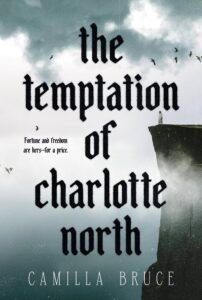
Camilla Bruce, The Temptation of Charlotte North
(Del Rey)
Setting: Coastal Britain, 1910
In this moody gothic historical, set on a remote and windswept island with a tragic past, a loosed spirit becomes a sinister ally to a repressed teenage girl as she yearns for her melancholy preacher. Camilla Bruce is one of the most consistent and insightful authors of psychological thrillers writing today, and The Temptation of Charlotte North easily lives up to that reputation. What draws me most to Bruce’s work is the skillful blending of setting and character, how the two feed off each other to reveal a stranger, darker picture, on full display in this latest.
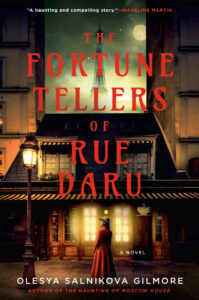
Olesya Salnikova Gilmore, The Fortune Tellers of Rue Daru
(Berkley)
Setting: Paris,1920s
A spunky fortune-teller? Jazz Age Paris? An exiled Romanov princess with an old family mystery? Hauntings by a persistent Russian duke? Yes to all. –Olivia Rutigliano
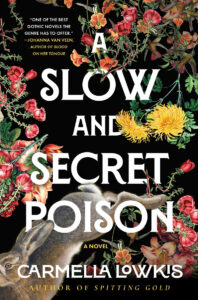
Carmella Lowkis, A Slow and Secret Poison
(Atria)
Setting: English Countryside, 1920s
In this lesbian gardening novel with a supernatural twist, Carmella Lowkis cements her status as one of the best new historical writers around. Set in the early 1920s, A Slow and Secret Poison takes place at a remote country manor occupied by a family of cursed aristocrats. When a new gardener arrives, eager to prove her worth as the rare woman in her field, she forms an intense bond with the estate’s melancholy mistress. The two join forces in a desperate attempt to end the family’s deadly curse before it can claim its last victim, for a compelling romantic thriller that kept me guessing all the way to the last page.
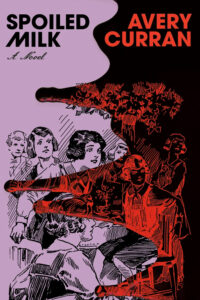
Avery Curran, Spoiled Milk
(Doubleday)
Setting: England, 1920s
Boarding school mysteries will never stop sending me, and Spoiled Milk nails the genre with its Picnic at Hanging Rock vibes and cool girl sensibility. After a student’s shocking plunge from a high bannister, the upper class cohort bands together for a seance, only to awaken the repressed desires of a century of schoolgirls. Eerie, atmospheric, and lyrically driven, Spoiled Milk may be the most intriguing gothic of the year.
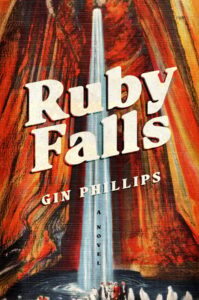
Gin Phillips, Ruby Falls
(Atlantic Crime)
Setting: Chattanooga, 1920s and 30s
With her syncopated pacing, unusual settings, and deep psychological insights, Gin Phillips has quickly become one of my favorite crime writers, and Ruby Falls looks to be an excellent addition to her growing oeuvre. In Ruby Falls, a mining town finds itself transfixed by an enormous underground waterfall with strange mystical powers, as a murder sows discord in the caverns and the world around them succumbs to the nadirs of the 1930s.
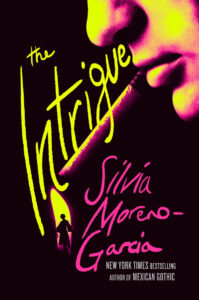
Silvia Moreno-Garcia, The Intrigue
(Del Rey)
Setting: Mexico City, 1940s
A con artist who preys on wealthy older women in 1940s Mexico teams up with a disenfranchised bastard to bilk her aunt of all they can. The Intrigue looks to be Silvia Moreno-Garcia in peak form, for another entry in a storied career.
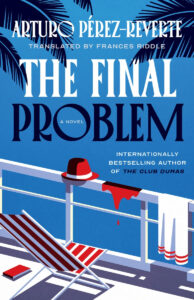
Arturo Pérez-Reverte, The Final Problem
(Mulholland)
Setting: Greece, 1960
Acting as a detective doesn’t make you into a detective, but what if you play a detective for, say, decades? And that detective is Sherlock Holmes? And then you are trapped on a Greek island during a 100-year storm and a dead body pops up and you might as well try to solve the crime, just to get everyone off your back so you can go back to playing chess with the pulp fiction writer who’s been helping with the investigation. That’s the premise of Arturo Perez-Reverte’s brilliant, sly, and entirely reverential metamystery, set in 1960 and featuring the ultimate test of acting: solving as crime as your character. The Final Problem is, in short, the ultimate loving ode to Golden Age detective fiction, made all the more remarkable for its place among the competition.
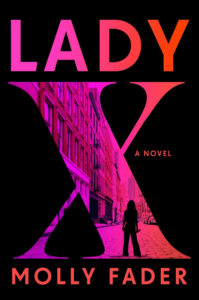
Molly Fader, Lady X
(Ballantine)
Setting: New York City, 1970s
Lady X is split between the present day, where Fader’s heroine is grappling with the discovery of her Hollywood heart-throb husband’s bad behavior, and New York City in the 1970s, where the mysterious Lady X begins a series of escalating attacks against creeps, rapists, and other misogynist offenders. So good! And, depending on my future career as a graffiti-spraying vigilante painting dicks on a wall in the name of feminist justice, so inspirational…
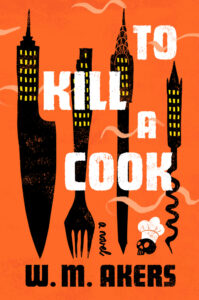
WM Akers, To Kill a Cook
(GP Putnam’s)
Setting: New York City, 1970s
I have long thought that “food critic” is an amazing day job for an amateur detective; points already to W.M. Akers for discovering this, as well. The rest of the story is tons of a fun; it’s set in 1970s NYC, and introduces us to tough-as-nails, fast-talking restaurant critic Bernice Black, who finds herself in a whole new kind of culinary disaster when she discovers the severed head of her chef friend inside a jellied aspic. –OR
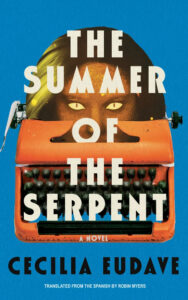
Cecilia Eudave, The Summer of the Serpent
Translated by Robin Myers
(Soho)
Setting: Guadalajara, 1970s
Lives and visions collide in one long hot summer in Guadalajara, Mexico, in the late 1970s, in Eudave’s new fever dream of a novel. The Summer of the Serpent makes for a hypnotic and transporting read and a powerful, impressionistic portrait of a place and time. –Dwyer Murphy
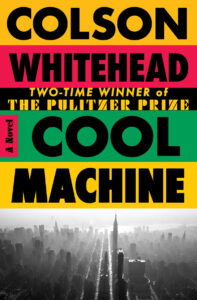
Colson Whitehead, Cool Machine
(Doubleday)
Setting: 1980s
Whitehead’s Harlem Trilogy has easily been one of the high water marks for contemporary crime fiction, and the series comes to a fitting conclusion this year with Cool Machine, a wild march into 1980s New York, as Ray Carney dives into the proverbial ‘one last job’, Pepper takes an odyssey through the downtown club scene, and a sliver of redemption is sought through family ties. Whitehead is one of the most talented novelists of the era, and we’re lucky he’s taken on such a deeply felt, wildly entertaining project. –DM
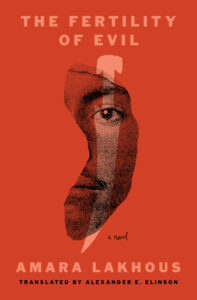
Amara Lakhous, The Fertility of Evil
Translated by Alexander E. Elinson
(Other Press)
Setting: Algeria, 1960s-1980s
Decades after the Algerian Revolution, someone starts picking off the former freedom fighters of a 60s-era revolutionary cell, and it’s up to one world-weary detective in the city of Oran (once made famous through the work of Camus) to piece the sad tale together. The Fertility of Evil already looks to be one of the best historical novels of the year, for a story that looks back on the past not to re-litigate, but to understand.
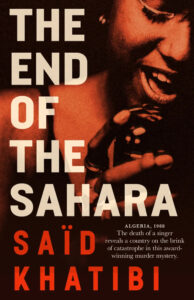
Saïd Khatibi, The End of the Sahara
Translated by Alexander E. Elinson
(Bitter Lemon Press)
Setting: Algeria, late 1980s
The End of the Sahara is the second novel on this list to take place in Algeria during the tumultuous late 1980s. At the Khatibi’s moody masterpiece, a nightclub singer has been found murdered, perplexing a wide range of lovers, friends, enemies, and others drawn into her magnetic orbit, and in possession of her deadly secrets. Evocative, brooding, and perfectly hard-boiled!
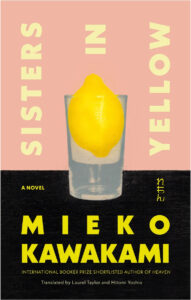
Mieko Kawakami, Sisters in Yellow
Translated by Laurel Taylor and Hitomi Yoshio
(Knopf)
Setting: Tokyo, 1990s
Mieko Kawakami wowed the literary world with her critically acclaimed Breasts and Eggs, and now with Sisters in Yellow she proves the same skill and versatility within the crime genre. In what I already predict as one of the best crime novels of the decade, a group of young women fall under the charismatic influence of a flighty scammer and fall deeper and deeper into the trap of criminalized poverty. Epic, brutal, and stunning, Sisters in Yellow scratches the same itch as Lady Joker, Out, and the film Shoplifters.
Molly Odintz
Molly Odintz is the managing editor for CrimeReads and the editor of Austin Noir, now available from Akashic Books. She grew up in Austin and worked as a bookseller before becoming a Very Professional Internet Person. She lives in central Texas with her cat, Fritz Lang.