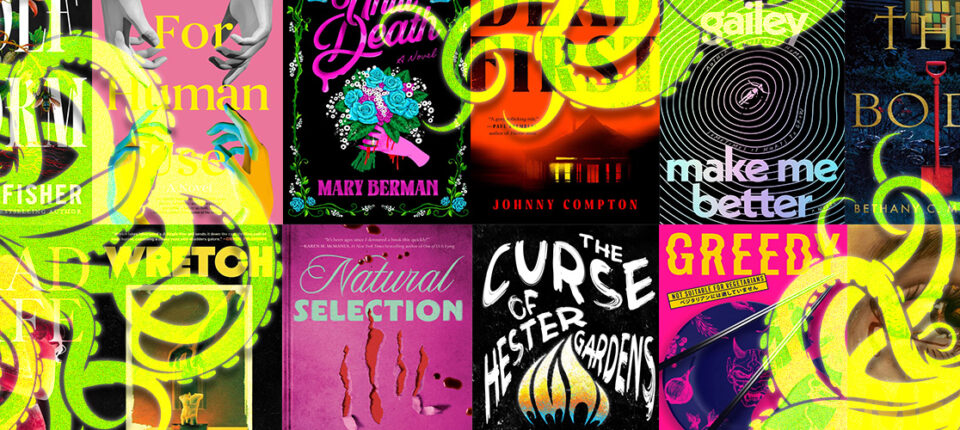
This year’s horror ranges from the absurd, to the affecting, to the absurdly affecting, with each of the titles on the list below proving the consistent creativity and relevance of a genre in full flourish. I had to cut myself off at the somewhat arbitrary number of 27, or else risk working on this list forever, but I think fans of the genre should find something for everyone here, from suspenseful works light on bloodshed, to hardcore horror marked by gleeful amounts of gore. Thanks, as always, for reading my humble recommendations, and enjoy the terrors below.
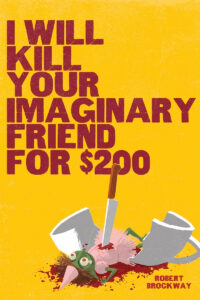
Robert Brockway, I Will Kill Your Imaginary Friend for $200
(Page Street Horror, January 27)
Any childhood fantasy, taken as reality by an adult, becomes terrifying, doubly so what those fantasies are imaginary friends acting as very real enemies. The depressed protagonist of I Will Kill Your Imaginary Friend for $200 is scraping together a simple living off of eliminating inconvenient remnants of childhood protectors when he comes across a new challenge: a creature who sucks the life from those it claims to protect, via a truly disturbing television show. What a strangely affecting tale, and the one on this list most likely to leave you both sobbing and hopeful.
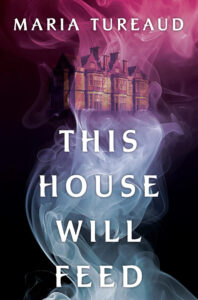
Maria Tureaud, This House Will Feed
(Kensington, January 27)
While there have been plenty of horror novels featuring cannibalism lately, none are so harrowing as Maria Tureaud’s bleak, visceral portrait of the Great Famine, and the enormity of suffering and sacrifice contained therein. In This House Will Feed, a young woman in the throes of starvation is rescued from her workhouse prison at the peak of the Irish famine and taken to live on an estate mysteriously marked not by want, but by plenty. What is the manor’s secret to their outlier status? And what shall be sacrificed to ensure their prosperity continues? This House Will Feed is a major tearjerker with a brutally realistic setting and an intensely satisfying finale.
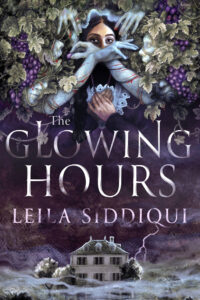
Leila Siddiqui, The Glowing Hours
(Hell’s Hundred, February 3)
There’s been quite a few takes on that rainy summer when Mary Shelley wrote Frankenstein in a Swiss villa, but The Glowing Hours catapults this historical moment into supernatural territory for my favorite version yet. Siddiqui’s narrator is a disgruntled Indian aristocrat, fallen on hard times and abandoned by her family, who finds employment as maid to the Shelley family just in time to accompany them on their writing jaunt to Switzerland, where Lord Byron awaits the party in a leaky chateau. Misery envelopes the travelers immediately, with bad weather, substandard accommodations, supernatural visitors, and the most horrifying of all: Lord Byron being a complete asshole.
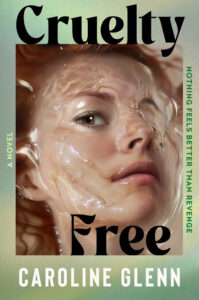
Caroline Glenn, Cruelty Free
(William Morrow, February 3)
When a former starlet returns to Los Angeles, it’s been ten years since she lost her child, ten years since she was dropped by her adoring fans, and ten years since her husband came out of the whole mess scott-free. A chance encounter with a charismatic younger woman leads to a risky, yet rewarding, new business plan: kill off anyone who’s ever mistreated them, boil their bones into collagen, and sell it to women desperate to firm up their faces before they find themselves replaced. What could go wrong?
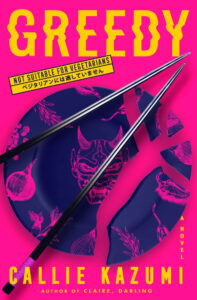
Callie Kazumi, Greedy
(Bantam, February 3)
Kazumi’s sophomore effort follows a desperate gambler who stumbles on a sweet new gig: private chef to an eccentric billionaire with unusual tastes. While he adores the new creativity he can bring to his work (and the breathing room he’s earned from the Yakuza’s collectors) he’s worried about his ability to turn a blind eye to his employer’s mysterious sourcing of meat… A mouth-watering parable of complicity & consumption under capitalism.
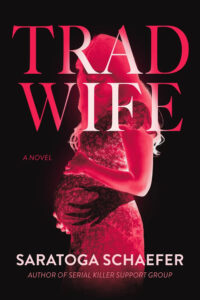
Saratoga Schaefer, Trad Wife
(Crooked Lane, February 10)
Trad wives aren’t just for instagram anymore–they’re also the subject of several upcoming horror novels, including Saratoga Schaefer’s body-horror take on Rosemary’s Baby (this time, Rosemary’s in charge, and the devilish figure that impregnates her is actually quite sweet).
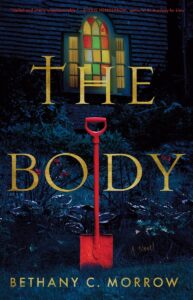
Bethany C. Morrow, The Body
(Tor Nightfire, February 10)
I’m in love with the new novel from Bethany C. Morrow, who won my gothic heart with her very weird Cherish, Farrah, an instant cult fave. In The Body, religious trauma manifests in increasingly disturbing ways for a woman in a troubled marriage. Morrow’s protagonist is desperate to escape her past, determined to hold onto her husband, and unready for the depth of obstacles she will encounter in either quest.
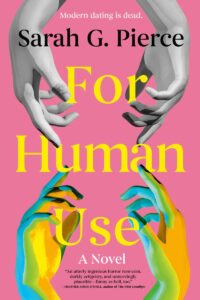
Sarah G. Pierce, For Human Use
(Run For It, February 10)
Sarah G. Pierce sharply and hilariously satirizes the dating industry in this horror romance of epic proportions. For Human Use presupposes that our epidemic of loneliness might find a cure in the provision of perfectly preserved cadavers to the paying public in the interest of companionship (what kind? we can only speculate).
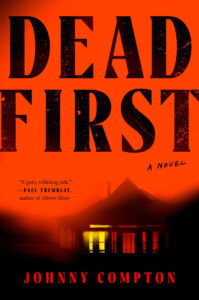
Johnny Compton, Dead First
(GP Putnam’s, February 10)
As a semi-proud resident of the Austin-San Antonio metroplex, I’ve been psyched to witness hometown horror hero Johnny Compton’s rise, especially as Compton is dedicated to crafting stories that incorporate ongoing central Texan concerns (and colorful characters). In Dead First, an immortal oligarch hires a PI to investigate his past and find out why he can’t seem to die. Imagine Groundhog Day, but Elon Musk is the one driving off that cliff with a prognosticating rodent. A nice image, isn’t it?
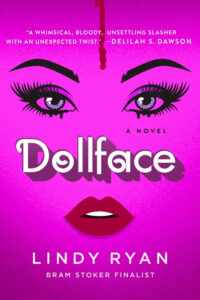
Lindy Ryan, Dollface
(Minotaur, February 24)
In Ryan’s fabulous new slasher, the satire cuts sharper than the murder weapon. Dollface features a horror writer who’s recently relocated to a picture-perfect suburb with a dark underbelly. When bodies start dropping at the hands of a menacing figure wearing a plastic doll mask, Ryan’s narrator finds herself torn between condemnation and inspiration; she’d love to see the crimes stop, but the neighborhood slasher is really helping her writer’s block.
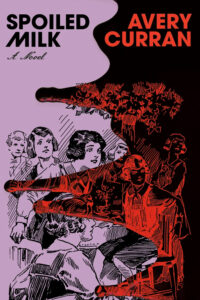
Avery Curran, Spoiled Milk
(Doubleday, March 10)
Boarding school mysteries will never stop sending me, and Spoiled Milk nails the genre with its Picnic at Hanging Rock vibes and cool girl sensibility. After a student’s shocking plunge from a high bannister, the upper class cohort bands together for a seance, only to awaken the repressed desires of a century of schoolgirls. Eerie, atmospheric, and lyrically driven, Spoiled Milk may be the most intriguing gothic of the year.

T. Kingfisher, Wolf Worm
(Tor, March 24)
T. Kingfisher’s upcoming historical horror novel is truly disgusting, and not for the faint of heart. Wolf Worm features a botanical illustrator hired to document the life cycles of flesh-eating insects in meticulously detailed drawings by a man hiding such sinister deeds as can’t possibly be imagined before reading the final pages of the book. If you can’t get enough of flesh-eating insects, there’s a lot of insect horror this year, including Gemma Amor’s ITCH! and the aptly titled Meat Bees by Dane Erbach. Perhaps that’s the next logical step after fungalpunk. Can I call it entomology core? I certainly plan to!
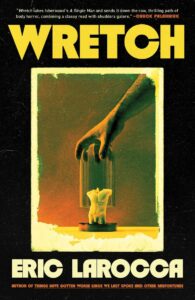
Eric LaRocca, Wretch: or, The Unbecoming of Porcelain Khaw
(Saga, March 24)
Eric LaRocca hooked me from the first sentence of Things Have Gotten Worse Since We Last Spoke, and his latest novel is my favorite yet. Wretch, or, The Unbecoming of Porcelain Khaw is a furious, menacing grief horror featuring a terrifying villain who can reunite you with some semblance of your dead loved ones, but only after extracting a terrible, ruinous price. This book really reminded me of the Canadian TV show The Booth at the End, in which supplicants plead their case to a man in a diner who may be the devil, and accept strange duties to perform in return, all with cascading consequences. I guess I would really love to rewatch that show. And also everyone should read this book.
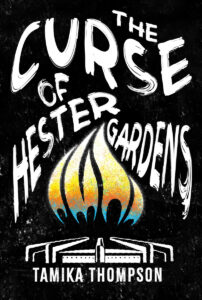
Tamika Thompson, The Curse of Hester Gardens
(Erewhon, March 31)
Every building, long enough occupied, becomes home to a host of unquiet spirits, but Thompson’s setting of a violence-ridden public housing estate has more hauntings than most. In The Curse of Hester Gardens, the ghosts of the past make their mark on the uncertainties of the present, creeping dread purveys every interaction, and one family faces unimaginable obstacles, and even harder to imagine defenders. Bleak, beautiful, and not to be missed.
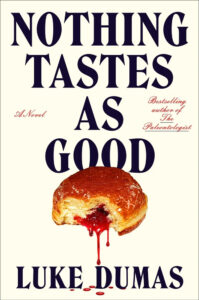
Luke Dumas, Nothing Tastes as Good
(Atria, March 31)
Finally, a horror novel for the Ozempic era! Luke Dumas has been quietly building a devoted following, but Nothing Tastes as Good should make for a big breakout novel given its satirical brilliance and timely themes. Dumas’ hero has struggled with fatphobia his entire life, and after spotting an ad for an experimental weight-loss treatment, he decides to jump into the chemical dieting industry feet-first. The effects are immediate, noticeable, life-changing, and horrifying—weight loss is guaranteed by the drug, but so, too, is an unholy thirst for human flesh. And big pharma is ready to cover up any and all adverse consequences in the quest for FDA approval.
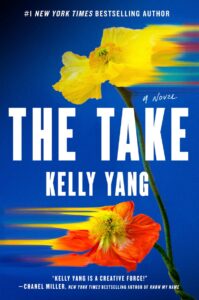
Kelly Yang, The Take
(Berkley, April 14)
Wellness horror meets capitalism noir in Kelly Yang’s vicious send-off of the lies we tell to those we exploit. In The Take, a young woman in need of quick cash applies to assist an aging Hollywood director with an experimental new blood treatment that shaves years off the receiver’s life—and ages the donor just as dramatically. So good! And so horrifying…
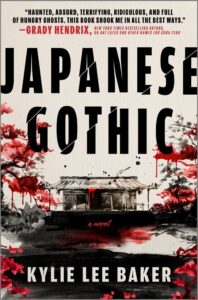
Kylie Lee Baker, Japanese Gothic
(Hanover Square, April 14)
Kylie Lee Baker’s last novel, Bat Eater and Other Names for Cora Zeng, stuck out for its visceral intensity and righteous fury, and her new novel is just as powerful, showing the author’s versatility with its slower build and more intricate plotting. In Japanese Gothic, a modern-day college student hides out with his distant father on a remote country estate, while a century and a half in the past, in the same house, the daughter of one of Japan’s last samurais prepares to confront the imperial forces with the remnants of her father’s comrades. When the two begin to see glimpses of each other, time and space fold in on themselves, and their storylines enter into a collision course that will threaten reality itself. Japanese Gothic is both great historical fiction and an excellent speculative thriller, and I can’t recommend it enough.
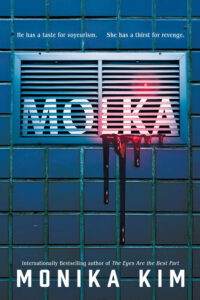
Monika Kim, Molka
(Erewhon, April 28)
Monika Kim’s sophomore horror novel was inspired by a rash of real-life scandals in South Korea involving molkas, or hidden cameras, used to spy on unsuspecting women and garnering perpetrators mere slaps on the wrist. In this rage-fueled tale of injustice and comeuppance, an office worker finds her own revenge after being preyed upon by a wealthy playboy and an incel security guard. I adored Kim’s elegantly grotesque debut, The Eyes are the Best Part, and Molka establishes her as one of the most compelling new voices in the genre.
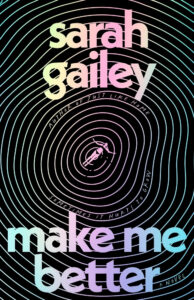
Sarah Gailey, Make Me Better
(Tor, May 12)
Another excellent entry into the growing genre of wellness horror! This one’s from horror writer extraordinaire Sarah Gailey, whose career I have been eagerly following ever since I read their sophomore novel, The Echo Wife. Make Me Better lives up to Gailey’s stellar reputation from the get-go, with a sternly worded dedication warning of the futility of side-stepping grief. And yet that is exactly the intent of Gailey’s terribly avoidant characters, who’ve marooned themselves on an island promising the unpromiseable, with predictably dire results. Make Me Better would form a perfect double feature with Eric Larocca’s Wretch, out in March of this year.
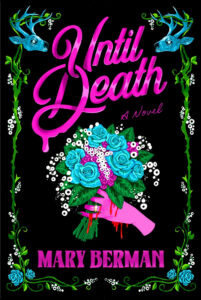
Mary Berman, Until Death
(Mulholland Books, May 19)
The wedding industry is, obviously, the perfect venue for horror, and this tongue-in-cheek take on the nightmare of planning a memorable union makes the most of this natural affinity. I won’t spoil the novel’s many delicious surprises, but rest assured, this one makes for incredibly satisfying reading.
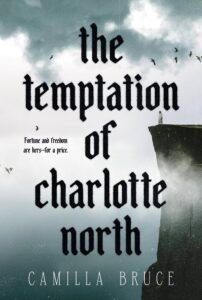
Camilla Bruce, The Temptation of Charlotte North
(Del Rey, May 19)
In this moody gothic historical, set on a remote and windswept island with a tragic past, a loosed spirit becomes a sinister ally to a repressed teenage girl as she yearns for her melancholy preacher. Camilla Bruce is one of the most consistent and insightful authors of psychological thrillers writing today, and The Temptation of Charlotte North easily lives up to that reputation. What draws me most to Bruce’s work is the skillful blending of setting and character, how the two feed off each other to reveal a stranger, darker picture, on full display in this latest.
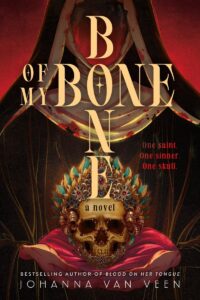
Johanna Van Veen, Bone of My Bone
(Poisoned Pen Press, May 26)
Hot off the heels of her well-received debut, Blood on the Tongue, Johanna Van Veen is back with another queer historical horror, this one set in the midst of the Thirty Years War (just like the previous item on this list, although this one takes place at the center of the conflict). In Bone of My Bone, two refugee women, a Catholic and a Protestant, try to smuggle the skull of a saint to safety while slowly falling in love.

Daniel Kraus, The Sixth Nik
(Saga, June 23)
Hot off the heels of his well-received Angel Down, and with several film adaptations under his belt or in the works, Daniel Kraus is having a moment, with two novels publishing this year: the self-explanatory film criticism book Partially Devoured: How Night of the Living Dead Saved My Life and Changed the World, and the space horror novel The Sixth Nik, which I finished reading late last night and which completely and utterly destroyed me. In The Sixth Nik, a young girl is tasked with an epic quest to a dark truth, for a work reminiscent of Ender’s Game and Dan Simmons’ Hyperion, neither of which had been read by Kraus before writing this novel (as the publisher’s introductory note has assured me). A ridiculously awesome book, with a shattering finale.
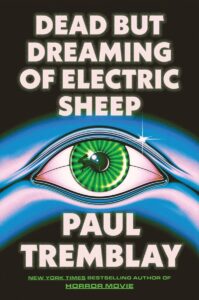
Paul Tremblay, Dead but Dreaming of Electric Sheep
(William Morrow, June 30)
A semi-professional Twitch streamer is hired to pilot a mostly-dead corpse from coast to coast in a grotesque display of proprietary technology—a plot reminiscent of nothing so much as Weekend at Bernie’s, oft-mentioned by the novel’s knowing protagonist, and a signature example of Paul Tremblay’s wacky influences and deadly serious applications.
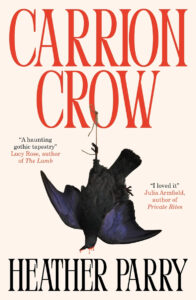
Heather Parry, Carrion Crow
(Pushkin Press, June 30)
What a truly disturbing tale! Heather Parry’s Carrion Crow is based on an infamous French case that you’ll recognize instantly if you, like me, are on Wikipedia late at night looking through the most messed-up crimes in history. At the start of the novel, Parry’s locked-in-the-attic heroine remains cheerful, despite her circumstances—she’s only up there to get a little paler, to lose a little weight, to make sure her morganatic marriage to a struggling solicitor has the highest chance possible of success. As she stays in the attic longer and longer, getting weaker and weaker, she begins to think her mother has lured her up the rickety stairs for a more nefarious purpose, one involving not rest and preparation, but captivity and abandonment. Check out Parry’s previous novel, Orpheus Builds a Girl, for more feminist body horror with a historical twist!
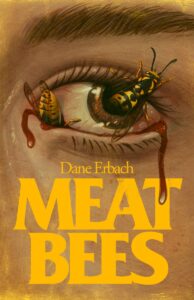
Dane Erbach, Meat Bees
(Clash Books, August 4)
In this gleeful ode to monster schlock, set against our modern backdrop of environmental destruction, flesh-eating wasps descend upon a small town in the Smoky Mountains. A grumpy teenager in town for the summer may be the community’s last defense against a nightmarish threat, if she can get over rolling her eyes long enough to notice all mysterious disappearances. Also, there is a really cool “forest coaster” which sounds insanely dangerous and which I must ride immediately.
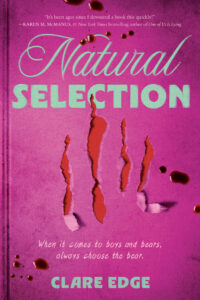
Clare Edge, Natural Selection
(Delacorte, August 25)
Remember when the internet was deciding if it was better to come across a bear or a man when walking as a woman in the forest? Well, what if the woman….was the bear? And what if she was going around killing off nasty misogynists in the town next door?