I’m not sure that the term claustrophobic crime novel is a genre unto itself. If it isn’t it should be. Claustrophobia, whether of the physical or mental kind, is the engine that drives some of our best novels. Thrillers and crime novels in particular. This is because every well-done claustrophobic novel is also a psychological character study told entirely or, almost entirely, from the point of view of the novel’s protagonist; and being inside someone’s mind in a claustrophobic situation – whether of their own making or created from external circumstances – can’t help but be thrilling, tense and unpredictable. In several of my own novels I have found it most effective to write from a single character’s perspective – whether from the first or third person point of view. What’s interesting for me as their conduit in a sense is to observe through a character’s mind how they will react as the situations/encounters I put them in become tenser and/or more fraught. Who of us can say who we really are – the heroic, or anyway upright, person we want to believe we are or something less – until we’re in a crisis situation? That unpredictability and sense of a protagonist revealing to me their truest nature at the same time that I am writing the story that is forcing them to do so, for me defines the art of writing and is what makes doing it exciting.
Here are five of my favorite claustrophobic crime novels and why I think they work so well. If I had to guess, none of these great authors were aware ahead of time how their protagonists would react to every situation they wrote them into.
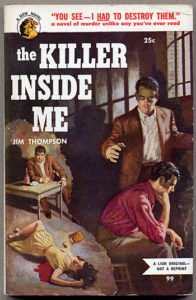
The Killer Inside Me, Jim Thompson
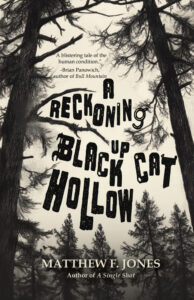
What makes the classic noir novel The Killer Inside Me so horrifying is its first-person narration. The story is told entirely through the mind and voice of Lou Ford who is seen by his friends, acquaintances and co-workers in the small Texas town he is a deputy sheriff in as a likable, if not over intelligent fellow. We, as readers, though, know from being trapped inside his deeply disturbed mind that he is above everything else a psychopathic killer ruled by what he calls ‘his sickness’. The Killer Inside Me is perhaps the best example of what I would call the psychological claustrophobic crime novel. I first read this novel in high school and have since re-read it a couple of times. Its power comes from so effectively relating what we, as intelligent human beings, all know to be true, but too often tend to not give enough credence to – who someone is on the outside does not mirror who they are on the inside. The dual nature of human beings is a spark that has helped to ignite many of my own novels, including A Reckoning Up Black Cat Hollow.
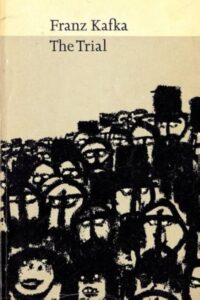
The Trial, Franz Kafka
The Trial is a classic claustrophobic novel in both the psychological and physical sense. The third person narrative focuses solely on Josef K.’s consciousness. On his confused and disoriented thoughts following his arrest for an unknown crime by an obscure authority and his futile attempts to navigate a mystifying, farcical, impenetrable legal system and discover objective facts relative to his case. The novels physical settings only add to its claustrophobic feel. The rooms and buildings K. frequents – the city itself – feel as cramped and disarrayed as K.’s thoughts. There is a pervasive feeling as the novel progresses that reality – or what K. had assumed as reality – is dissolving around him. Through K.’s mind we accompany a normal, rational man as he is ultimately crushed into resignation by a cold and farcical regime. The true genius – and horror – of the novel for me lies in the smothering way it forces readers to confront the question – what happens when what we accept as objective reality turns out not to be.
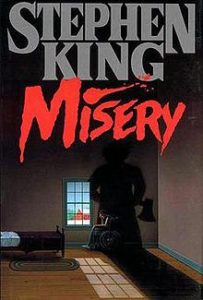
Misery, Stephen King
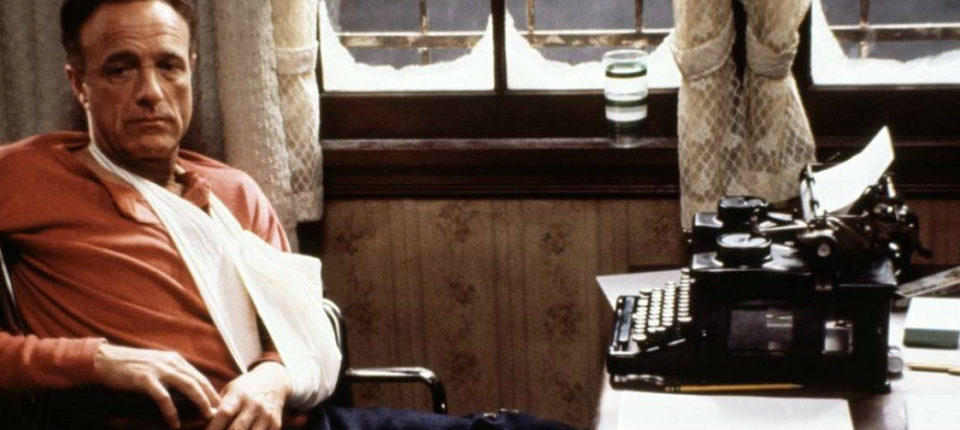
Misery, like all of King’s great novels, can’t really be put into a single genre. It is, at once, a horror novel, a suspense novel, a crime novel, a straight up thriller. Not to mention, the novel is peppered throughout with a delicious, dark humor and works on some metaphorical levels (King himself has supposedly said that Annie Wilkes was a metaphor for his own cocaine addiction.) What for me makes the novel work so powerfully on all these levels is its smothering claustrophobic feel. King forces the reader to see the world only as Paul Sheldon, the novelist who Annie has kidnapped after he has been injured in a car accident, with the intention of forcing him to resurrect in his writing her favorite character, Misery Chastain, who was killed off in Paul’s last novel. The reader is in a sense being held captive in Annie’s house with Paul, who is confined to a bed and/or wheelchair. We experience his terror, desperation, pain and disorienting thoughts exclusively from inside his head. Some of the most horrifying moments of his captivity are when Paul is left alone in his wheelchair, to speculate on what sort of mental or physical torture Annie has in mind for him upon her return.
The Postman Always Rings Twice, James M. Cain
One of the greatest claustrophobic crime novels of the last century, with a plot and theme as relevant today as it has been throughout the history of mankind. Frank Chambers narrates the entire novel in what in essence is his confession, while sitting on death row after being convicted of the murder of his former lover, Cora, though the only murder he actually committed was of Cora’s husband. The fates of Frank, an amoral drifter, and Cora, an amoral woman looking to escape her drole life, feel fated from the moment they meet. Through his self-serving justifications for his crimes Frank makes it clear that he was – or convinced himself he was – powerless against his lustful want of Cora. The novel’s circumscribed setting – a middle of nowhere roadside diner owned by Cora’s husband Nick – contributes to the suffocating experience of reading it; through Frank’s descriptions of this small, bounded world we understand why Cora, without money of her own, might feel trapped there. Cain’s lean, economical prose, not a wasted word, and dialogue contribute to the feeling that we are following a narrowing road to an inevitable end.
Child Of God, Cormac McCarthy
Child of God, McCarthy’s third novel, is centered on Lester Ballard, a mentally unstable young man who finds himself on his own and struggling to survive in Tennessee’s hill country after his family’s farm is foreclosed on. He takes up living in caves and stealing food to survive. As his mental state deteriorates further Ballard descends into a life of depravity that eventually leads to him becoming a serial murderer of young woman, the corpses of which, out of his twisted need for human connection and warped sense of intimacy, he keeps as companions and commits necrophilia on. The novel’s unidentified narrator relates Ballard’s descent into madness in a matter of fact, nonjudgemental tone that adds to the chilling effect of reading it. It is McCarthy’s sheer mastery as a writer, and southern gothic humor (a scene in which Ballard enters into a boxing match with an orangutan at a county fair comes to mind) makes this superb novel hard to put down and less of a grim read than a simple description of it makes it sound.
***