In 1992, at twenty-two, I sat in a spacious meditation hall in a Catskills ashram. It was my first time visiting a spiritual retreat center and I had not a clue that I would eventually move in. The hall was grand with plush aqua carpeting and little lights on the aisle so people could move around in the dark when everyone else was meditating. On the back wall, opposite the throne on which the current guru sat, stood a huge light box photo of Baba Muktananda, the prior guru, who had been dead for ten years.
Baba Muktananda was one of the Indian masters who brought meditation to the West in the late 60s and early 70s. He was hailed as the real deal, known as the guru’s guru. By the time I sat in the hall, I had read his spiritual autobiography twice. I believed he had attained enlightenment and passed on his abilities and lineage to my powerful female guru.
There were countless stories of how Baba, a bearded man with a glowing complexion who frequently sported a bright red ski cap, had touched and transformed people’s lives. People who felt empty reported having deep spiritual experiences in meditation that reminded them of their true worth. Women who couldn’t get pregnant suddenly became mothers. Actors who were broke started winning awards.
In that hall for the first time, while waiting for my guru to enter the room, I stared at the photo of Baba’s warm, playful smile. It was a grin that managed to say, I see you, I know things, and isn’t this fun? all at once. I had never met him, but felt I knew and loved him.
Two years later, when I was living and working at the ashram, we were told at a Staff meeting that a New Yorker essay was coming out that would expose Baba Muktananda as a molester and rapist of young women. I was shocked. But I was also surprised that I immediately believed the accusations. Waves of nausea bubbled up and I wanted to bolt out of the meeting.
Another devotee, seeing the concern on my face, approached me and said, “Blair, I lived with Baba. I knew Baba. There is no way he would do this. He was so full, there is no way he needed to. Those people are very disgruntled.”
I had already had an experience of another bearded, beloved, and ultra-cool person in my life crossing a line, and the truth in the rumors registered. My popular high school musical theater teacher was, like Baba, charming and funny. Once when I was assistant directing a musical, we met alone at school on a Saturday to plan. He sat across from me at a long plastic table, leaned forward and asked, “How old are you?”
His tone was different, and my shoulders tensed. Surely, he knew the answer.
“Sixteen,” I said, bracing myself. “Why?”
“Because I’m forty-two and we’re coming on to each other.”
I froze.
True, I liked being able to spend an afternoon alone with him. But I knew I wasn’t coming on to him. He waited for me to thaw. I kept my eyes fixed on the table. Thankfully, he backed off.
At that time, when the inconceivable amount of sexual harassment by bosses, fathers, and clergy was just starting to be discussed on talk shows and in popular magazines, it didn’t occur to me to tell anyone. It didn’t occur to me that this was a pattern. It grossed me out, but it also made me feel attractive and a little special.
And even though I didn’t want to be that kind of special, I held on to the feeling and put the whole episode in a box to literally get on with the show. I was spared. But I wonder who wasn’t.
As I reeled from the accusations against Baba, I understood that powerful, charming men do these things, but I didn’t understand why. Recently, more than thirty years after the New Yorker article, which also included abuses by the current guru, changed the story of Siddha Yoga, Deepak Chopra, referred to as “America’s guru,” showed up repeatedly in the Epstein files.
While reading his emails, with statements such as, “God is a construct. Cute girls are real,” my stomach churned the same way it did when I heard the news about Muktananda. I was never a Chopra fan, but just the idea that someone who claims to have so much wisdom is a card-carrying member of “the old boys club” and so recklessly objectifies women, is sickening.
And it really made me think about how, for millennia, again and again, men rape and destroy lives and escape consequences. When rape and molestation are carried out by one with spiritual authority in a spiritual environment, the abuse is magnified: it can cause a victim to lose faith in humanity, as well as in faith itself, as they shut down to beliefs and a community that once gave them comfort.
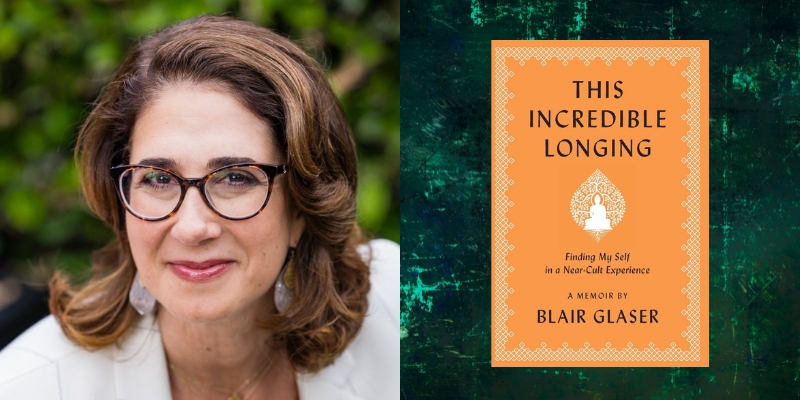
As I was writing my memoir, This Incredible Longing: Finding My Self in a Near-Cult Experience, which chronicles my time living in the ashram, a former devotee reached out to let me know about a lawsuit filed in New York State in 2023 by several victims against the SYDA (Siddha Yoga Dham Association) organization for the lack of acknowledgement of Muktananda’s abuse.
What I read in the lawsuit was horrifying. The lawsuit alleges that Muktananda molested not just a handful of underage women; but possibly hundreds. And there was a whole process, which included a peephole that was constructed for spying on, selecting, and grooming these young women, that many ashram staff knowingly and unknowingly participated in. There were reports of special gynecological tables in his residence set up for his sick hobby.
That lawsuit finally settled in March of 2025. The ashram still denies any wrongdoing but as far as I can tell, due to the settlement, it will not disparage the victims and their experience. This may be progress, but a spiritual organization supposedly dedicated to truth that is so fiercely defended against discovering, owning, and making reparations for truth is a sham.
I now believe that, similar to what has been revealed in the Epstein files, what happened at SYDA was a full-fledged operation, and many people who said they didn’t know about it simply averted their eyes. And since there was so much at stake for those to whom Baba was a beacon, I imagine it was the easiest thing to do. But the consequences must be faced by someone. There is a debt of justice, or in ashram parlance, karma, that must be paid.
Even though I now serve as an executive leadership coach who helps leaders ethically wield authority, I still don’t know why powerful men are drawn to rape women, girls, and young men. I have ideas.
It would seem that men who have so much power and no consequences, while having the freedom to do whatever they please, are not truly free: a life without consequences isolates them from the rest of humanity, and leaves a gaping hole within. Isolation carries with it a searing numbness and emptiness which, on a feeling level, diminishes their experience of their power.
Knowing they have power, but not being able to feel it, drives them to seek reaffirmation in transgression, in stealing innocence, beauty, and vulnerability from those who still have and feel it.
I continue to reckon with the fact that I was one of the people who not only spared abuse but received a solid foundation—discipline, practices to center myself, and a greater awareness of my true talents and purpose—from my time in Siddha Yoga.
Although I’ve always believed that big people have big shadows, and that both good and bad can exist in and result from one action, there is no excuse for covering up sexual abuse. There are so many factors that play into our society’s complicitness: gender, class, wealth, faith, and misuse of power of all kinds.
I hope, strand by strand, we can continue to untie the knot of it, hold powerful men and their enablers accountable for their horrific actions, and move towards the possibility of a safer world.
***