Fiction has a long history of exploring the damage wrought by adults on the lives of youngsters. In my own crime novel, A Bad, Bad Place, twelve-year-old Janey’s childhood is wrecked by her discovery of a murdered woman. From David Copperfield to Demon Copperhead, disrupted childhoods shape the narrative and hook the reader.
I’ve chosen a few of my favorites.
*

Niccolo Ammaniti, I’m Not Scared
Imagine that as a child, you discover another child buried and deliberately trapped in a deep hole. This horrific premise lies at the heart of a thriller set in 1970s Italy, in a village where the adults are floundering and morality has been lost.
The first-person narrative beautifully and authentically captures nine-year-old Michele’s attempts to do the right thing in a world of powerful secrets and collusion.

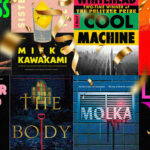
Anna Burns, Milkman
Living through the civil war raging in 1970s Northern Ireland would be sufficient to derail any chance of growing up unscathed, but Burns adds a further layer when her unnamed teenage protagonist is targeted by a sexual predator. Burns captures the girl’s fear, distress and lack of adult support, but also her inner-strength, resolve and humor.
A stunning portrayal of a youngster hanging on to selfhood against a backdrop of violence and oppression.

Ian Banks, The Wasp Factory
It is a testament to Banks’ stunning writing that we feel sympathy for a sixteen-year-old engaged in bizarre rituals, animal torture and murder. Frank is both disturbing and hilarious as he tries to carve a path through a life warped by the behaviour of an adult.
The twist at the end simply takes your breath away, and you will never ever forget what happened to Eric. For all Frank’s shocking behavior, the novel raises questions about identity and gender which resonate even louder today.

Muriel Spark, The Girls of Slender Means
Follows a brief period in a shabby but gentile boarding house during the Second World War. Jane is part of group of young women, and like so many teenagers, eager to make a serious mark on the world while also craving beauty and social poise.
Spark is a master of bringing out the oddness in her characters, and Jane who is admired for her “brain-work” also longs to be thin enough to accompany the glamorous girls as they wriggle through the bathroom window, slathered in margarine. The utter joy of being young is offset by the knowledge that the tragedy of war is unavoidable, and this looming shadow this gives the novel Spark’s characteristic unsettling edge.

Douglas Stuart, Shuggie Bain
A heartbreaking and gritty account of a young life shattered not by a single event but an entire childhood of hardship. Shuggie grows up in 1980s Glasgow surrounded by alcoholism, male violence, poverty and neglect. For a young gay boy, it is a harsh and intolerant environment where he is denied any chance to flourish.
Despite his trauma and broken childhood, Shuggie’s unconditional love for his alcoholic mother and determination to protect her shine through.

Angie Thomas, The Hate U Give
Aimed at young adults, this novel describes the fallout of a racist shooting in inner-city America. Sixteen-year-old Starr is the only witness to the shooting and her ordinary life with loving family comes to a shocking and abrupt end. When Starr makes the courageous decision to testify in court, she faces outrage, danger and threat.
The novel is a powerful depiction not only of a young black life wrecked by one incident, but also by daily injustice and inequality.
*
Even in the most destructive circumstances, the young protagonists of these novels do their best not only to survive but to behave with decency. Perhaps what makes the portrayal of shattered lives so appealing is the hope of redemption.
***