I’m not the first to notice we’re living in a new age of cannibals, brought to us by late stage capitalism and the urge to examine consumption itself through the most basic of needs: hunger. The current wave of cannibal literature kicked off with Chelsea G. Summers’ A Certain Hunger, in which a food critic* finds the most delectable satisfaction in eating her many lovers. The carnage becomes an altogether more vicious affair in Tender Is the Flesh, Agustina Bazterrica’s grotesque send-off of the meat industry and class hierarchy, set in a world where all animals have been eliminated for “health” concerns, and the privileged few have grown quickly accustomed to savoring the flesh of their factory-farmed inferiors. These twin pillars have carved out a niche for a delectable, disgusting subgenre to mature into a glorious gospel of class warfare, forbidden appetites, sardonic parodies, and cheerful grand guignols.
I’ve been wanting to write this list for a while, but after seeing this year’s upcoming releases, I knew I couldn’t delay any longer. 2026 adds to the genre with a host of new novels featuring cannibalistic consumption, as well as one nonfiction title of note: Hannibal Lector: A Life, a deep-dive history of Thomas Harris’ greatest creation by Brian Raftery. Since there are so very many horror novels coming out these days, I attempted to narrow the list with a few rules for inclusion:
- No immortals or bloodsuckers. Those are vampires.
- No undead eaters. Those are zombies.
- Characters don’t need to know they are consuming human flesh in order to be considered cannibals.
- Characters cannot consume human flesh solely because they are starving, although starvation may play a factor.
- All titles on this list are from 2025 and 2026, so as to appreciate the cannibal zeitgeist.
Enjoy! And don’t read these on a full stomach…
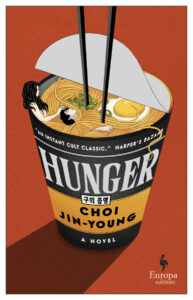
Choi Jin-Young, Hunger
Translated by Soje
(Europa Editions)
In this instant cult classic from South Korea, a woman loses her lover to sudden death in the street, then begins to slowly consume his body to preserve their connection. The novel alternates perspectives between living and dead, survivor and decedent, as they reach for an unholy reunion through uniting flesh and spirit.

Briana N. Cox, Indigent
Does it count as cannibalism if you’re only eating human flesh because the worms in your brain need it to survive? I guess we’ll have to ask the health department’s resident anti-vaxxer…But I digress. In this anti-capitalist parable of decay, rot, and urban renewal, a soon-to-be-condemned apartment complex gets overtaken by a parasite-infested family far too interested in adding the building’s maintenance guy to their flesh-eating coven.

Ayesha Manazir Siddiqi, The Centre
(Gillian Flynn Books)
In this intense parable of translation and appropriation, anyone can become fluent in any language—as long as they are willing to, well, consume a native speaker. This one actually came out three years ago, but feels extra-relevant to the current moment, so I wanted to include it as its own item.
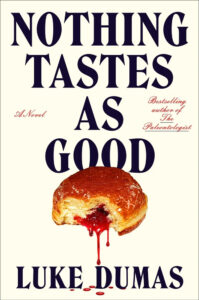
Luke Dumas, Nothing Tastes as Good
(Atria)
Finally, a horror novel for the Ozempic era! Luke Dumas has been quietly building a devoted following, but Nothing Tastes as Good should make for a big breakout novel, given its satirical brilliance and timely themes. Dumas’ hero has struggled with fatphobia his entire life, and after spotting an ad for an experimental weight-loss treatment, he decides to jump into the chemical dieting industry feet-first. The effects are immediate, noticeable, life-changing, and horrifying—weight loss is guaranteed by the drug, but so is an unholy thirst for human flesh. And big pharma is ready to cover up any and all adverse consequences in the quest for FDA approval.
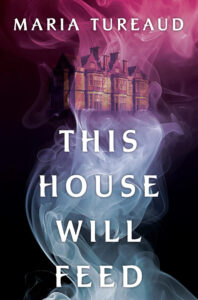
Maria Tureaud, This House Will Feed
(Kensington)
While there have been plenty of horror novels featuring cannibalism lately, none are so harrowing as Maria Tureaud’s bleak, visceral portrait of the Great Famine, and the enormity of suffering and sacrifice contained therein. In This House Will Feed, a young woman in the throes of starvation is rescued from her workhouse prison at the peak of the Irish famine and taken to live on an estate mysteriously marked not by want, but by plenty. What is the manor’s secret to their outlier status? And what shall be sacrificed to ensure their prosperity continues? This House Will Feed is a major tearjerker with a brutally realistic setting and an intensely satisfying finale.
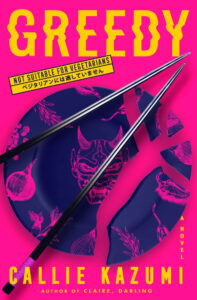
Callie Kazumi, Greedy
(Bantam)
Kazumi’s sophomore effort follows a desperate gambler who stumbles on a sweet new gig: private chef to an eccentric billionaire with unusual tastes. While he adores the new creativity he can bring to his work (and the breathing room he’s earned from the Yakuza’s collectors) he’s worried about his ability to turn a blind eye to his employer’s mysterious sourcing of meat… A mouth-watering parable of complicity & consumption under capitalism.
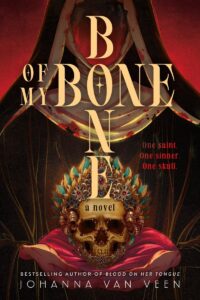
Johanna Van Veen, Bone of My Bone
(Poisoned Pen Press)
Hot off the heels of her well-received debut, Blood on the Tongue, Johanna Van Veen is back with another queer historical horror, this one set in the midst of the Thirty Years War and featuring unholy appetites of a wide variety.
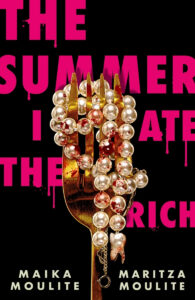
Maika Moulite and Martiza Moulite, The Summer I Ate the Rich
What if the food you cooked came alive only when garnished with the ashes of the dead? And what if you had one chance to make it as a chef for the ultrawealthy, if only you can keep your employers sated? Sisters and cowriters Maika Moulite and Martiza Moulite have crafted a mouth-watering tale influenced by Haitian cuisine and folklore, featuring a budding chef whose need to consume human flesh might just be an asset in the high-stakes world of private dining.
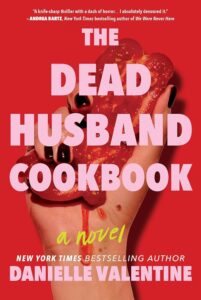
Danielle Valentine, The Dead Husband Cookbook
(Sourcebooks Landmark)
In this delectable culinary thriller, disgraced editor Thea Woods gets one last chance to restore her reputation when a celebrity chef shows up at her small publisher ready to write a memoir and asking for Thea by name. Thea, a lifelong fan of Maria Capello’s, has never believed those awful rumors about Maria’s husband and his untimely demise, but she may change her mind after a few weeks at Maria’s farm editing the single copy of her manuscript. This book made me so hungry…
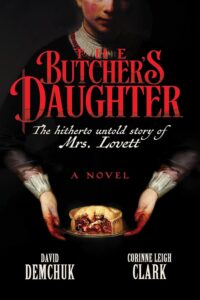
David Demchuk and Corinne Leigh Clark, The Butcher’s Daughter
(Hell’s Hundred)
How ever did the mysterious matron of Sweeney Todd get her gruesome start in the world? Perhaps it began with her happy childhood in a butcher shop, a happiness ending abruptly upon the death of her father and the newly dangerous circumstances of her life—first as a maid to a dangerous master, and later as a prisoner in a convent determined to tell her sorry tale to any and all sympathetic listeners.
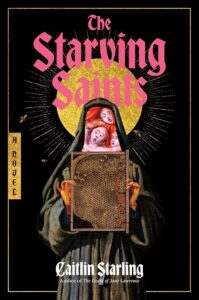
Caitlin Starling, The Starving Saints
(Harper Voyager)
A castle under siege and about to run out of food is the setting for Starling’s cannibalistic feast of terrors. When mysterious strangers arrive promising victory and sustenance, the defenders let them in, but at what cost? And what bargains must be struck to be rid of them? You’ll never look at fingers the same way again…
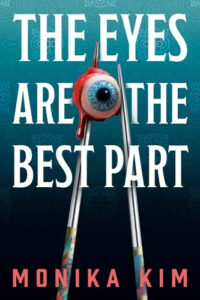
Monika Kim, The Eyes are the Best Part
(Erewhon Books)
In this darkly funny psychological horror, a college student must protect her mother and her sister from her mother’s creepy new boyfriend. Like all the other men in their lives, he’s trying to reduce their humanness into stereotypes about doll-like, submissive Asian women, and Kim’s protagonist is certainly not going to let him get away with it. She’s also spending a lot of time having intense dreams about eating bright blue eyes, standing over her sleeping enemies, and generally losing touch with reality in a way that pays plenty of dividends by the novel’s end.

Lucy Rose, The Lamb
(Harper)
In this dark fairy tale, a young girl tries to help satisfy her mother’s insatiable craving for human flesh, culled from those they call “strays”—hikers and homeless people found wandering in the dense forest surrounding their little home. When a new arrival ingratiates herself to the family and romances the girl’s mother, she threatens to disrupt the family’s careful balance, spurring Rose’s child narrator to drastic efforts in restoring their lives to a semblance of normality. Sapphic cannibals for the win! Also, I gave my copy of this book to my favorite restaurant server and I think this is what we should all do with cannibal books.
*An earlier version of this article mistakenly called the character an art critic