Is that saintly Andy Griffith, beloved by Americans as Sheriff Andy Taylor, ogling and grabbing a blonde woman dancing in a Mexican bar? And is that Andy – good ol’ Andy – later trying to rape the woman and kill her boyfriend?
Toto, I have a feeling we’re not in Mayberry anymore.
Of course, TV viewers knew that Griffith was an actor, and a talented one, and remembered him from the 1957 drama “A Face in the Crowd.” He later played a very different type in “The Andy Griffith Show,” patiently managing a town full of well-meaning yahoos named Goober and Gomer and Otis.
But it was jarring to experience lecherous, murderous Andy in “Pray for the Wildcats,” airing on ABC in 1974, when made-for-TV movies were at their creative and crowd-pleasing heights.
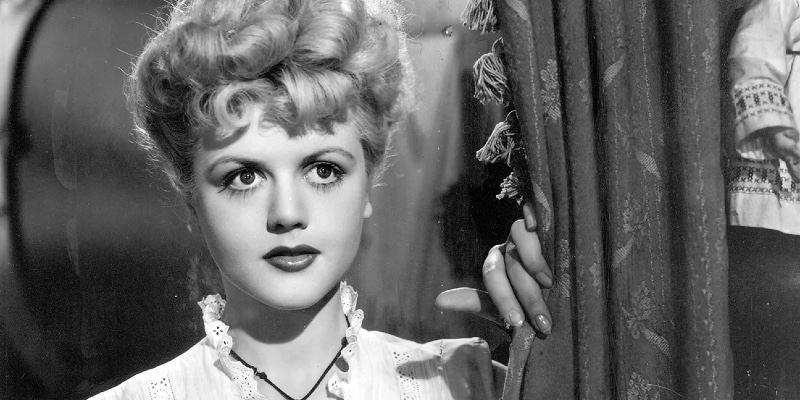
“Pray for the Wildcats,” which also starred “Star Trek” idol William Shatner and “Brady Bunch” dad Robert Reed, was only one example of villainous turns by actors known for their likable roles. These thespians were known as good guys sometimes before they turned heel and sometimes after. Fred MacMurray played amoral scum in “Double Indemnity” and “The Apartment” before being a TV dad. And perhaps no one could play the good and bad sides of the coin as well as Angela Lansbury, the manipulative, murderous political mother in “The Manchurian Candidate” but later beloved sleuth Jessica Fletcher in “Murder, She Wrote.”
I’ll come back to Griffith, MacMurray and Lansbury in a bit, but first some great, two-faced actors whose bad sides tore a hole in our naïve little hearts – or in some cases redeemed themselves in our eyes.
Don’t call him Shirley
Leslie Nielsen remade his career as thoroughly as any actor in Hollywood. He played the square-jawed starship captain in the 1956 science fiction film “Forbidden Planet” but in 1980 deployed deadpan delivery as the “surely you can’t be serious” doctor in “Airplane.”
In between, Nielsen – aside from his brief role as the captain of the doomed ocean liner in the 1972 disaster flick “The Poseidon Adventure” – played so many heavies in TV movies and series that his spoofing of his deadpan image in “Airplane!” increased the film’s laughs by at least 39 percent. He went on to a new comedy career in the “Police Squad!” TV series and “Naked Gun” movies.
Nielsen in the 1960s and 1970s was likely to show up on our TV screens as any actor in the business. His Wikipedia page says he appeared in 150 TV shows in addition to 100 films before his death in 2010. In any given week in the 1960s and 1970s, he’d show up – usually as a bad guy – on “Gunsmoke” or “The Virginian” or “Columbo.”
It was “Columbo” that gave some of the industry’s best good guys to be among the best bad guys.
Just one more thing, or several actually
“Columbo” episodes are, like a lot of shows in the 1970s when viewed today, comfort food: Not a lot of surprises but they’re predictable fun. “Columbo” is fun because of the clever-but-comforting writing of the series, which is not a whodunnit but an exercise in how the detective played by Peter Falk will catch the bad guy.
The series is also fun because of the endless supply of guest stars from classic Hollywood film and TV to appear.
Nielsen’s “Columbo” episodes – two of them, “Lady in Waiting” in the first season and “Identity Crisis” in the fifth – are a little disappointing for “Naked Gun” fans hoping that Nielsen played a scenery-chewing bad guy. In the earlier episode, he’s the boyfriend of the killer, played by Susan Clark, and in the latter episode, he’s the victim.
In the 1970s, “Star Trek” star William Shatner was trying to duplicate his success of the 1960s and doing a lot of guest star shots. He played the killer in a 1976 episode of “Columbo” and gave a very Shatner performance as a TV actor. He returned as a killer as an abrasive radio show host in the 1990s revival of the series.
Shatner’s “Star Trek” co-star, Leonard Nimoy, was a great “Columbo” villain in a 1973 episode, “A Stitch in Time,” in which he played an arrogant – is there any other kind of “Columbo” villain? – surgeon who plans to kill a research partner (played by Will Geer) so he can take credit for their project. Nimoy’s surgeon performs a heart procedure on Geer but uses dissolving sutures so his heart will “come undone” in a few days. A nurse (played by Anne Francis) tells Nimoy she knows what’s he up to. Oh, bad idea. Columbo investigates the nurse’s murder and there’s just the right amount of cat-and-mouse between the detective and the killer surgeon that – spoiler alert for a half-century-old TV episode – almost certainly plays off Nimoy’s cool Spock persona, a trait that Columbo cites when the surgeon seemingly loses his cool.
One of the best “good guy to bad guy” appearances on “Columbo” was beloved sitcom and “Mary Poppins” star Dick Van Dyke, who played a photographer who murdered his overbearing wife in the 1974 episode “Negative Reaction.” Van Dyke is, unlike some of Columbo’s antagonists, on the offensive against the detective very quickly. Columbo’s irritating pop-ins and mannerisms eventually offend every one of his suspects, but Van Dyke shows little tolerance for Peter Falk’s detective. The interplay demonstrates how appealing the series was for viewers and for many performers who were guest stars.
‘I hate Illinois Nazis’
I’d like to think that most of us would agree that there are few bad guys as reprehensible as a Nazi and they’ve been portrayed countless times in film and TV. One of the most unlikely portraits of a Nazi came in 1980, when Henry Gibson played the leader or the Illinois Nazis in “The Blue Brothers,” the “Saturday Night Live” spinoff movie starring John Belushi and Dan Aykroyd.
Gibson was best known for his three years as the mild-mannered, poetry-reciting regular on “Rowan & Martin’s Laugh-In” beginning in 1968. I’d guess a big part of the idea of casting Gibson as the Nazi leader, who delivers a repugnant, taunting speech before he is routed into a river by the Blues brothers and then pursues them for the rest of the movie, is that it’s a shocking transformation from his meek “Laugh-In” presence.
The opposite direction, from villain to hero, was taken by Raymond Burr, who made a huge impression as the suspected murderer who is the subject of Jimmy Stewart’s surveillance in “Rear Window” in 1954 before playing ace attorney Perry Mason in the series of the same name from 1957 to 1966 and then in dozens of TV movies.
If there’s anyone whose segue between villainous roles and heroic parts could be cited as the best of all time, it’s three actors who moved from film villain to beloved TV series star or vice versa.
My three heel turns
Fred MacMurray is a performer who’s remembered now for a couple of high points in his career, the amoral male lead in “Double Indemnity,” directed by Billy Wilder and released in 1944, and the warm-and-fuzzy father in the 1960s sitcom “My Three Sons.” In between, he starred in Disney movies like “The Absent-Minded Professor” and “The Shaggy Dog.”
It’s hard to imagine a better reverse heel turn than the one MacMurray made. He’s as sleazy as they come in noir in “Double Indemnity,” and you can’t go too far to the opposite end of the spectrum than appear as the inventor of Flubber in Disney movies.
I’d also note, however, that MacMurray played a cad – not a murderous one, at least – in another Wilder film, “The Apartment,” from 1960. The film’s stars Jack Lemmon and Shirley MacLaine get a lot of attention, but MacMurray, as the personnel director of a big New York City insurance company, is relentlessly self-centered and, well, just awful, cheating on his unseen wife with MacLaine’s character. It’s a hugely problematic situation, of course, with him being an executive in the company where she works as an elevator operator. MacMurray is a serial womanizer, ruthlessly picking up, dropping and sometimes firing his conquests. As characters go, he would fit right into modern corporate society.
Angela Lansbury’s long, distinguished career in film was highlighted by one of the most chilling performances of all time as Eleanor Shaw Iselin, the ambitious wife of a senator in “The Manchurian Candidate” in 1962. In a film with many memorable villains, Eleanor stands out for her cold-blooded domination of her husband and her son. She’s so good, in fact, that her later roles have us doing a double take to spy her murderous intent.
It’s so perfect that she’s smart and tart and not sweet as pie as Jessica Fletcher in “Murder, She Wrote,” beginning in 1984.
Like Lansbury and MacMurray, Griffith established an indelible impression as Sheriff Andy Taylor. By the time he starred in “Pray for the Wildcats” in 1974, he’d tried other TV efforts and might have been experiencing typecasting that he didn’t break until he starred as “Matlock” beginning in 1986.
“Pray for the Wildcats” might be the most startling departure from Griffith’s persona. From the first shot of Griffith with his motorcycle helmet off, smirking to see another dirt biker eat dirt, to scenes of him being an overbearing villain in the corporate boardroom, coercing three corporate drones – played by Shatner, Reed and preacher-turned-actor Marjoe Gortner – to accompany him on a desert dirt bike trip into Mexico.
Griffith is effective and seems to be having the time of his life, relishing the role as a manipulator and victimizer, preying on weaker colleagues. Besides the cast, the movie offers some classic 1970s elements, from seemingly endless shots of bikes speeding through the desert to the theme, played on electric guitar filtered through a wah-wah pedal. The movie might be considered a high-desert attempt to cash in on the success of “Deliverance” two years before and to be certain, it doesn’t have the visceral impact of the earlier film.
Griffith’s role in “Pray for the Wildcats” might be the pinnacle of good guys turned bad, as Lansbury’s “Murder, She Wrote” was the pinnacle of the opposite transformation. They’re exemplary of the practice.