Every crime fiction reader waits for that moment when the characters spot a shadow in the doorway. They hold their breath, sensing that something thrilling is about to happen. Romance readers do too, except in their case, it’s the brush of a shoulder, a longing look, or the ache of a confession waiting to be expressed.
These seem like opposite feelings, but they’re powered by the same storytelling energy. Whether you’re writing a love confession or a murder attempt, you’ll employ anticipation, hope, dread, and the tension between what a character wants and what could ruin them. Romance and crime fiction aren’t opposites—they’re more like twins separated at birth.
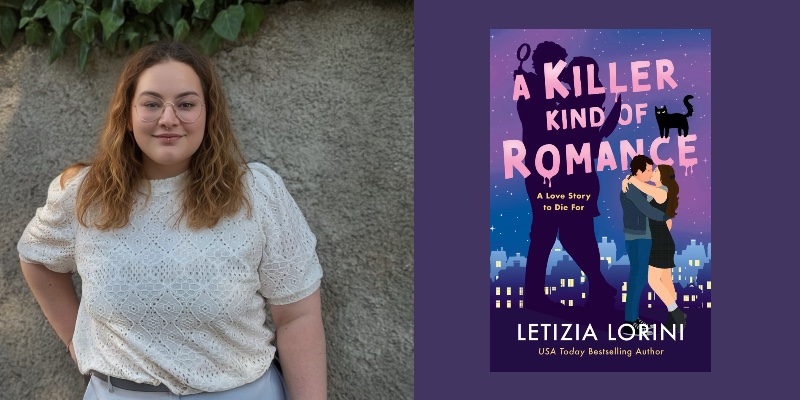
When I began writing A Killer Kind of Romance, a romcom with a murder plot and explosive banter, I was terrified of forcing two genres that, in theory, don’t belong together. But boy, do they.
The premise is simple: what happens when a woman who distrusts romance and adores crime fiction is forced to live out both genres at once? Suddenly, Scarlett’s first and only love moves back into town, and the murders she discusses on her podcast begin happening in real life. Her world unravels as fiction blurs into reality, forcing her to navigate both her heart and her instincts for survival.
While crafting my story, I found myself naturally wielding crime fiction techniques to enhance the chemistry between my characters and romance techniques to make the danger more engaging. The more I mixed them, the more I saw that love and suspense don’t just exist side by side: they actually make each other stronger.
*
The Shared DNA of Love and Suspense: Tension
Whenever a reader picks up a book, they wonder: What happens next? That’s the driving force that pushes us to turn to the next page, and then the next, devouring chapter after chapter. At their core, both romance and crime fiction are built on tension.
Crime fiction fans seek uncertainty, while romance fans crave the happily-ever-after they know is coming, but the tension lies in how and when it’ll arrive. Will our main characters choose each other now? Or will something pull them apart first?
Let’s look at A Killer Kind of Romance specifically. Will Scarlett see the beauty there is in love, or will she continue pushing Rafael away? Will they survive the serial killer who’s using their town as hunting grounds, or will they perish?
Think about a slow-burn romance where two characters finally touch. It’s a brief but intense moment. Will they kiss? Will they step away? Will someone interrupt? This tension feels like sneaking down a dark hallway with a flashlight. The stakes may differ, but the reader’s heart races just the same.
Both genres use delayed gratification to keep readers hooked. In crime fiction, danger escalates and recedes, while in romance, emotional closeness is postponed, interrupted, or becomes more complicated. In both cases, tension is created by withholding what the characters (and the reader) want most.
Pacing also changes when you write a hybrid story. I started using romantic moments as breaks between danger. These moments don’t lower the tension—they make it more complex.
That’s why danger works so well as a romantic obstacle. It sharpens every touch, every choice. And why, when you combine crime fiction and romance, you get double the plot, but most importantly…double the tension.
*
Fast-Forward Intimacy With Fear
One of my favorite discoveries while writing A Killer Kind of Romance was how easily crime fiction mechanics can be applied to the exploration of intimacy. A ticking clock doesn’t just make things more dangerous; it also increases desire. Urgency makes characters speak up and share things they might have kept secret otherwise. You also see who they really are when things go wrong.
Misdirection, a common technique in crime fiction, also works well in romance. You can make readers expect one emotional reveal, then surprise them with another.
You might set up a scene where the reader expects a confession, only for the character to instead admit fear or jealousy. The love confession is delayed, but the emotional intimacy deepens, making the eventual payoff stronger.
In crime fiction, the twist surprises. In romance, it brings the characters closer together.
So, how does fear relate to intimacy? By speeding up connection. A racing heart, quick breaths, and noticing the person next to you are signs of both attraction and adrenaline. That’s why people often have a stronger bond with someone they’ve survived something with.
In fiction, a dangerous situation can possess the same emotional significance as a pivotal romantic moment. The “brush with death” scenario often serves as a catalyst for honesty, vulnerability, and desire, revealing characters’ most authentic selves. Authenticity, in this context, becomes a powerful narrative force.
Two characters trapped in a car while it sinks into water don’t have time for subtlety. They say what matters. When they resurface, gasping and alive, the emotional bond is already forged, even if neither of them is ready to name it yet.
So… if you survive something traumatic together, does it count as a date? Emotionally, it does.
*
Humor as Emotional Misdirection
A romcom is more than just romance: it mixes swoon and laughter. How does this fit into a darker story? Humor is another way to manage tension. Comedy gives readers a break and lowers their guard before a scare, making the surprise feel even bigger.
In a murder romcom, hilarity is essential. It keeps readers interested without overwhelming them. It also shows character: two people who can laugh in the face of danger will stick together when things get tough. Banter while escaping danger feels very different from banter at a quiet dinner. It gives attraction an edge, a blade at its throat.
Because humor and horror are closely linked emotional responses, their combination produces a powerful effect. A well-timed joke can intensify a threat, while a threat can enhance the impact of humor. Thus, comedy becomes a valuable tool in the suspense writer’s repertoire.
Picture our main characters arguing about who forgot to lock the door, only to realize, halfway through the argument, that someone else had picked it. The jokes land, the reader relaxes, and then the threat hits harder.
*
Writing a Love Story with a Body Count
Balancing humor, fear, attraction, and danger is a delicate task. If you focus too much on romance, the danger might not feel real. If you only focus on danger, the romance can feel forced.
For me, intention is always the key. Every joke, close call, and kiss should advance both the relationship and the story. The emotional and physical stakes should match: a betrayal should risk more than just feelings, and a reveal should threaten more than just safety.
Writing a hybrid book should constantly prompt the questions: What do the characters want? What are they afraid of? How could those answers help or hurt them?
*
Why Readers Want It All Right Now
It’s no accident that dark romance and psychological thrillers are popular now. People want intense stories that offer everything at once: fear, desire, relief, chaos, and catharsis. Today, characters like the wild girl and the morally gray love interest are everywhere. Messiness isn’t something to hide anymore; it’s something to explore.
Take Scarlett, the main character in A Killer Kind of Romance. She’s a damaged character who makes mistakes and isn’t afraid to live out her messiness. She keeps her emotions guarded, is an emotionally detached sister, and keeps her love interest at arm’s length. Her mistakes make her human, and her vulnerabilities make her compelling.
As for Rafael? He’s a former bad boy with a dark reputation, suspected of being a serial killer, and trusted by no one in town. However, beneath his guarded exterior, he also serves as a source of emotional support for Scarlett, and he’s a fiercely loyal protector, which keeps both Scarlett and the reader constantly on edge.
Their relationship is messy and intoxicating, proving that love and suspense aren’t opposites, but forces that feed off each other, driving the story forward.
In a world that feels increasingly unpredictable, stories that blend love and danger reveal what life is truly like: joy and fear often coexist. Love and terror don’t happen alone. Their overlap is where the most authentic emotions are found.
*
Romance, Crime, and Everything In Between
When I think about the moments that shaped A Killer Kind of Romance, it’s always those where romance and danger came together in surprising ways. A joke right before a threat. A whispered confession when survival isn’t certain. A kiss that’s sweeter because it could be the last.
That’s the magic of mixing genres: your heart races for both reasons at once.
Romance and crime fiction don’t just work well together. Instead, they make each other stronger. Both rely on the same psychological reactions, the same need for emotional stakes, and the same excitement of not knowing what comes next.
When you mix romance with danger, you don’t only get a love story or a crime story. You get a story that feels alive, making the reader feel like they’re falling in love and running for their life at the same time.
To me, that’s the most thrilling feeling of all.
***