In the public imagination, the story of a serial killer tends to begin and end with the killer himself. Headlines will often center on the brutality of the crimes and the psychology of the perpetrator, while the lives of those caught in the periphery fade silently into the background. Among the most overlooked figures are the wives and families left behind, those forced to confront the unimaginable realization that the person they loved lived a secret life.
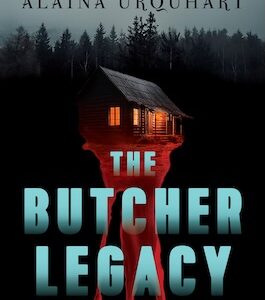
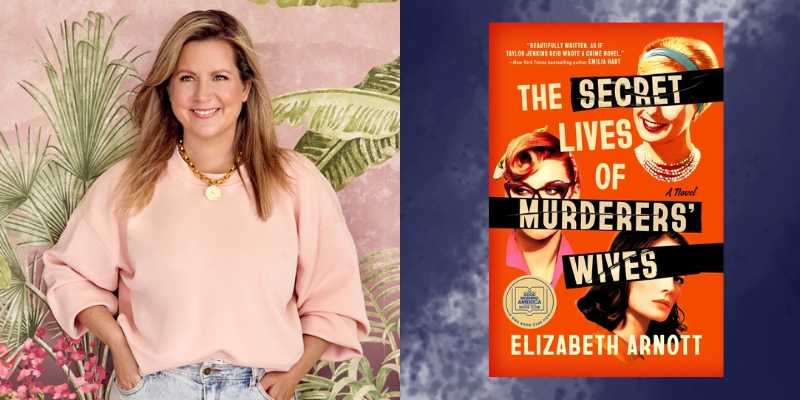
In The Secret Lives of Murderers’ Wives (March 3, 2026), Elizabeth Arnott turns that familiar narrative inside out. Set in 1966, at a moment when American society was shifting rapidly in its expectations of women, the novel follows three wives—Beverly, Margot, and Elsie—connected to notorious killers who find themselves bound together by the determination to uncover who is behind a new series of murders, and, in so doing, reclaim their own stories.
It was a time when the ideas of writers like Betty Friedan were beginning to reverberate beyond the page, and Arnott situates her mystery during a moment in time when the promise of change began colliding with deeply rooted constraints.
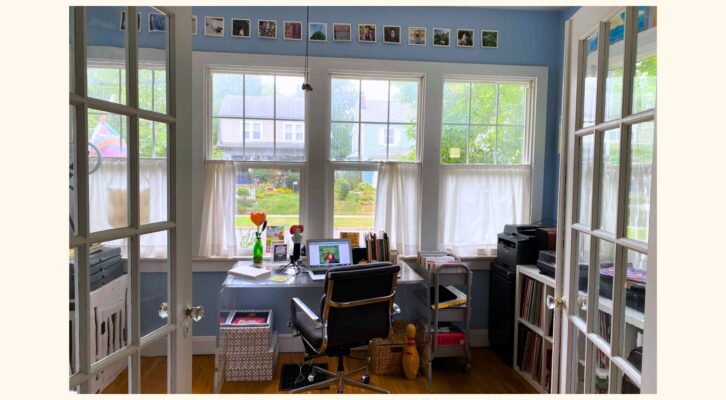
I spoke with Arnott over Zoom from her London home to discuss her research process, the challenge of writing suspense while remaining fair to the reader, and the complicated position of women who find themselves tethered to violent men. She also reflects on the uneasy question at the heart of the novel: how well does anyone truly know the person closest to them?
*
Hassan Tarek: The story centers on women connected to some of California’s most notorious killers. I was struck by the fact that the story focuses on the wives rather than the perpetrators themselves. What first sparked that idea for you?
Elizabeth Arnott: I’ve always been fascinated by true crime, the psychology of murder, and the way that criminals’ minds work. True crime is such a huge thing, and over the years I’ve consumed many different stories and perspectives on it.
More recently, over the past few years, I found myself drawn to stories of those who are adjacent to serial killers—those who aren’t complicit in their actions and don’t necessarily know what they were doing at all, but who are left to wade through the rubble and the trauma of what they did. The families, the wives, the daughters, the sisters.
As I started looking more into these women, it became clear that they were often treated as silent bystanders. They were just footnotes to these men. They weren’t given any focus or a chance to tell their stories.
When I started researching the real-life wives of serial killers, I became fascinated by them. What I noticed was that they are so often left without any sort of power or autonomy over their own lives. Very often they are forced to move state, take the children, change their names, and live under the shadow of what a man did.
I wanted to tell a story that would empower them—let them clutch back some power and have some fun.
HT: The novel takes place in 1966, just a few years after Betty Friedan’s The Feminine Mystique helped ignite second-wave feminism. How consciously were you writing into that moment when attitudes toward women were beginning to shift so dramatically?
EA: It was very intentional to set it at that time. The mid to late 60s was when the serial killer—although they weren’t called serial killers yet—was really becoming a cultural construct. These men were starting to get talked about in the newspapers and getting headlines. It was something seeping into the cultural consciousness.
The FBI’s Behavioral Science Unit hadn’t been established yet, which would later begin profiling these killers. I wanted three women who would beat them at their game and start doing it from their white picket fence gardens in suburbia.
I realized it was also a fascinating time for women. You did have that second wave feminism, and in many ways women would have felt more liberated than women in the 50s. But it was still an incredibly difficult time to be a woman.
In the workplace the gender pay gap was staggering. In many states women couldn’t serve on juries because it was thought they were too fragile and emotional…it would take them away from the heart of the home where they belonged.
If you weren’t married you couldn’t get a credit card. If you were married your husband had to sign off on everything, so you had very little financial autonomy.
And that’s not to mention the cultural environment of the Civil Rights movement, the Vietnam War, and space exploration. There was so much going on that it felt like the perfect backdrop for the novel.
HT: Beverley, Margot, and Elsie come from very different backgrounds, yet they form a close bond. How did you approach building their dynamic?
EA: They came very organically, which is something that’s not really happened to me before as a writer. It was like they just showed up on the other side of my laptop and were like, let’s go—which sounds very woo-woo, but it did feel like that.
As I started writing them more, it became clear that they were different representations of the ways we might react if we discovered that our husbands were serial killers.
You have Beverly, who is a mother with two young children. She shoulders a huge amount of guilt over what her husband has done and feels the shame of it very heavily. She struggles to accept that the father of her children is this monster.
Margo is Mrs. Bravado. She goes to Hollywood parties, drinks margaritas, lies by the pool, and wants everybody to think she isn’t affected by what her husband has done. But underneath all the faux fur and glamour she is very damaged and vulnerable.
Then there’s Elsie, who works in a newsroom and is battling to make a name for herself. She responds with action and forward motion at all times.
I wanted to explore how there are many different ways to deal with trauma. But ultimately, especially with female friendships, it’s often the worst things that have happened to us that draw us tightly together.
HT: The three women all carry the stigma of being connected to violent men, which becomes one of the most unsettling parts of the novel. What interested you about exploring how much responsibility society places on those simply close to perpetrators?
EA: I think it’s a very natural human reaction to look at these women and say, “how could they not have known what was going on?”
That was my initial reaction before I started writing the book. I probably had some preconceptions or prejudice. I thought, sure, they didn’t know—but I would know.
Now I know that’s absolutely not the case. Ninety-nine percent of the time we can’t know what these perpetrators are doing, because so often they are psychopaths or sociopaths who are masters of manipulation and compartmentalization.
If you look at Dennis Rader, who called himself BTK, he described this as “cubing.” Different sides of his personality could face outward in different situations.
He saw himself as a father, a family man, a scout leader, a member of the church—and then in another identity he would go out and kill. He was so good at compartmentalizing that the women around him simply couldn’t know.
Yet there is still a lot of societal prejudice toward people who are in the orbit of serial killers simply because they are close to them.
HT: As a reader, you spend much of the novel wondering who the killer might be—and second-guessing yourself along the way. How do you plant clues while still keeping the reveal satisfying?
EA: Through a process of many, many drafts.
With this book I actually wrote an entire draft with one killer in mind, and then realized I was going to change that. I went back and rewrote the last quarter or two-thirds of the novel with a different killer, but it meant that clues that misdirect the reader were already there.
I hate it when there’s a twist that nobody could ever guess. You need to be fair to your reader. There should be clues scattered throughout so that you could feasibly guess who it is, even if you still enjoy being misdirected.
I do plan my novels out. I know some writers who don’t even know who the murderer is while they’re writing, but I generally have an idea— though it can change.
My plans are very movable. They shape-shift and change constantly as I’m writing. But I do need to have a plan in mind to start.
HT: The novel also asks readers how well we can truly know the people closest to us. Was that uncertainty something you wanted to explore from the beginning?
EA: I think so, and I think that’s a really astute way of summing the novel up. Occasionally in my own marriage I’ve turned around, apropos of nothing, and said “stranger in my house.” How much can we really know anyone?
For these women, it’s the person they fell in love with, the person they’ve shared everything with, and the person they were supposed to feel safest with. Approaching that did make me interrogate my own relationships. Novels that make us think often ask uncomfortable questions, and that’s an uncomfortable one.
We don’t know what’s going on inside anyone else’s mind. I have an identical twin sister, and even then I still cannot know everything going on in her head.
Being reminded of that throughout the novel builds tension and unease. It’s a big question we can apply to our own lives, and it’s quite scary to consider.
HT: Looking back now that the novel is finished, is there anything about the story that surprised you as it developed on the page?
EA: That’s a great question. There are certainly scenes I look back on now and think, okay, that is as close to what I hoped and intended as it could be.
As novelists there’s something we’re always striving for. We have an idea of what we want the book to look like in our heads, and we’re trying to realize that on the page.
I remember hearing an author describe it as having a cathedral in their head and putting it down on paper only for it to look like a garden shed.
There is a particular scene in the novel where Beverly visits her husband in prison to try to extract information from him. She thinks she’s finally got the upper hand. He’s behind bars, she’s demanding answers.
But she realizes she is still being manipulated by him. She is still powerless to him and what he has done.
That surprised me the most. These women may feel like they’re moving on, but in many ways they will never be able to move on. And that’s very true of the hidden and forgotten victims of violent crime.
***