The exquisite, fragile beauty of flowers has certainly inspired budding (yes, pun intended) authors to pen lush prose, sentimental epithets and stunning poetry. Yet despite their evocative imagery and the scent memories they conjure up, flowers have managed to be the basis for any number of mystery, crime and thriller stories and novels over the years. Whether a series of mysteries that take place surrounding a florist shop or inspired by historic events, it’s well worth delving into the beautiful, yet dark, atmosphere of floral literary mysteries.
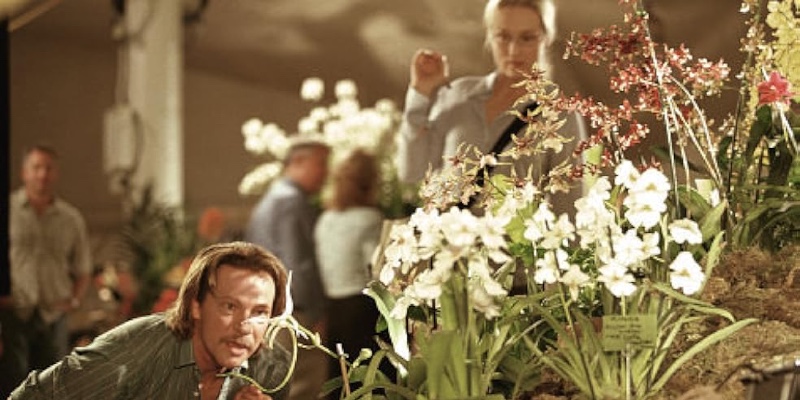
One of my personal favorites in this realm is The Orchid Thief by Susan Orlean. (Film buffs may be familiar with the premise because of the clever Spike Jonze and Charlie Kaufman thriller Adaptation.) This nonfiction gem follows the trail of John LaRoche, an obsessed horticulturist whose goal is to obtain the ultra-rare ghost orchid bulb and clone it in a greenhouse. However, the means by which he goes about his quest is, shall we say, not within the law. Despite it being a work of well-crafted journalism, the book often reads like a thriller. It’s an excellent insight into the psyche of floral obsession: the quest to find something rare with an incredibly brief lifespan, and yields only a short moment of glory during its bloom.
In Confessions of an Ugly Stepsister by Gregory Maguire, the author of Wicked brings readers back to 17th century Holland during peak tulip mania. Tulip mania was an intriguing phenomenon, generally regarded as the first historical economic bubble, in which the value of rare tulip bulbs went up to staggering highs. At one point, a single bulb of a particularly rare variety, cost more than the price of a house in a desirable Amsterdam neighborhood. Amidst this backdrop, Maguire gives readers a retelling of the Cinderella story, this time focused on one of the “ugly stepsisters,” and the father of the Cinderella character experiences financial difficulties due to tulip mania. This is a brilliant choice for those who like a side of fantastical historical fiction with their mystery reads.
Continuing with the tulip mania motif, The Golden Tulip by Rosalind Laker also grapples with the motive of greed and moneymaking set in 17th century Holland coupled with a topic often associated with floral beauty: painting. Francesca, the talented daughter of an alcoholic painter, is apprenticed to Vermeer. While her true love is a tulip merchant, her debt-ridden father offers Francesca’s hand in marriage to a shady merchant whose debts he cannot settle financially. Betrayals and plot twists keep the mystery element afloat – and never fear, tulips make an appearance as well.
Flower shops and businesses can also be the center of inspiration for some thrilling reads. It’s easy to imagine a flower shop as a place full of stunning smells and plumage, but beneath the outer beauty, there are often darker themes at play. One such example is the cozy mystery Killer Flowers by PJ Peterson, which revolves around small-town Washington florist Christie O’Mara and an unsolved murder mystery. Wrongly accused of a flower-adjacent crime (a customer found dead shortly after a bouquet delivery) whilst in the midst of trying to figure out the meaning of a hidden note, Christie is faced with simultaneously proving her innocence and putting to rights a local murder that occurred in the past. To chalk up the cozy elements, there’s a cat and an elderly great-aunt involved.
Last but certainly not least, who doesn’t love a good floral celebration with a side of murder? Queen of the Flowers by Kerry Greenwood is an engaging mystery novel that delivers a glorious 1920s Australian setting with beloved crime solver Phryne Fisher (herself the subject of numerous mysteries, a TV series and film). Chosen to be, as the title suggests, the Queen of the Flowers in St. Kilda’s Flower Parade, Phryne Fisher finds herself caught up in crime. Two of the young women who are to be flower attendants go missing, so instead of focusing on flower arrangements and cocktails, Phryne sets her sights on figuring out their whereabouts and what has happened to them. With dashes of romance- as well as elephants, a brothel and politically charged cab drivers- readers will be drawn into the Jazz Age world of Australia, where both the scenery and the flowers are breathtaking supportive elements to the tale.
The next time you buy a bouquet or stroll in a field of wildflowers, after reading these books, you may never think of flowers in quite the same way!