
I love actors who are chameleons, those master thespians who disappear into every role so that they become different people each time you see them on screen.
I love that Daniel Day Lewis is as convincing in the movie Gangs of New York as the menacing gang leader Bill “The Butcher” Cutting as he is the genteel Newland Archer in the film adaptation of The Age of Innocence. I’m in awe of how Viola Davis portrayed with just as much intensity the long suffering, humble wife Rose Maxson in Fences as she did the calculating and manipulative law professor Analise Keating in How to Get Away With Murder. And who could forget the notorious chameleon extraordinaire Meryl Streep who played both iconic and polar opposite characters Miranda Priestly in The Devil Wears Prada and Julia Child in Julie & Julia?
Watching them on screen always makes me wonder, how do they do it? How do they flip a switch and successfully play all these different people so compellingly? But according to Streep, “Acting is not about being someone different. It’s finding the similarity in what is apparently different, then finding myself in there.”
Trying a Little Bit of Everything
I’m no actress but “finding similarity in what is apparently different” makes a lot of sense for an author like me who has jumped between genres throughout her career. I’ve written more than thirty books, and I enjoy switching things up, going from romance to thrillers to women’s fiction and back again—all while finding the throughline that connects these novels.
The first short story I ever had published was in a romance anthology after I entered a national first-time writers’ contest when I was 19 years old. I’d grown up on the genre, swiping my mother’s romance paperbacks as a preteen. I learned the romance plot structure through reading and practice.
After writing romance for a few years, one of my editors, who saw my talent for soapy storytelling, suggested I shift to writing women’s fiction when the market started to change. I agreed and wrote three book series where I explored the lives, loves, and tribulations of characters set against the backdrop of a family business, performance arts academy, and juvenile detention center.
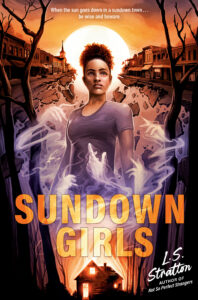
Then a few years after that I decided to try mysteries and thrillers after I picked up psychological thrillers like The Girl Before by JP Delaney and Big Little Lies by Liane Moriarty that had me on the edge of my seat. My first few attempts at writing mysteries were a bit clunky, but I learned more about foreshadowing, incorporating red herrings, and establishing motives. Eventually I sold and published my first thriller, Not So Perfect Strangers, my modern spin on Strangers on a Train. And now, for my next book, I’m trying yet another genre. My latest novel, Sundown Girls, is about a sixteen-year-old girl whose family unwittingly takes a vacation in a haunted, former sundown town where other girls have gone missing. It will be my first horror and young adult novel.
My shifts between genres have less to do with lack of focus or boredom than following the muse wherever it takes me. I don’t believe in cramming a story into a mold just to make it fit. Some narratives don’t work as a romance. Some manuscripts are much stronger as a locked room mystery than they ever would be as literary women’s fiction. The trick is to let the plot and characters breathe. Let the themes emerge and become what they were meant to be.
For example, when I originally conceived Sundown Girls, I meant for it to be an adult mystery/thriller novel—much like the two books, Not So Perfect Strangers and Do What Godmother Says, that I had written previously. There was no supernatural element. It was supposed to be told from the perspective of a thirty-year old-woman vacationing in the wilds of Virginia after a traumatic event. The main character has flashbacks to an even more horrific trauma in her teen years and uses those memories to help her solve the mystery of what’s happening in the present. But I realized the meat of the story was in the flashbacks. The rule of writing is that if most of the plot is happening in the past, that is where the story should live. So I knew I would have to write a YA novel told from a teen girl’s perspective in real time.
I wasn’t ecstatic about the idea; I didn’t know if I had the voice for the young adult genre. Could I convincingly “play the role” of a sixteen year old girl? I was unsure but willing to try. I ditched the old draft, started a new one, and emailed the new chapters to my agent for feedback. She wrote to me a week later, “I love it!!!! Keep GOING!” Four months after that, I finished the revised draft and marveled at where a little bit of faith and creative inspiration had taken me.
What Lies at the Core
After traversing so many genres, I realize that what stays consistent in all the books I write is my author’s voice. Much like acting, writing across genres is not simply about writing something different, but finding the similarity in what is apparently different, then finding yourself in there. In all my works, I bring my perspective as a forty-something, East Coast-based, middle-class Black woman. I bring the experiences of a journalist, wife, and mother. I imbue the text with my sense of humor, introspection, and vivid imagery. The “rules” or plot structure of each genre may be different but the throughline is me.
That is why I’m fearless and willing to try writing just about anything. Who knows, maybe I’ll even try fantasy or science fiction one day if the fancy takes me. But no matter how far I tread into new territory . . . no matter how many different genres I try, the compass I always use as an author will point me back to what lies at my core and what makes me unique as a storyteller: my voice.
***