America’s Progressive Era spans the years 1890 to 1920, a period defined by a widespread feeling among a growing middle class that the country was moving in the right direction. Driven by urbanization and industrialization, wages were up, and conveniences were being introduced fast and furiously. With the Civil War having officially ended twenty-five years earlier and emerging from the materialistic excesses of the Gilded Age, many Americans were decidedly optimistic.
And yet, much of the country’s population wasn’t feeling it. Social and economic justice issues—suffrage, child labor, poverty and low wages, dangerous working conditions, pollution, tenement housing, and political corruption—continued to vex society and captivate the nation’s attention with sensationalized headlines in newspapers from coast to coast.
Among those leading the charge were the Progressive Era’s muckrakers; if the old-timey term is unfamiliar, just think “investigative journalist,” and you’ll be spot on.
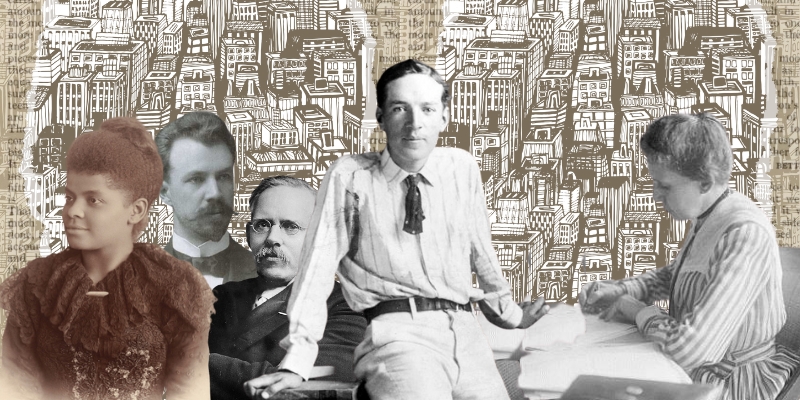
It is hard to overstate the vital role muckrakers played in shining a light on social ills at the end of the nineteenth century and the beginning of the next. Were it not for them, many of the Progressive Era’s achievements would not have been realized as soon as they were, if ever. In a tip o’ the top hat to the OGs of investigative journalism, let’s give a shoutout to a few of yesteryear’s leading muckrakers.
*
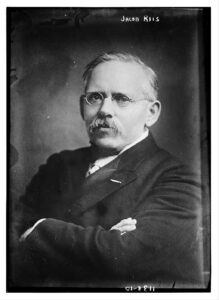 Jacob Riis, 1849–1914
Jacob Riis
Hallmark Issue: Poverty
Muckraking highlight: Riis’ photojournalistic, eighteen-page article in Scribner’s Magazine (1890), “How the Other Half Lives,” included line drawings and photographs examining the deplorable living conditions of New York City’s most impoverished residents.
Impact: Riis’s work inspired reforms such as the New York Tenement House Act of 1901, which required tenement housing to be cleaner, safer, and more spacious. His reporting impressed Theodore Roosevelt, who, in McClure’s Magazine, proclaimed Jacob Riis to be “the most useful citizen of New York.”
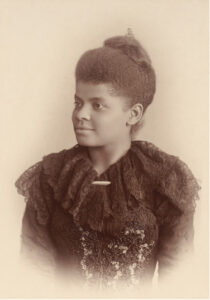 Ida B. Wells, 1862–1931
Ida B. Wells
Hallmark Issue: Human rights
Muckraking highlight: After spending months investigating the systematic torture and murder of Black Americans in the South, journalist Ida B. Wells wrote about it in Free Speech, the Memphis newspaper she co-owned and edited. Her reporting revealed that Black men were lynched not for alleged assaults on white women, but for registering to vote or for failing to show deference to white Southerners.
After a white mob set fire to her newspaper office, Wells moved north to New York, where she joined other intellectuals and activists. It was there, in 1892, that she gave an impassioned speech to a room of Black women in New York City’s Lyric Hall. That speech led to the publication of Southern Horrors: Lynch Law in all its Phases.
Impact: Wells’s writings and activism were a catalyst in the crusade against lynching. Although an anti-lynching bill was never passed by both houses of Congress, Wells’s efforts were crucial in raising awareness of the heinous crime.
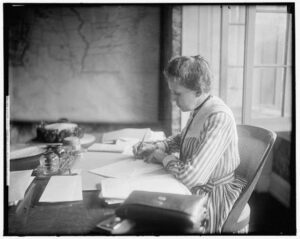 Ida M. Tarbell, 1857–1964
Ida M. Tarbell
Hallmark Issue: Corporate Misconduct
Muckraking highlight: Journalist Ida Tarbell published a series of articles, titled “The History of the Standard Oil Company,” in McClure’s Magazine (1901) that depicted tycoon John D. Rockefeller as a greedy, miserly monopolist.
Impact: Tarbell’s landmark expose contributed to the 1911 Supreme Court decision that broke up the Standard Oil Trust into thirty-four separate companies.
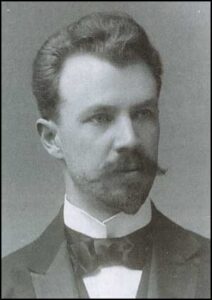 Lincoln Steffens, 1866–1936
Lincoln Steffens
Hallmark Issue: Government Corruption
Muckraking highlight: Originally a series of articles in McClure’s Magazine, the journalist Lincoln Steffens’s book The Shame of the Cities (1904) documented political corruption in large cities such as Chicago, St. Louis, and Philadelphia. His reporting laid bare how political machines, complicit business leaders, and an apathetic citizenry enabled widespread graft, bribery, and unethical practices.
Impact: With the intention of shocking the public into action, Steffens’s work helped motivate the Progressive Era’s reform movements aimed at combating the corruption of public officials.
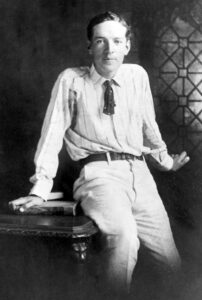 Upton Sinclair, 1887–1968
Upton Sinclair
Hallmark Issue: Labor Rights
Muckraking highlight: In 1906, Upton Sinclair investigated and exposed the horrid conditions in Chicago’s stockyards and meatpacking plants, as well as the severe hardships of immigrant life, in his landmark book, The Jungle.
Impact: Sinclair’s chilling tale helped lead to the passage of the Meat Inspection Act and Pure Food and Drug Act in 1906.
*
In my second novel in the Harriet Morrow Investigates series, The Case of the Murdered Muckraker, Harriet matches wits with two fictional Chicago aldermen, “Saloon Micky” Mike Powers and “Irish Dan” Daniel Walsh, inspired by two actual First Ward politicians, “Bathhouse” John Coughlin and “Hinky Dink” Mike Kenna. Both Coughlin and Kenna were known as the Gray Wolves, so-called because of their practice of preying on a defenseless public.
Involved with running numerous saloons, brothels, and gambling dens, they were most notorious for hosting the annual First Ward ball, which attracted upwards of 20,000 participants. The Chicago Tribune wrote of the festivities, “If a great disaster had befallen the Coliseum last night, there would not have been a second-story worker, a dip or pub ugly, porch climber, dope fiend, or scarlet woman remaining in Chicago.”
Around the time of my story, British reformer William Stead’s book, If Christ Came to Chicago (1894), exposed the city’s political corruption and social injustice. Recognizing the need for further action, reformers in 1896 organized the Municipal Voters League with the specific purpose of ousting the Gray Wolves from power.
Headed by the energetic George Cole (who plays a role in The Case of the Murdered Muckraker), the organization endorsed candidates who pledged to support the merit system of civil service and promised to grant public utility franchises only to companies willing to adequately compensate the city. In the municipal elections of the late 1890s and early 1900s, the Municipal Voters League proved so successful in electing its approved candidates to the city council that muckraker Lincoln Steffen (profiled above) proclaimed that Chicago had a lesson to teach cities throughout the nation.
The muckrakers of the Progressive Era strove to call public attention to many of the same ills that continue to plague America one hundred and twenty-five years later: corporate opposition to the formation and bargaining power of unions, poor (often dangerous) working conditions for low-paid workers, child labor, a criminal justice system that punishes people of color and the poor more harshly than others, abusive treatment of immigrants, and threat to one’s right to vote.
And yet, despite society not fully fixing itself, most Americans haven’t given up trying. Whether ProPublica’s work on exposing racial injustice, The Marshall Project’s focus on criminal justice, the Pulitzer Center’s support of reporting on pollution, CBS’ Sixty Minutes continued coverage of bad political and corporate actors, or the Fund for Investigative Journalism’s support of reporting on unsafe working conditions, today’s investigative journalists continue the muckraking tradition of shining a light on where we are falling short or failing and urging us all to do better.
***