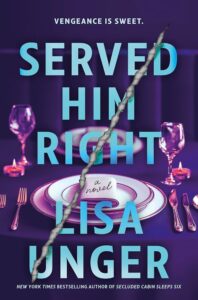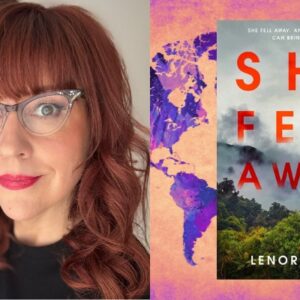
Maybe it’s my subconscious reaction to current events, or something to do with (ahem) midlife, but lately my female characters seem to be more in touch with their dark sides. From con artist Pearl in CONFESSIONS ON THE 7:45, to assassin Paige in THE KILL CLAUSE, to “herbalist” Ana Blacksmith in SERVED HIM RIGHT, the women populating my stories are made bold by their unhealed trauma. They’re not just rule breakers; they’re making their own rules. And they’re a little bit dangerous. Okay, very dangerous.
Historically in fiction, a woman with power has been portrayed as evil and unredeemable. The Wicked Queen is vain, vengeful, and wracked with jealous rage over poor innocent Snow White. Maleficent unleashes her rage at rejection on poor Aurora, cursing her to prick her finger and sleep for a hundred years. The Three Witches (or Weird Sisters) in Hamlet cast spells and invite ruin. I could go on.
Later things get more layered. George R.R. Martin’s Cersei Lannister is murderous, incestuous, and ruthless. But she’s a ferociously devoted mother. She’s just looking out for her family, complicated though it may be. Annie Wilkes from Stephen King’s Misery presents like the consummate good girl, but it’s a façade masking a lava pit of violent rage on permanent simmer. But who can blame her for abducting and torturing her favorite author? She’s a devoted reader, passionate about a character who has been blithely killed off.
This rich literary tradition of the bad girl — ranging from portrayals that are blatantly misogynistic to more layered modern interpretations of female anger, power, and psychopathy – inspired me to poll some of my favorite writers for dangerous female characters they’ve loved. Naturally, these creative powerhouses, each of them mega-bestselling and award-winning authors, came back with an eclectic list. Here’s what they told me:
Megan Abbott didn’t hesitate to choose Lilly Dillon from Jim Thompson’s 1963 novel The Grifters. “Lilly Dillon, so memorably played in the movie adaptation by Anjelica Huston, was one of the few women who managed to stake a place for herself in the mob. She was a big influence on my novel Queenpin and one of the toughest and most resilient women in all of noir.”
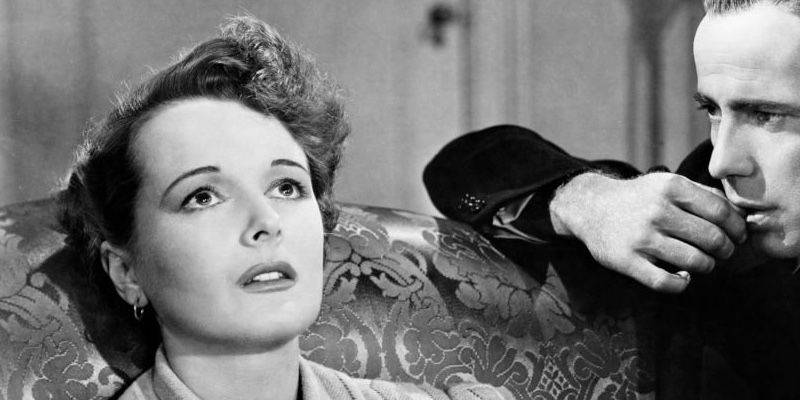
Ace Atkins chooses the 1930 noir classic The Maltese Falcon by Dashiell Hammett. “I don’t think it gets any better than Brigid O’Shaughnessy. From the moment she walks into Spade & Archer, Sam has her pegged. But she changes her story and her personality enough times to give a PI whiplash. Yet, like the best of ’em, you want to believe in her. Even if she has a gun on you. Spade, perhaps the wiliest of all heroes, thinks there might even be a chance of them being together. After the black bird caper and if Brigid ever gets out of prison. Now that’s a charming woman. I get it. I wouldn’t have stood a chance.”
May Cobb is known for the wild and unpredictable women in her novels. “There’s something so sinister and yet so delicious about wicked female characters and villains,” May told me. “One of my all-time favorites is Patty McCormack’s cunningly murderous portrayal of Rhoda in the 1954 film, The Bad Seed.”
Sethe, the protagonist of Toni Morrison’s Beloved, was a tremendous inspiration for my novel, THEY ALL FALL DOWN,” says Rachel Howzell Hall, “Here is a woman who loved her children so fiercely that she committed the ultimate act of violence just to shield them from the horrors of slavery that she’d endured. I first read Beloved in college. Back then, when I was “smart” enough to get the grade, but I was far too inexperienced to actually understand Sethe. Everything about this story clicked once I had my daughter. Now, not a day goes by where I don’t think, “I would do anything to protect her.” In THEY ALL FALL DOWN, my heroine, Miriam, shares that exact mindset. But as she navigates her journey, she discovers that “doing anything” always comes with a cost.”
Legendary Laura Lippman is quite the badass herself. She’s even taken a deep dive into her own inner bad girl with her 2020 collection of essays My Life as a Villainess. For her choice, she goes back to Louisa May Alcott’s Little Women originally published in two volumes in 1868 and 1869. “I’m going to think outside the box and pick Amy March: burned her sister’s book, got to take the big European tour in same sister’s place, used that opportunity to steal Laurie. Yeah, I know Little Women frames Professor Bhaer as Jo’s choice, but c’mon. Amy March is the original badass. It’s probably how Amy Dunne got her name. I’m not a particularly big Alcott fan, but I LOVE Amy March.”
Kate White looks to the playwright Arthur Miller and his classic work, The Crucible. “Abigail Williams accuses many, including John Proctor’s wife, of witchcraft, leading to their execution, and I always viewed her as pure evil. But after seeing and then reading Kimberly Belflower’s incredible play, ‘John Proctor Is the Villain’ last year, I was reminded that the forty-something Proctor had an affair with the seventeen-year-old Abigail. I realized at last that she was entitled to her rage. Yay, Abigail! Though sending innocent people to the stake to burn might be taking it a bit too far.”
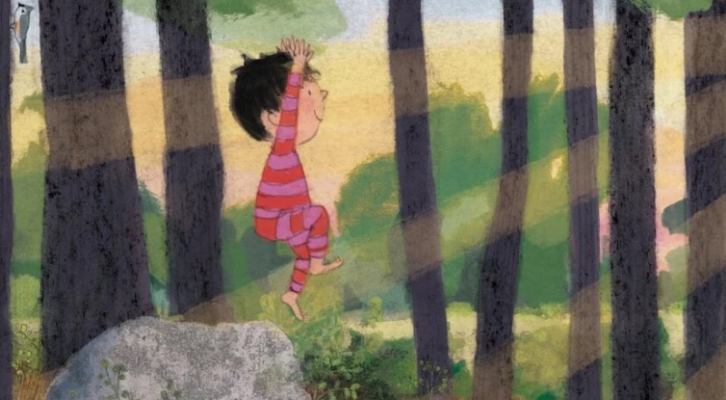
Heather Gudenkauf turns to a childhood classic where she finds her favorite badly-behaved character. “Bad girl (and by bad, I mean endearingly cranky, meddlesome, and brutally honest) Harriet M. Welsh from Louise Fitzhugh’s (1968) classic Harriet the Spy enthralled me as a child and continues to do so today. As a kid, I walked around with a notebook and a pen, covertly watching others while documenting every movement and conversation of those around. Not much has changed these days. I still carry a notebook, still jot down my observations.”
Alafair Burke also revisits a childhood favorite, the Amelia Bedelia books by Peggy Parish: “Amelia Bedelia, the overly literal maid who ‘draws the curtains’ and ‘dresses the turkey.’ Earnest, industrious, and so well-intentioned, she is one of the most hilarious menaces I have ever encountered on the page.”
Of course, no list like this would be complete without a mention of Amy Dunne from Gillian Flynn’s blockbuster GONE GIRL. Ruth Ware had this to say about Flynn’s dark and unpredictable heroine. “Sometimes it’s hard to know when the antagonist becomes the protagonist – and never more so than in Gillian Flynn’s superb, genre-defining Gone Girl. It’s hard to say much more than that without spoiling some of the twists (and I’m reluctant to do that, even more than a decade after publication) but Amy Dunne’s influence resonates throughout psychological thrillers – including my own.”
I’ll end with one of my modern favorites. In My Sister the Serial Killer, Oyinkan Braithwaite introduces us to not one but two remarkable, deadly women. At first glance, we might think that it’s the beautiful and murderous Ayoola who is the bad girl in this compellingly dark tale of sisterhood. But if we look more closely, we see that it’s really Korede, the devotedly religious nurse, who has the backbone, and the willingness to do literally anything for Ayoola.