There is always, when writing a substantial piece of fiction, a moment or possibly more than a moment, let’s call it a phase, of desperation when all hope seems lost. It is part of the writing process, although knowing that it’s part of the process rarely makes it less surprising or easier to handle when it arrives. In his final book Inside Story, which contains among sections of touching memoir and strange make-believe some excellent and very practical writing advice, Martin Amis describes the experience thus:
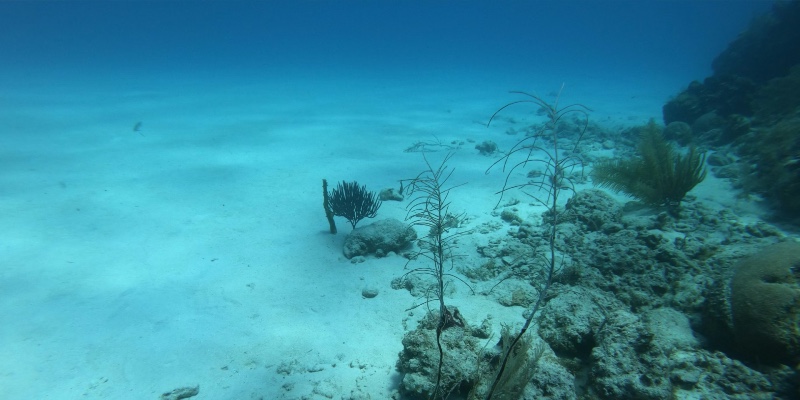
With every work of fiction, with every voyage of discovery, you’re at some point utterly becalmed (like Conrad on the Otago) and you drop overboard and sink through the fathoms until you reach the following dual certainty: that not only the book you’re writing is no good at all, but also that every line you’ve ever written is no good either, no good at all. Then, when you’re deep down there, among the rocks and the shipwrecks and the blind and brainless bottom feeders, you touch sand and can start to gird yourself to kick back up again.
Martin, whom I was lucky enough and to know and work with at the University of Manchester, never struck me as the depressive type. Even though he was obsessed with the most horrifying elements of modern European history (Stalinism and the Holocaust), he was consistently cheerful, always excellent company and never morbid, so this passage when I first read it left me both surprised and unsurprised. Surprised (at least slightly) that even Martin with his enormous success and inherent good humour would every now and then reach such a low ebb, but unsurprised that he describes that experience in ultimately positive terms. Having sunk down into this lifeless underworld where all your efforts seem null and absurd you then almost effortlessly, according to the metaphor, touch bottom and begin to bounce back up again. You do have to “gird yourself” so perhaps it’s not entirely easy but it’s also not very much of a struggle (you’re certainly not metaphorically flailing around or gasping for breath) and in fact when the passage is read in its larger context Martin makes it clear that this phase is exhilarating. When he imagines a period in which he has stopped writing completely it is one of the things, he tells us, that he will miss the most.
In a Paris Review interview from 1994, Alice Munro discusses a similar pattern but in more detailed and more anguished terms. She explains that with most of her stories she reaches a point fairly early on when she realises something is badly wrong and begins to feel the story isn’t viable and should probably be abandoned. What follows, she explains, are several days of “grouching around” and “bad depression” in which she frequently feels edgy or “enraged” before she figures out a way to carry on.
The whole process may take up to a week, the time of trying to think it through, trying to retrieve it, then giving it up and thinking about something else, and then getting it back, usually quite unexpectedly, when I’m in the grocery store or out for a drive. I’ll think, Oh well, I have to do it from the point of view of so and so, and I have to cut this character out, and of course these people are not married or whatever. The big change, which is usually the radical change. . . I don’t know if it makes the story better. What it does is make it possible for me to continue to write.
Article continues after advertisement
What Munro describes here is a pained and slightly panicky process of rethinking. Writerly despair in her account, as it becomes absorbed and lived through, changes from being a signal that everything is wrong and the whole endeavour is utterly hopeless to becoming a signal that something big but specific is wrong and needs to be fixed. It’s a blunt instrument which forces you, in other words, on pain of complete failure, to imagine another way to proceed, and as Munro points out whether this makes the story or novel better matters rather less than the fact it makes it possible for the writer to get to the end and actually finish.
My own writing experiences accord pretty closely with what Amis and Munro describe – periodical frustration followed by despair, grumpiness, a tearing of hair and then, when all seems nearly lost, the glimpsing of a new possibility. One difference though is that they both suggest that this difficult phase only happens once with each new piece of work whereas in my experience if you’re unlucky, or if the work is particularly tricky for some reason, it can happen several times. You can bounce back up to the surface swim around happily for a little while and then sink down again. The process of writing my latest novel White River Crossing involved several such phases—I’ve forgotten exactly how many but probably three or four at least—in which I wondered seriously if there was a way forward or not. On each occasion I managed to figure out a new path and that path usually involved gritting my teeth throwing away a great deal of what I had already done and beginning again, not from scratch exactly but from the first place where the ground felt solid enough to build on.
It would of course be much more pleasant (both for the writer and for the people who have to live with them) to be able to identify the weaknesses of one’s approach and recognise how to correct them without all the melodrama, but it rarely seems to work like that. Once you start thinking about a novel or story taking a certain form it’s very difficult to step back and recognise that the form should actually be radically different unless you are forced to do so, and that force, that element of take-it-or-leave-it compulsion, is what the phase of desperation delivers and why it seems necessary sometimes.
The fact is that the process of writing fiction is too intuitive and too much wedded to the workings of the unconscious to be fully amenable to sensible and rational adjustment. When you hit that serious kind of blockage the work is refusing to co-operate with your plans, refusing to conform to the pattern you want it to adopt, but the answer to that problem, the new and better pattern which can replace the old one, emerges from a place beyond our rational control and can only be accessed, it seems, via a certain amount of emotional turmoil. At the time it can be a sickening feeling and it’s not something you ever look forward to, but afterwards, looking back, it usually seems like a price worth paying. As Martin Amis’s watery metaphor makes clear, there’s both a relief and a thrill involved in that voyage back up to the world’s bright surface after you discover, like flashing treasure in the shadows, the new method which allows you to survive and start again.