Ireland is the cadaver on the dissection table in these murder mysteries by five women writers. Their books are forensic examinations of the country’s social dysfunction; the pasts they probe are wounds that never properly heal. Witnesses and suspects gaze through soft rains with hard eyes, answering questions asked by officers burdened by their own troubled histories.

Dervla McTiernan, The Ruin
Dervla McTiernan’s series detective is male, but in The Ruin (2018), Maude Blake, a suicide victim’s determined sister, plays amateur investigator, finding evidence that her brother Jack’s death was murder. Detective Cormac Reilly remembers the siblings from a case twenty years earlier, two neglected children found alone in a decaying manor house, their mother dead of an overdose in an upstairs bedroom. Reilly had been a raw Garda recruit when he rescued the children, but he never forgot them. Maude, especially, stayed with him, a teenager who tried to hold her family together and to protect her much younger brother from parental abandonment and institutional neglect.
Reilly probes a hidden past that unravels in present-day consequences, bucking internal police politics that distort the investigations and threaten to derail justice. The secrets behind the deaths—and McTiernan’s Ireland is an island of dark secrets—lie buried under decades of family dysfunction, failures of institutional care, police corruption, and the loosening but lingering grip of Ireland’s Catholic Church.
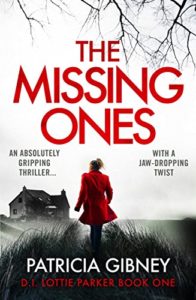
Absence informs Patricia Gibney’s The Missing Ones (2017). Detective Lottie Parker, three years a widow, still aches for her dead husband and anguishes over the hours spent on the job and away from her children. Decades earlier, she lost a brother, a child who vanished. Her mother’s stubborn silence about the boy is one source of their estrangement.
The discovery of two bodies—a woman strangled in the cathedral and a man hanging from a tree—are linked by similar tattoos and histories that lead back to St. Angela’s. It’s a shuttered former children’s home, slated for real estate development. Lottie contends with a tight-lipped bishop, a banker, and a real estate developer, unearthing shady deals and forgotten scandals. Lottie must crack open the unholy alliance between the new “Celtic Tiger” Ireland and the old Catholic one if she’s to save her youngest child, who’s gone missing, too.
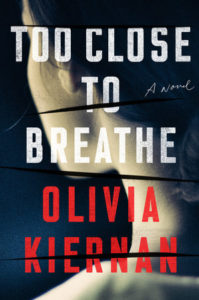
In Olivia Kiernan’s Too Close to Breathe (2018), Detective Chief Inspector Frankie Sheehan returns to work after her leave of absence to investigate the apparent suicide of a young female scientist. A killer staged Dr. Emma Sweeney’s death by hanging. But a frustrated Frankie wrestles with unhelpful neighbors and professional colleagues, a missing husband who turns up dead, and hints that the outwardly perfect scientist had a history of mental health issues. Frankie must untangle a web of academic rivalries and hidden motives to find the truth behind Emma’s death.
Kiernan’s Frankie Sheehan is a complex, compelling, character. A childhood trauma—the murder of her young sister—drives her professionally but paralyzes her personally. She sees an echo of herself in Emma’s perfectionism, her struggle to succeed in a male world, her relentless focus on her career, and her emotional isolation. The Irish mental health system failed them both, providing insufficient, fragmented support. All this drives Frankie almost to the breaking point in her quest to find Emma’s killer.
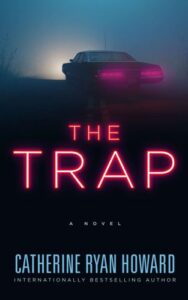
Catherine Ryan Howard, The Trap
Catherine Ryan Howard opens The Trap (2023) with a tense, visceral scene. The reader’s dread grows with that of a girl who accepts a nighttime ride on a lonely road from a man offering respite from the rain. Three women from County Wicklow have already gone missing. Lucy O’Sullivan’s sister Nikki is one of them. Convinced the police are doing little to find her, Lucy roams lonely streets at night, posing as bait to trap the killer. News breaks that the killer’s latest victim escaped, and the earlier girls may still be alive. But the police remain closed-mouthed, so Lucy agrees to an interview with the controversial true-crime reporter, Jack Keane. From that point, it’s a wild ride, with shocks and reversals aplenty.
Howard shifts from Lucy’s point of view to that of two Irish policewomen: Denise Pope, a seasoned detective, and Angela FitzGerald, a recruit awaiting full police certification. Through them, we see which cases get priority and why, how the pressure of publicity and the optics of a case shape decisions, and how institutional reputation, procedure, and justice collide. But the most chilling point of view is that of the killer, a cool, organized, seemingly rational, and ordinary man. He sits with his wife in front of the TV, thinking about his crimes, living a banal existence—except for the hideous secret life he’s hidden for years.
Tara French’s first Dublin Murder Squad mystery, In the Woods, introduced Detective Cassie Maddow. The severe knife wounds she sustained healed, but self-doubt and nightmares linger. She had worked under an alias: Alexandra Madison. In The Likeness (2008), Frank Mackey, Cassie’s boss and former lover, assigns her to the murder of a college student who could be her twin. The next shock is the victim’s name: Alexandra Madison, the identity Cassie had invented. Mackey releases the false story that Lexie Madison is still alive and persuades—manipulates— a doubtful Cassie into assuming the dead girl’s identity. Cassie feels pressured to prove herself, a woman in a man’s world. She moves into the secluded house Lexie had shared with three men and one woman, the dead girl’s closest friends. Slowly, Cassie uncovers the buried past that led to Lexie’s death.
In The Likeness, French constructs an intricate plot and builds the suspense slowly. The atmosphere is hypnotic, dreamlike, and disorienting. The unsettling dynamic among the roommates, the strange, closed society they created in the odd, isolated house . . . all this attracts rather than repels the lonely detective, and the lines between Cassie and Lexie blur. The Likeness is a superb, slow-burning psychological thriller. Not a book to speed through but to savor.
***