Just sit right back
And you’ll hear a tale
A tale of a fateful trip…
Okay, so I won’t sing the entire theme song for Gilligan’s Island, but I could, even though I haven’t seen the show in decades. But who would have known the show would help inspire my 12th novel, Dig, forty-something years later? It was one of many islands from which I drew inspiration, but with it being the first, it planted the seeds of isolation and desperation and fear that I would forever equate to any island, whether the island deserved it or not. No one is shipwrecked in my novel Dig, which takes place on a fictional bridgeless, barrier island off the coast of Savannah, called Crow Island, but isolation and fear take center stage. Isolation can foster a sense of dread, a feeling of being trapped, and often, whether in the real world or the made-up world of fiction, dangerous and dark histories can develop. From Peter Pan’s Neverland, and King Kong’s Skull Island, to The Island of Doctor Moreau by H.G. Wells and the Arthurian legend of Avalon, there are plenty of fictional islands out there that added to my fondness for creepy island legends and lore, but two novels in particular hammered home the notion that one day I would have to write my own island book—Michael Crichton’s Jurassic Park, which takes place on Isla Nublar, a fictional island off the coast of Costa Rica, and Dennis Lehane’s Shutter Island, which takes place on a fictional island in Boston Harbor that will absolutely make you shutter. For Dig, as far as tone, it was a combination of these two stories that helped set the stage for Crow Island, specifically, the psychologically creepy vibes of Shutter Island and the utter chaos and dread (once the dinosaurs are running rampant) of Jurassic Park.
Once I started researching for my novel, there were 5 “real” islands with dark histories that stood out as the creepiest of all, and I’ll now list them in my personal order of creepiness.
At #5 we have Clipperton Island, a two-square mile circular coral atoll, perfectly ringed by sand, that rests 700 miles off the coast of Acapulco. Could you imagine? Its history is dark enough, but being that far out from the mainland? No thanks. Named after the English pirate John Clipperton, the island was once popular for its rich deposits of bird and bat guano, before things turned really dark after supplies from the mainland were cut off during the Mexican Revolution. Soon after, the recluse lighthouse keeper, Victoriano Alvarez, declared himself king, enslaving the remaining women and children on the island and terrorizing them for two years, before one of his victims finally killed him. Two days later, on July 18, 1917, the US Navy ship Yorktown rescued the remaining women and children.
At #4 we have the penal colony of Cayenne, otherwise known as Devil’s Island, in French Guiana. From afar, it may seem like a palm tree tropical paradise, until 1852, when French Emperor Napoleon III turned it into penal colony. The living conditions here were brutal and inhumane and death was not only common but eventually expected, either from tropical diseases or violence from the ruthless guards. Over 80,000 were sent there during its 100-year existence and very few came back—because coming back was never the plan. The French closed the prison in 1953, but the buildings still stand, abandoned, as a reminder of the island’s disturbing history. Do the math, that’s a lot of deaths, and some think this island might be haunted? I think so. I’ll pass. Onward to the next one.
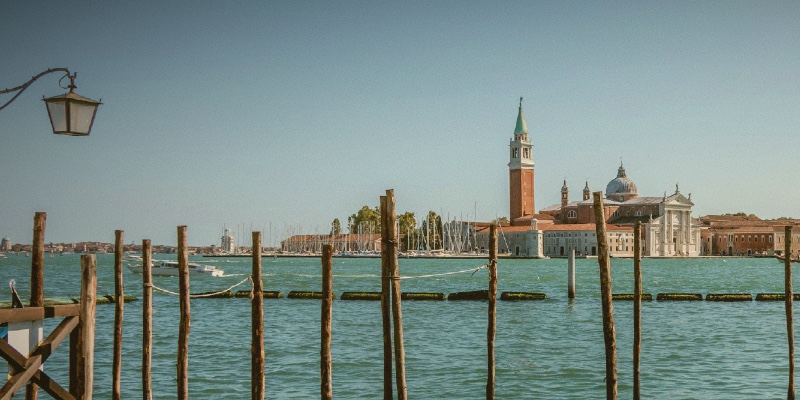
Coming in at #3 is Poveglia, an abandoned island in the Venetian Lagoon. It might be small, but as far as deaths go—over 100,000, all buried in mass graves—it’s mighty. If being an 18th century plague quarantine station wasn’t enough of a dark-history backdrop, throw in the asylum era that lasted from 1922-1968, where rumors of cruel experimentation occurred regularly inside the psychiatric hospital, and legend has a doctor committing suicide by jumping from the bell tower. Poveglia still sits abandoned and is off-limits for visitors. Bummer, because I’d be there in a heartbeat. Not really, so onward to the next island.
And at #2 we have the Island of Dolls, a chinampa in the Xochimilco canals near Mexico City. If you think old dolls are creepy enough, try an entire island of them. Oh, and they’re hanging from trees like ornaments. Oh, and many of them are missing limbs and heads. As the story goes, former caretaker, Don Julian Santana Barrera, found a girl floating dead in the canal. After finding a doll floating nearby, he hung it on a tree to honor her spirit. This, of course, then became an obsession for Barrera, and over the next 50 years he collected dolls from the trash and hung them all over the island, on trees, on fences, on his small cabin, and according to legend, he was found dead in 2001 in the exact same spot he’d found the girl decades before. This island is open for tours, and many bring their own dolls to hang on the trees. The atmosphere there is described as unsettling and intense, and some claim to hear whispers coming from the dolls, and some have even seen their heads—those that still have them—move, as if watching. I’ll have to take their word on it, because this is an island I’m definitely not visiting.
And finally, the no way, no how, and in no lifetime #1 island I will never visit, Ilha da Queimada Grande, otherwise known as Snake Island, off the coast of Brazil. This island, known as one of the most dangerous places in the world, is so bad the Brazilian government has banned anyone, aside from a few crazy authorized scientists, from going there. Don’t like snakes? Well, this island has the highest concentration of venomous snakes anywhere on earth. That’s all that lives there, with its most popular being the golden lancehead viper. Its venom only melts human flesh, so there’s no concern there. At the risk of going full circle with crazy lighthouse keepers, it was a group of the island’s lighthouse keepers who were the last to live on the island, before they were found dead in the 1920s, in pools of blood and covered in snake bites. I’m scared to death of snakes, so, no.
Just, no.