Alone. Scared. Stuck.
Hostile, lonely environments are not uncommon in horror books. But exactly how authors use isolation to write characters who are trapped is fascinating because you can see very different examples of the worst kinds of loneliness depending on the story.
The cultural conversation about loneliness has gotten more prevalent since the pandemic (and in fact, there’s a pandemic book on this list). There are real-life issues explored in books that focus on isolation as a theme because it’s a killer in a way a monster or a demon isn’t. There are statistics that say loneliness is as deadly as smoking.
And it’s real. Not a fictional creature we can forget about once the book is over. Because of that, isolation has a way of invading a story and making it more terrifying, even if we’re not consciously aware of it.
When I was writing my horror novel Trad Wife, I knew I wanted the main character—a tradwife influencer desperate to have a baby—to be physically and emotionally isolated. She lives in the country, in the middle of a wheatfield, and she’s a bit delusional and brainwashed. She’s a very solitary character who doesn’t get a lot of socialization, except via her burgeoning tradwife social media accounts.
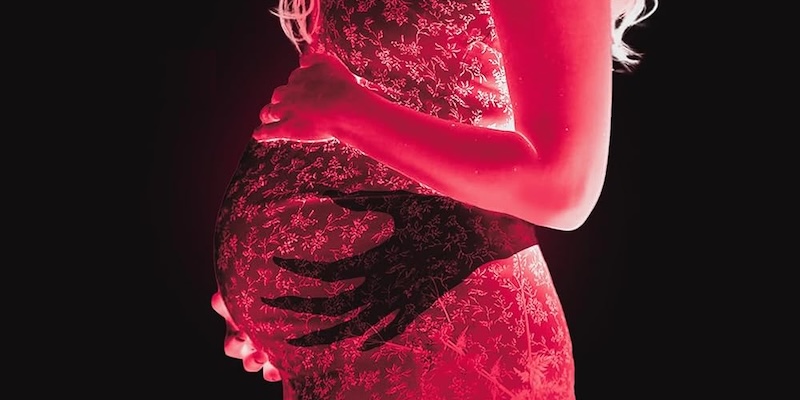
When she falls pregnant after engaging the “help” of a demonic being she finds living in her well, the resulting child is far more hungry and unusual than she anticipated. This isolates her even further, keeping her from healthcare and civilization, a choice made to create a claustrophobic, intimate feeling in the story.
As a reader, I love a book that traps its main character, either mentally or physically. How are the characters going to escape? Will they even escape? What ramifications will they face due to their experiences throughout the story?
Here are six other horror books that thrill in keeping their characters (and story) isolated.
*

Caitlin Starling, The Starving Saints
Three women trapped in a castle under siege contend with divine figures modeled after their saints who infiltrate and twist salvation until it’s something unrecognizable. As the castle descends into madness, cannibalism, and violence, the main characters must fight to survive these false gods while being physically stuck in a location they cannot escape.
Taut, queer as hell, and horrifically enchanting, The Starving Saints traps its characters not only physically but mentally as well. You’ll bite your nails to the quick in this claustrophobic and surreal historical horror.

Vincent Tirado, We Came to Welcome You
Married couple Sol and Alice move into the gated community of Maneless Grove, where oppressively “friendly” neighbors try to get Sol and Alice to join a Homeowners Association from hell. But when weird stuff starts happening around their house and community, Sol begins to fear there’s something else at play besides microaggressions and “community spirit.”
The main character Sol is surrounded by people throughout this book. But she’s isolated nonetheless. Tirado deftly shows how feeling othered and pressured to assimilate can cause mental and emotional isolation in this timely social horror.

Kylie Lee Baker, Bat Eater and Other Names for Cora Zeng
After watching the grisly murder of her younger sister, Cora Zeng becomes a crime scene cleaner during the pandemic, dealing with dead bats and a rise of violent acts against East Asian women in the apartments she cleans. But when Cora encounters a hungry ghost who she fears is familiar, things take a turn for the worse.
This is a pandemic book, set during the quarantine, so even though it takes place in NYC, it’s clear isolation is a major theme. Cora is a very interior-focused character who struggles to make connections, and her being emotionally cut off is palpable. The loneliness is only heightened by the terrifying blend of social and paranormal horror in this powerfully relevant story.

Gus Moreno, This Thing Between Us
What starts as a tech horror story about a couple who buy an Alexa-type device called an Itza only for the wife to be suddenly killed turns into a complex and frightening exploration of grief and isolation. After his wife’s death, Thiago moves to a secluded cabin in Colorado, but something followed him there. Something evil, trying to get into the world.
Thiago is physically isolated for most of the story, not just because of his wife’s death but because of the lonely cabin he ends up in. He battles mental isolation too, cut off from others and dealing with a massive outpouring of loss and grief. There’s even some liminal space horror to really hone in on the loneliness Thiago faces in this brutally haunting horror.

Richard Matheson, I Am Legend
One of the key pieces of literature in the vampire canon, this classic from the 1950s features Robert Neville, the last man on Earth, who hunts plague-infected vampires during the day, hunkering down alone at night. No spoilers, but that ending is…incredible. (And the movie didn’t do it any justice, let’s be real.)
One of the key themes in this story is isolation and how Robert thinks, behaves, and reacts due to his terrible loneliness being the last man alive. The isolation in this one is all-encompassing. Robert suffers from all types of seclusion, and the effect becomes clear the further you read. What’s lonelier than being the last of your kind?
***