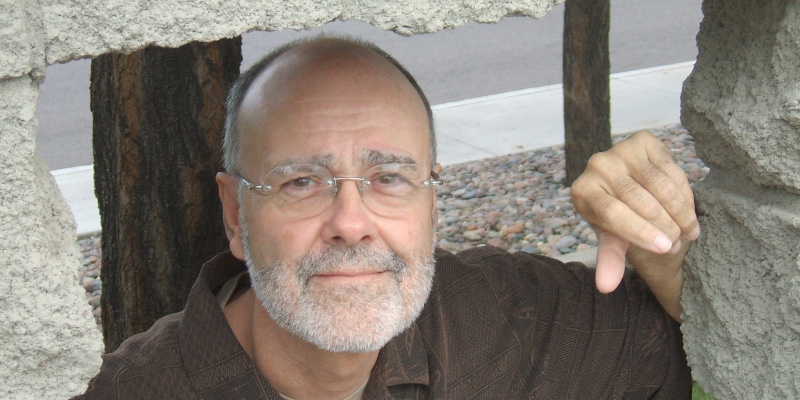
When the author James Sallis died in January, the first few paragraphs of his obituaries inevitably mentioned “Drive,” the 2011 film based on one of his novellas.
Directed by Nicolas Winding Refn, “Drive” is a colorful blaze of car chases, double-crosses, and shootouts powered by an electro-pop soundtrack and Ryan Gosling as an anti-hero who is, for all intents and purposes, a complete psychopath. It did well at the box office and gave Refn the cultural cachet to make whatever he wanted next, including the deeply divisive “Only God Forgives,” which also starred Gosling as a largely silent figure capable of extreme violence.
For authors whose books are adapted into popular movies and TV shows, the good news is your work is recognized by a larger audience than ever before. The bad news is you risk becoming known only for those adapted works. In the case of Sallis, whose career spanned more than six decades, “Drive” has risked overshadowing his fantastic Lew Griffin detective novels, in addition to hundreds of short stories.
If you’ve never read Sallis, he’s well worth picking up, particularly if you write crime or science fiction. One of his strongest superpowers, honed by decades of world-building as quickly as the limited space in science-fiction magazines allowed, was to convey the sense of something massive in just a few sentences. For example, his story “New Teeth”—an ultra-short mashup of “Invasion of the Body Snatchers” and “Blade Runner,” with a somewhat existential twist at the end—traces out the characteristics of the human-possessing creatures, the scope of the invasion, and the thankless nature of the protagonist’s creature-killing job in one short paragraph:
“By the time a jumper got the old man, Walsh had already put down dozens of them. Came by one night with a bottle and beer since it’d been a few weeks, saw it in his eyes. It had moved in strong, had a good hold. Using his gestures, the way he talked, but Walsh knew. It did, too. Stood there like they do, waiting. No one said thank you that time.”
“A sentence is not just information,” Sallis told CrimeReads last year. “It has a weight to it, a valence, a charge. I go looking for each sentence, each phrase, to have such value to it: sound, rhythm, pitch, depth. ‘Get as much of the world as you can,’ I told my students, ‘into each sentence you write. You’re not simply telling the reader this happened, that happened; you’re doing your best to recreate the experience.’ Which is, of course, why each sentence, page, and scene gets rewritten incessantly.”
Sallis rarely tried tugging the reader’s heartstrings; many of his characters aren’t that sympathetic when viewed objectively. However, he always took the time to give those characters a definitive shape, a sense of mission and quirks that made them human, and in that way he built a degree of empathy for even the worst miscreants of his crime fiction. Lew Griffin, for instance, is a killer and an alcoholic who, over a series of novels, does his best to hide behind a mask—but he’s living and breathing as much as a fictional character can. Call that Sallis’s other superpower.
“Drive,” the novella that later became a novel that inspired the movie, is a perfect encapsulation of Sallis’s gifts—and does a fantastic job of conveying quite a bit in a tight word count, besides. As portrayed by Sallis, Driver (he’s never given a proper name) has more nuance and inner life than the borderline-Terminator in Refn’s movie; he’s the son of a thief, a loner, and a pretty good stuntman when he’s not serving as a getaway driver for hire. Sallis delivers a lot of background in just a few lines:
“Up to the time Driver got his growth about age twelve, he was small for his age, an attribute of which his father made full use. The boy could fit easily through small openings, bathroom windows, pet doors, and so on, making him a considerable helpmate at his father’s trade, which happened to be burglary.”
As the backstabbing and bodies pile up, Driver delivers bone-crunching violence with the same efficiency as parallel-parking a car:
“From the first, the guy jammed in the window, he’d taken the shotgun that felled the second. It was a Remington 870, barrel cut down to the length of the magazine, fifteen inches maybe. He knew that from a Mad Max rip-off he’d worked on. Driver paid attention.”
Sallis was pleased with how the movie translated his prose. “Does it differ from my book? Of course,” he told CrimeReads. “The vocabularies of film and novel are different. But the pulse and blood of what I wrote is there. Nic told me on set that Drive was his take on my take. I said I hoped the two of them played well together. And they did—wonderfully.”
If Sallis made his driver empathetic, even when doing terrible things for nothing more than hard cash or to make scarier people leave him alone, the movie whiffs on that front, mostly because Refn seems more concerned with shaping his version of Driver into an avatar of carnage.
Many other crime fiction authors, when writing their own characters, make a similar mistake—they’re so concerned with building a badass, they forget that a truly memorable anti-hero is someone who thinks a little like us. Sometimes, they also load up on the sob stories to make a toughened protagonist a little more sympathetic, only to tumble headfirst into maudlin cliches.
Sallis avoided all that; that’s what made him a master. He’s gone now, but he’s left an extensive body of work for everyone coming after him. You can read his prose and see him using all the tools, all the tricks to sink you into his worlds.