Lined up like convicts, waiting to enter an elementary school cafeteria in Norman, Oklahoma, a rumor rippled through our ranks: the president had been shot in Dallas. That moment, of course, answers the familiar question — where was I when I heard John Kennedy had been assassinated. As an eight-year-old, the news made little impact on me; the president was an abstraction. More tangible were the adults’ faces — my teacher, my mother, my older sister — wet with tears. Their grief was shocking, and only in the days that followed did the scale of what had happened sink in. What landed hardest were the black-and-white images of the state funeral, and a little boy about my age saluting his father’s passing caisson. Ironically or not, television made the incident real. That’s when the nation’s nightmare felt … dramatic.
World events become something more than history when recast as fiction, whether on a screen, page, or in a song. Transformed by storytellers, news becomes narrative — shaped, deepened, and made human. Within days of those rifle shots fading in Dealey Plaza, artists in every medium began mining the tragedy’s sprawling cast of characters, tangled conspiracies, and timeless themes to craft fictional interpretations. Never mind the mountain of nonfiction efforts — the investigations and accusations that metastasize with every release of “secret” documents. Those works aim to make you think. What matters here are the fictional renderings, created to make you feel.
For obvious reasons, people under a certain age can’t answer, “Where were you when you heard Kennedy was shot?” Below are works that shaped my understanding of that day, along with the circumstances in which I discovered each one. So, I ask: Where were you when you encountered these seminal works?
Executive Action
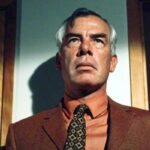
In 1973, with one year of high school left, my bravest act of rebellion is wearing an American flag T-shirt and elephant bells wide enough to hide a bottle of Boone’s Farm apple wine. Sure, I figure someone besides Oswald killed Kennedy — but who? In the musty, popcorn-strewn Newark Cinema, I sit transfixed as Executive Action, David Miller’s bold thriller unspools. The film serves up a highly speculative, detail-rich vision of a wide-ranging conspiracy that answers that question. In a now-demolished Delaware theatre, my half-formed skepticism is turbocharged by a Seventies classic, providing conspiratorial ammunition that gets me through dozens of college bull sessions … and beyond.
JFK
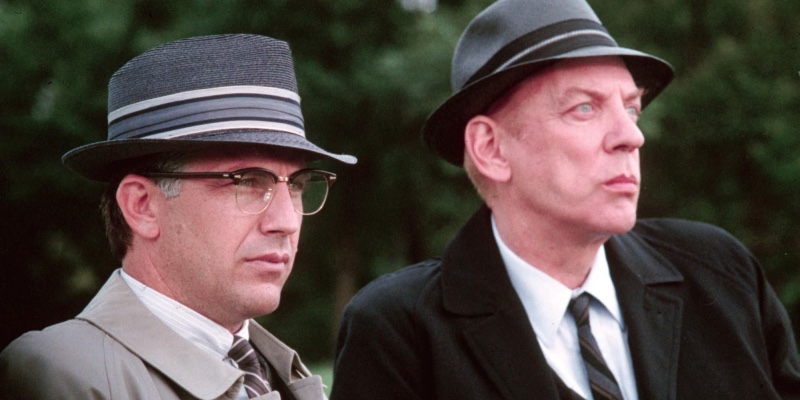
It’s 1991. I’m in Los Angeles — a new father and journeyman screenwriter, toiling in the trenches of film land. Oliver Stone is a movie god; Kevin Costner, somehow, even bigger. I can only dream of collaborating with such icons. Instead, I’m developing a talking dog-and-cat movie for Disney. On a Tuesday night, I join friends at one of Westwood’s grand movie palaces to see Stone’s JFK, expecting top-notch filmmaking — and get so much more. Stone and Costner’s Oscar-winning thriller, dramatizing New Orleans DA Jim Garrison’s investigation, doesn’t just reignite my long-dormant JFK obsession. It sparks a nationwide reexamination of the assassination, sets the gold standard for all Kennedy conspiracy narratives — and spawns countless hypnotic memes (“Back, and to the left”).
Interview with the Assassin
By 2002, I’ve been a professional screenwriter for over a decade. The dog-and-cat project is behind me, and I’ve finally landed a sole writing credit with an original script. But the film industry is changing fast, and pushing creative boundaries is essential if I’m to pay the mortgage. I hear intriguing things about Interview with the Assassin and catch a matinee at the Laemmle in West LA. Ninety minutes later, stumbling out into the sunlight, I feel creatively reborn. Neil Burger’s underappreciated debut is a pseudo-documentary shot in a gritty, realistic style that amplifies both suspense and its conspiratorial theme. This marks the beginning of my deep dive into blending fictional storytelling with historical speculation.
11/22/63
I’m sitting on bleachers at an Orange County high school, watching my kid’s water polo team slog through a match they’re sure to lose. It’s mid-November, 2011. As my second-born struggles in the pool, I’m struggling too — grinding out the sixth sequel to a direct-to-DVD action movie, dealing with a shaky marriage, my mind drifting to regrets and missed opportunities. If only I could go back, undo a few mistakes, rewrite a less-than-stellar present. Next to me, another dad holds Stephen King’s new book in his lap. With a title like 11/22/63, the subject matter is unmistakable, and I’m intrigued. He lends me his copy. I devour it in three sessions, reabsorbing the tragedy of Kennedy’s murder and the futility of trying to change that terrible past. Years later, watching my kid graduate from medical school, I think back to that day in Orange County, my own myopic disappointments, and remember a book that nudged me to appreciate what I had, not what I lacked.
Murder Most Foul
In late March 2020, my debut novel DEEP STATE has been out two months, and the world is shutting down. A pandemic is reshaping the lives of every person on the planet it hasn’t already taken. I’m in LA, driving — because that’s what one does here. Framed by windshields, the faces of other drivers are etched with fear and apprehension. One of my oldest friends, a devotee of serious music, calls. Grateful for distraction, I pick up. He insists I check out a new song from Dylan. Dylan? Since when was a new song from him a must-listen? Still, I give it a try, and over the next seventeen minutes of that epic song, I am transported out of my newly insane world. To 1963. To a different loss. Another inflection point. Dylan’s masterpiece of mood, musical magic, and heartache is almost more than I can bear. Sitting in my car, traffic-mired on the northbound 405, I cry. Just a little. And I’m not sure exactly why.
***