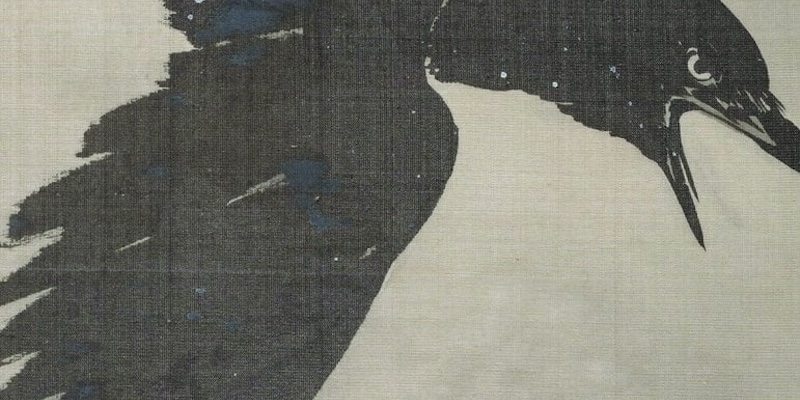
In an age where the awful and the unthinkable ping brightly across our phone screens, Gothic literature can seem almost quaint in its shyness, in its shadowy reserve. But that would be to underestimate what horror the suppression of horror can beget. I grew up in South Central Pennsylvania—a place rife with withholding—and I’ve always felt the area could support its own sub-genre of Gothic fiction.
But first, a little about the genre.
Named with a nod to the moody architecture that looms in its early European examples, the Gothic has proved a shapeshifting form—mutating over two-and-a-half centuries of varied incarnations. Among the most enduring features of the Gothic: sublime and isolated settings (think The Shining), the dead who will not stay buried (Dracula, A Christmas Carol), familial shame and mental illness (Beloved, The Yellow Wallpaper), and monstrosity (Frankenstein).
Because its uncanny power arises from the entangling of psychology and place, the Gothic feels different in different landscapes. Faulkner’s Mississippi version is humid and bodily. Shelley’s continental novel is tortured and nomadic. Poe’s more urban take is claustrophobic—manifesting under a floorboard or behind the construction of a catacomb wall. In Gothic worlds, mind and environment infect one another, to no good end.
I believe a South-Central-Pennsylvanian Gothic would slow walk its version of dread. The region’s past persists within a bucolic landscape. If you know how to read the rolling hills, each swell bears witness to some violence that pushed then towards now: its geography—a library of scars. Treed ridges between farms recall vast woodlands clearcut for agriculture. Meandering cricks tell of the bedrock that forced their self-contortion. Boulder fields testify to rapid thaws amidst a glacial past. And that’s just the land. The human histories—of the bloodiest battle of the Civil War, of indigenous massacres and forced assimilations, of the bounty-hunting of free Blacks living just north of the Mason-Dixon line—these may be less legible in the hills and hollers but they are just as real. Cruel.
The region is shrouded… often in idyllic dawn mists, it’s true. But placid beauty can obscure as surely as dank fog. And all that remains unspoken—entombed—has the potential to rise on its own.
I was eleven, growing up along the Conodoguinet Creek a mile from where it falls into the Susquehanna River, when I fell in hopeless love with Jane Eyre. I was far too young to understand the nuances of Charlotte Brontë’s Gothic romance. But what I was able to glean marked me. I identified deeply with the outsider protagonist Jane. I was intrigued by the remote settings that served to isolate her. The amount of pain a person could push down disturbed me—as did the hurt it caused, finally surfacing. Later, I learned about the specters of colonialism and misogyny that haunted Jane’s world more profoundly than any madwoman in the attic could hope to.
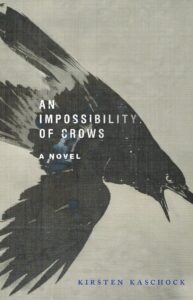
Over years of reading tales of atmospheric dread, I realized that most of the fiction I love leans Gothic. I come by my weakness for the form honestly: it was in the water. The germs of the Gothic have quietly thrived for over two centuries in the place I was raised. So when I set out to write An Impossibility of Crows—an unapologetically Gothic tale in which an ex-chemist breeds a crow the size of a horse to give her daughter wings—I could imagine it in no other landscape.
These were the themes I knew instinctively would flourish in this soil:
Radical Skepticism. The genre has always pushed back on Enlightenment reasoning. Shakespeare’s proto-goth poster boy, Hamlet, sums it up this way: “There are more things in heaven and earth, Horatio, than are dreamt of in your philosophy.” Because the supernatural and the unexplained are observable in the Gothic, they are not easily dismissed. In South Central Pennsylvania, whole communities have chosen to embody their faith in ways that resist modern technology. The rejection is tangible. The religion-science conflict can be felt in modest churches and on buggy-rutted backroads—and in my novel by my protagonist Agnes and her sister Bethany and the fork in their upbringing that sends one to science and one to God.
Decay. In Gothic horror, the dead keep showing up. In South Central Pennsylvania, we know they are there because the living keep attending to them. Not just at gravesites and in Civil War reenactments, either: in the town of Gettysburg and all across Central PA, ghost tours thrive year-round and 12-foot skeletons serve as permanent yard ornaments, displayed proudly as hex signs. In my epistolary novel, ghosts emerge from the bones of house and barn through letters, quilts, and journal entries. And there are other dead, too, who refuse to lie still.
The Monstrous. Daphne du Maurier’s Rebecca is often touted as the quintessential Gothic novel, but it is a short story of hers—“The Birds”—and Hitchcock’s subsequent film adaptation that helped me understand my novel’s monster. This ecological tale of terror was set in Cornwall and California, respectively. My Solo is a more local creature. I folded the darkest birds from my childhood into this horse-sized crow. I remember them in the gravel along rusted train tracks, under laundry lines surveying clothes stiff with winter, and on the interstate, unperturbed by traffic as they yanked entrails from deer carcasses. I remember their grating speech-like caws and ominous roosts—hundreds of birds staring dead-eyed from a single leafless tree.
What is it that makes a thing monstrous? This is an ever-present concern of the Gothic, even in stories without literal monsters. Silence, I think, because it can consume whole households. Absence. Grief has both talons and tentacles. But maybe it is the inability to grieve—the refusal to acknowledge loss or to confront trauma (personal or societal or both)—that remains the still-beating heart of the genre. Growing up in South Central Pennsylvania in the last quarter of the 20th century, I was wordlessly instructed to deny the demons I encountered. And also the ones that lived within me. I was not allowed to see them, note them, name them. So of course, in my proposed sub-genre of the Gothic, that’s precisely what causes them to grow.
***