
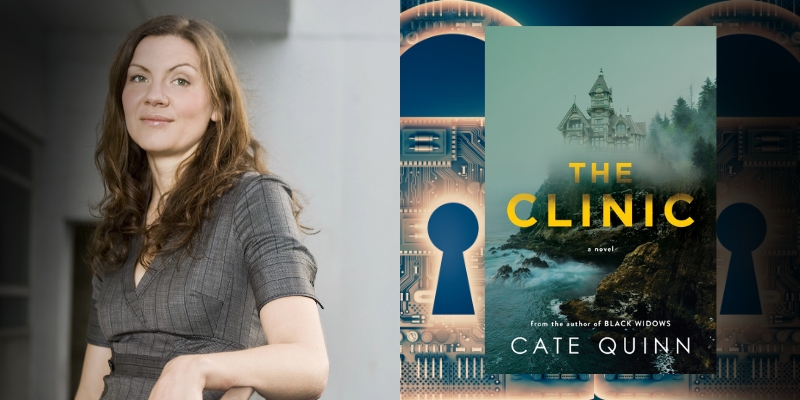
One of the best things about being a crime writer is the research. Disappearing down crime rabbit holes and giving myself full permission to see things from a villainous perspective is one of the most exciting parts of my job. Plus, as an added bonus, I have a Google algorithm that is so messed up it doesn’t even know what to advertise me. Fortunately, you actually have to break the law to learn nefarious activities.
Here are some of the (legal!) “crimes” I’ve enjoyed most over the years.
*
Picking Locks
For my novel The Clinic, my lead character Meg is undercover security in a casino. She works in disguise, in dangerous sting operations to catch cheats and loan sharks. I did a lot of research into how casinos operate, and the kind of talents a person would need to get this unique “dark-mirror cop” job. Part of Meg’s back-story involves lock-picking training, and I was delighted to discover you can buy genuine lock-picking kits entirely legally, for under $30.
A full kit consists of transparent padlock, torsion wrench, tiny tools that look like dentist equipment. I also found a YouTube tutorial from a man who spoke in the soothing tones of someone who would absolutely break into your house whilst you slept.
It really didn’t take me long to get the hang of picking the transparent padlock, and then a real one. I was a natural! A real-world role in a crime-fighting elite beckoned.
Sadly, outside the home I never managed to replicate my “skills” despite trying on every unsupervised padlock I saw, to the complete mortification of my children. Alas, I remain a novelist—not a criminal mastermind.
*
Training in Forensics: CSI Is Lying to You
I’ve toured crime labs, interviewed forensic analysts, and attended workshops that taught me more about trace evidence and decomposition timelines than any human dinner guest ever wanted to hear. Television has convinced us that DNA analysis takes fifteen seconds and results appear with inspirational music. In reality, it can take weeks—sometimes months. Fingerprints aren’t always clear. Blood spatter analysis is more math than drama.
And fluorescent black lights? They reveal far more bodily fluid than any of us are emotionally prepared to process.
But the science matters—because crime novels live or die on authenticity. Or at least on making the science feel authentic while sparing readers from the full trauma of forensic reality. Hopefully I’ve done enough boring stuff, so you don’t have to when you read my books.
*
How to Send Untraceable Emails (For Fictional Purposes Only—Hello, Security Services!)
My characters love secrets, threats, and mysterious communication. That meant learning how someone could send a message without immediately being identified. My research journey involved VPNs, burner addresses, encrypted platforms, and enough technical jargon to make my laptop consider filing a restraining order. I spoke to cybersecurity experts—proper ones with badges, not anonymous online strangers named “GhostWolf69.” (OK maybe, one or two of those).
The most surprising part? A basic email host such as Gmail has a huge amount of anonymity built it. That is to say, your average web-savvy person can’t easily check and see which IP address sent which email. Criminals beware, however, police can access this information if they approach the email provider and ask.
*
How to Negotiate a Hostage Situation
As a parent this was absolutely my favorite and most useful thing to learn. I cannot tell you the number of times I have used ‘hostage negotiation’ in real life. Hostage negotiators are essentially the best “parents” on the planet. They are trained to use soothing low voices, mirroring language, and a variety of clever tricks to make the ‘terrorist’ (or “toddler”) feel safe, listened to, respected, and more likely to agree to terms.
Turns out negotiating isn’t about shouting orders, dramatic countdowns, or offering helicopters and suitcases of cash. It’s patience. Listening. Building rapport. Understanding that when adrenalin kicks in, intelligence (literally) plummets. Hostage negotiation was a research project that turned into a life skill.
What Police Keep in Their Trunks (No, Not Bodies)
My absolute favorite discovery: police vehicle boots are like Mary Poppins’ handbags. You expect a spare tire and maybe a first aid kit. Instead, it’s like the Swiss army knife of police road gear all packed in tight with not an inch to spare. Mainly the equipment is for road traffic accidents—cones to lay out, tape to restrict access, various things to redirect traffic. My favorite was the device for spiking the tires of escaping vehicles—spoiler, they’re hard to deploy correctly and almost never used.
Additional fun fact: police have to justify every time they turn the siren on, and its use is strictly monitored—no zipping through red lights to get home in time for CSI, police have to sit in traffic like the rest of us.
Seeing that side of policing—the compassionate planning for ordinary chaos—was a reminder that crime stories aren’t just about darkness. They’re about the people trying to push back against it, which is what my novels are all about.
*
In the End, It’s All About Curiosity
Writing crime means you get to ask uncomfortable questions, following exciting trails, and occasionally checking over your shoulder to make sure no one thinks you’re plotting an actual murder. But research isn’t about learning to break laws—it’s about understanding the systems, skills, and psychology behind them.
So yes, my internet search history is terrifying. Yes, I can now open a practice lock. And yes, if my career ever collapses, I have enough theoretical knowledge to plan the world’s least successful heist.
But for now, I’ll stick to novels. Much safer.
Probably.
***