The call wakes me at three a.m. I fumble for the logbook and pen. I’m the after-hours duty officer at U.S. Embassy Wellington. If a U.S. citizen is in trouble in New Zealand, I’m the person they talk to when they call the embassy for help.
Earlier in the week I assisted several tourists who lost their passports. I fielded a call from an outraged traveler who’d been fined four hundred dollars for carrying an apple in her purse that was served by the airlines. There wasn’t much I could do about that. It happens all the time even though the rules are clearly posted.
This early morning call is different. It blindsides me.
I listen to the distraught mother who fears her daughter is in danger and my heart breaks. I want to reach through the phone, reassure her, fix the problem, but all I can do is serve as a resource—tell her how and where to file a police report, explain the process and the next steps.
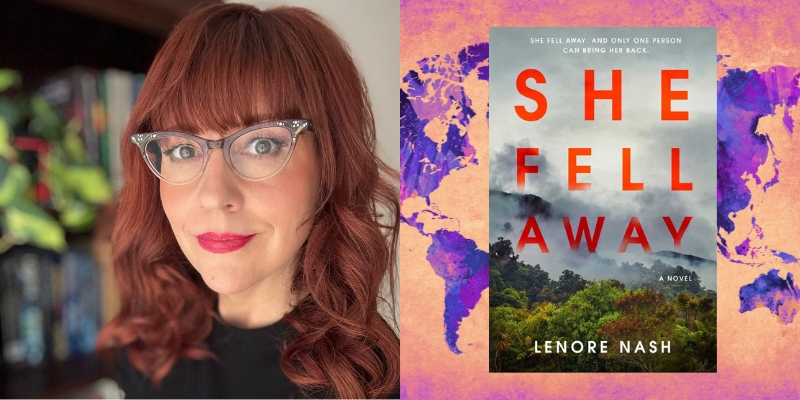
This feeling of powerlessness inspired my debut mystery thriller, She Fell Away, about an American Citizen Services officer searching for a missing exchange student in New Zealand. It’s against the rules of Lake Harlowe’s job to investigate crimes, but Bowie Bishop’s case grabs her and won’t let her go. Obsessed with finding the truth, Lake realizes that to find Bowie, she must confront her own dark past.
I’m drawn to profoundly personal, character-driven mysteries and thrillers. Paula McLain’s When the Stars Go Dark. Celeste Ng’s Everything I Never Told You. Julia Heaberlin’s We Are All the Same in the Dark. Alyssa Cole’s When No One Is Watching. I recognize these books when I meet them, like an instantly familiar stranger I must have known in a past life.
It’s the way they land, close to the heart, too close for comfort. The way they plunge us into a character as though we’ve plummeted through a frozen lake into the shock of stinging, icy water. The way they resonate long after the final page is turned, sounding the phantom consonant chord that helps us resolve life’s dissonance.
Like me, Lake grew up in a small, isolated Alaskan town. Like me, the Foreign Service was a means of escape, a way to travel the world while helping people, but also a way to stay one step ahead of the demons of her past.
After tours in Thailand, Bolivia, Switzerland, and New Zealand, I moved back to my Alaskan hometown across the street from my parents. A global pandemic was still raging, and it was a particularly brutal winter with snow piled higher than the windows and blizzard warnings for weeks at a time. And then I badly broke my right shoulder slipping on some steps.
Unable to write until my injury began to heal, I read through the first draft. It wasn’t working. I wanted to give up. Relegate the book to the graveyard where the ghosts of my other unfinished mysteries wandered, forlorn.
Next to my writing desk lived a heavy metal army trunk with leather handles that a previous owner painted a pulsing poppy orange, chipped and scratched with age. Who knows where this trunk traveled during which wars. And now it was here. In the dark heart of winter in Alaska. Filled with decades of handwritten journals. Unopened since I’d joined the Foreign Service a decade ago.
I didn’t want to open that trunk. It wasn’t exactly filled with sunshine. It was filled with stories I purposely forgot to tell myself. Doors I kept closed in my mind. Half-buried memories like lost mittens trapped in a snowbank, frozen forever because a thaw would mean a painful reckoning.
I opened the trunk.
I read about a young girl who longed to become an author. She wrote voraciously in journals, tunneling through grief, learning the art of self-sabotage, spinning big dreams bright with hope. I sat on the floor surrounded by poems about death, song lyrics that were never recorded, mementos from estranged friends, the letters I wrote to my family when I was an exchange student to Australia at the age of fifteen, photos of past lovers.
During the next months, my physical therapist pushed me past pain thresholds and into a hard-won healing. As bone fragments began to fuse, the book took on a new shape. It was as if I’d broken off pieces of myself and fed them to my characters.
Lake whispered about escaping from a repressive cult and the ways that surviving religious trauma had shaped her. Bowie became a singer-songwriter distilling the pain of losing her best friend into a tribute album to keep her memory alive.
At night, while the town slept, I wrote until three a.m. and then wrapped myself in a parka and stood outside on crystallized snow peaks, listening to the silence of the ancient pines, sometimes watching the northern lights shimmer across the velvet darkness.
I couldn’t not write this book.
I’m so grateful to the friends and colleagues who helped me complete the task. Open the trunk, they said. Use your pain. We want the real you.
As one reviewer noted, She Fell Away is a balance of high art and low. That’s me. That’s all of us. High and low, sunlight and shadow, joy and sorrow, rom-com and noir. The dualities that make life both more interesting and less safe.
In addition to being the perfect setting for an amateur detective on the run from her past, the nomadic Foreign Service life is also highly addictive. Currently, my family is transitioning from Bogotá, Colombia to Windhoek, Namibia. I’m writing the second book in the series and Lake is solving a crime during a lonely Christmas in Switzerland.
We’ll walk down unfamiliar streets, Lake and I. Discover unexpected versions of ourselves. Capture life with a net of words. Navigate the darkness together.
I hope you’ll come with us.
***