
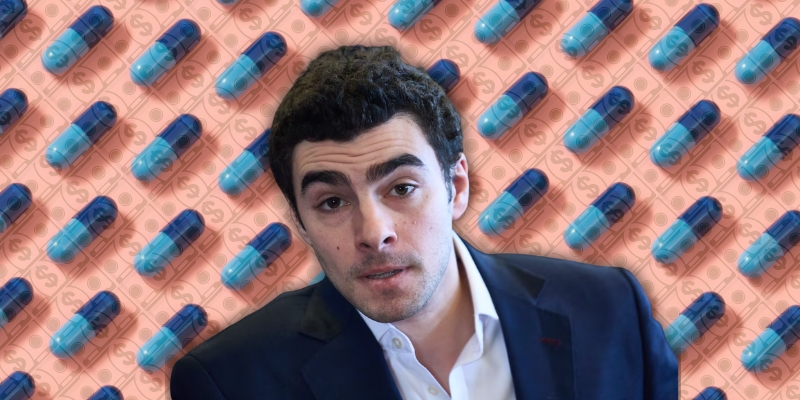
As a practicing physician, I’ve been asked about the Luigi Mangione case more times than I can count. That, in itself, should make us pause. A criminal case has become a proxy debate about healthcare—not just because of what happened, but because of what millions of people feel every time they open a medical bill or get a claim denied.
In the last couple of weeks, the case has taken another turn, with pretrial hearings focused on whether key evidence will be allowed at trial, including items prosecutors say tie Mangione to the killing of a UnitedHealthcare executive. And a newly released 911 recording—played in court—has added a gritty, unnerving sense of immediacy.
It’s tempting to treat moments like this as a lurid sideshow: a sensational crime, a single defendant, a tragedy for a family. But the public reaction has been something else—a mix of horror and, in some corners, a disturbing sympathy. That reaction doesn’t excuse violence. Nothing does.
But it does demand an explanation. When people start seeing a defendant as a symbol—however distorted—it’s a sign that they no longer believe the system is fair.
And in American healthcare, they’re not wrong.
Most Americans know the consumer-facing failures by heart: surprise bills, premiums rising faster than wages, deductibles that turn insurance into a coupon, and shrinking doctor networks that make “access” feel theoretical. Even for doctors, the math no longer works the way it used to. My wife is a physician employed by a hospital and insured through that same hospital—and she still gets hit with extra charges for routine care.
But cost is only the surface. The deeper problem is what these incentives do to behavior—to hospitals, insurers, and clinicians. Insurance companies cut payments, so hospitals raise prices elsewhere to compensate. Insurers respond by denying coverage or pushing costs onto patients. It becomes a cat-and-mouse game, and the patient is the collateral damage.
Hospitals—even the ones branded as “nonprofit”—are not innocent bystanders. When the primary incentive is volume, the system rewards doing more, charging more, documenting more, and sometimes overtreating.
We should be honest about what that does: it doesn’t just waste money; it can harm patients.
But here is what’s often left out: it harms clinicians, too.
We talk about burnout like it’s a personal weakness—like doctors and nurses simply need more resilience. The truth is harsher and more moral than that. Many clinicians today are experiencing moral injury: the damage that comes from being repeatedly forced to act against your own values.
In my clinic, I care for a woman with rheumatoid arthritis—an autoimmune disease that has slowly deformed her joints and inflamed her lungs. The “medical miracles” that could preserve her independence exist.
But she’s uninsured, and those drugs cost thousands of dollars a year and often require specialist access she can’t get. So I refill a decades-old medication—”reasonable” only in theory—and I watch her try to shrink her suffering with a half-smile: “It’s not that bad.”
After she leaves, the harm doesn’t leave with her. I stare at the chart and run through the contortions clinicians perform in this country: Should I call the drug company myself? Text a specialist friend and beg? Cobble together samples? I am her doctor—entrusted to advocate for her—and I know she is not getting the care she needs. And in moments like that, a little bit of soul goes with the patient.
That shared helplessness—patients blocked by cost, clinicians blocked by bureaucracy—is part of why the Mangione case is resonating. It’s a symptom of a larger legitimacy crisis: people don’t just feel the system is expensive; they feel it is immoral.
Which is why the only meaningful response is structural.
Start with a simple public promise: no one should be financially ambushed for getting care. Enforce real limits on surprise billing. Require usable pre-care estimates for non-emergent services. Penalize the shell games that keep “out-of-network” surprises alive.
Then, shift incentives from volume to outcomes. We cannot keep paying medicine like a factory, where success is measured in units moved rather than lives improved. Reward continuity and prevention. Pay for time—the kind that allows clinicians to explain, persuade, and listen, so patients don’t end up sicker and more expensive later.
Finally, include clinicians and patients where decisions are made. Too many systems are run as if care were a commodity and clinicians were interchangeable labor. But we are entering an era where AI will increasingly assist the technical side of medicine. What will remain distinctly human—judgment, trust, comfort, ethical tradeoffs—is precisely what our system is eroding.
We should condemn violence unequivocally. But we should also condemn the conditions that make so many people feel desperate and powerless inside the richest healthcare system on earth.
The Mangione case is not just a courtroom drama. It’s a symptom of a deeper sickness. As a doctor I can unequivocally say: ignoring it puts our collective health in peril.
***