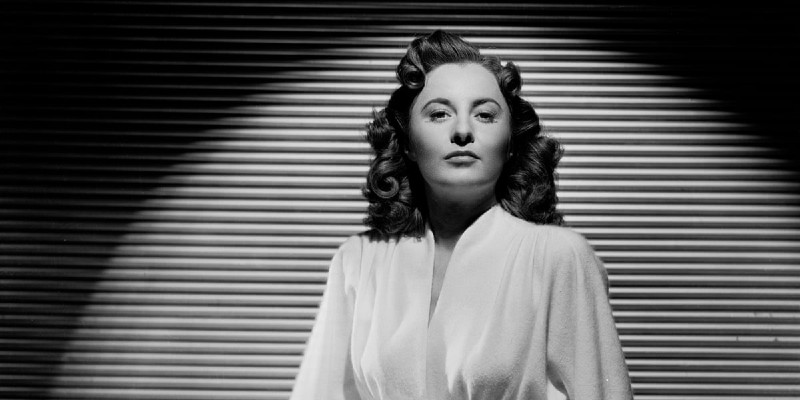
“As Slavoj Žižek argues, the critics and practitioners of noir—not to mention the characters featured in noir texts—exist in a noir relationship with noir itself.”
–Christopher Breu & Elizabeth A. Hatmaker, Noir Affect
*
Down is up and up is down. Truth Social is neither true nor social. A violent insurrection is a “day of love.” It’s not just me, right? The world seems unmoored.
It’s a familiar danger, though, an ambient dread that’s crept from the edges into the dead-center of the frame. What was mostly subtext is now the headline. Not great. Maybe everything feels crazy because it is crazy.
In this vertiginous hellscape I find strange comfort in noir—the dire, slippery genre that’s a mood as much as a theme of darkness. Romance books are flying off the shelves right now, and I get it….I understand why. My friend stockpiles romantasy like she’s building a fort against reality. But noir is my preferred read when the world feels broken.
*
What is Noir? Where Did It Come From?
Noir is a capacious cross-platform genre rooted in stories about corruption and doomed characters. Characters who deceive or who’ve been deceived. Good girls turn bad then good and bad again. Binaries dissolve. Menace threatens from outside and from within. We aren’t sure who to trust because noir blurs boundaries.
If Golden Age ratiocination and procedurals are about temporarily restoring order or justice, even temporarily, noir disrupts the balance. Noir is bracing and exigent—it refuses tidy answers or easy categories.
On the screen and page, noir’s thesis is brutally simple: There’s no way out. As a named cinematic mode, noir crystallized in the postwar years, though its literary DNA runs earlier, through Depression-era crime fiction. In 1946, French critics—most famously Nino Frank—began calling a wave of Hollywood crime films “film noir.”
Of course, noir can mean dark or black, and the French phrase roman noir has a longer history in criticism, but Nino Frank applied it to screen adaptations of hardboiled stories by authors like Dashiell Hammett and Raymond Chandler. (Many of these films were inspired by German Expressionism…cue the chiaroscuro lighting.)
Nino Frank recognized something new and asymmetrically darker than typical crime rippers: antiheroes not heroes; alienation; non-ending endings; pessimism; deformations. Patricia Highsmith, Vera Caspary, and Dorothy B. Hughes also wrote roman noir adapted into iconic films: Strangers on a Train, Laura, In a Lonely Place.
With such breathtaking aesthetic and formal diversity, I think it’s best to consider noir as art devoted to the theme of darkness, catalyzed by questions rather than answers. There’s no rigid script, no narrow definition, just darkness. As Christopher Breu and Elizabeth Hatmaker note, “In trying to define noir, we encounter the same forms of negativity that characterize the work of the form itself.” It foregrounds agitation and it’s magnetized by the pull of the abyss.
*
All Are Fallen
Noir is “elusive,” according to Breu and Hatmaker, but its signatures are unmistakable. Characters make bad choices. Double crosses aplenty. Sometimes protagonists are loners driven by lust or revenge, though motives can be murky.
Some noir doesn’t even feature a private eye or a core mystery to solve, leaning more into suspense and suspicion. Think of James M. Cain’s sleek, delirious noir thriller The Postman Always Rings Twice, which is often read alongside Camus’s The Stranger for its cut-to-the-bone fatalism.
Then there’s Megan Abbott’s shadowy seductions in Queenpin, Dare Me, and, most recently, El Dorado Drive, a pyramid-scheme noir-tinged riddle. In Abbott’s oeuvre, women hustle hard; they are the players and they get played. The body itself becomes a contested site of desire and confrontation. There are similar corporeal and mental doomloops across the neo-noir page and screen spectrum, from Blade Runner to Memento to Love Lies Bleeding.
So, no “happily ever after” around here. Authorities suck and main characters are compromised. Despite chaotic endings, noir still delivers a killer punch when the reader finally sees a grift hiding in plain sight. A source of narrative clarity in noir, is, ironically, darkness.
*
Anxiety & Performance
As an affect of destabilization, noir traffics in anxiety. That’s why domestic noir bangers like Gillian Flynn’s Gone Girl feel incredibly right even as they hurl us into an existential ditch. The big twist in Gone Girl is more than a stunning reveal. As Amy Elliott Dunne KO’s her husband, Nick, she shows us how systems (and storytelling itself) can be weaponized, how a Self can be performed or ventriloquized.
It’s a narratological rupture when Amy addresses the reader in the middle of the novel: “I’m so much happier now that I’m dead.” And we love her for it. “Cool girl is hot. Cool Girl is game. Cool Girl is fun.”
Today’s domestic noir builds on similarly shaky fault lines, centering women’s lived experiences and the epistemologies of characters navigating the minefield of “traditional” and intimate spaces, including digital spaces. Marriage and family thrillers are wildly popular, and I wonder if we’re so drawn to reading about hot-messes and anxieties because we’re living them. Are we really safe in “safe” spaces? Can we ever know ourselves?
Authors like Alafair Burke, Kelly J. Ford, Lisa Jewell, and Kellye Garrett raise the noir stakes when they braid intersectional concerns within tight plotting (class, race, sexuality, gender identities, health). There’s a queasy recognition reading what happens to people locked in a surveillance state. Or a pressure cooker.
For as disturbing as noir can be, and yes, it can go off the rails, its torque rings true. Noir’s insistence on distrust confirms many of the realities BIPOC and LGBTQ people live on the daily.
*
Gorgeous Annihilation
I love how noir refuses to play by any rules even as it honors genre lineages. Tzvetan Todorov suggested that genres are the codification of discursive properties in society, and they can function as models or “horizons of expectation” (for readers and writers). My hot take is that a genre is simultaneously fluid and stable. But that doesn’t mean noir will ever be predictable, or even knowable. Constraints are invitations to innovate.
It’s no surprise, then, why noir narratives can offer such gripping writing and incisive ideas. It textures the descent, conditions us to look for beauty in the carnage.
In Elliott Chaze’s Black Wings Has My Angel, we ride along for a febrile heist and shiver with Tim’s PTSD hauntings, but the betrayals and annihilation are almost too gorgeous to read. It’s a relief, for me at least, to get wrung out like a dishrag, to rage against the machine.
S.A. Cosby’s Razorblade Tears operates in the same vein, serving an exquisite bloodbath as two ex-cons from opposite sides of the tracks join forces to hunt down their gay sons’ killers. For folks who have to constantly code-switch or placate to survive white-supremacist patriarchal BS, noir offers a visceral vocabulary for anxiety and catharsis.
*
A Reparative Screw-You
I’m a fan first, and my obsessive love of noir inspires what I write and how I write it. I queer the genre to derange normative narratives of power and loss. Tropes are fun tools in the toolbox, and I leverage the femme fatale as an agentic badass, not disposable narrative collateral.
Since no happy ending’s promised, noir never says, “Everything will be fine.” It tells us, “Everything’s broken and you’re not crazy for noticing.” In a country that gaslights us and says facts have “alternatives,” this genre says, “Nah.”
Noir insists on questioning everything and keeping our eyes open. Isn’t survival a profound kind of love language? And, like Sister Holiday in my crime series, if we have to use rosaries as brass knuckles, swing hard and don’t apologize.
*
Author Note: Due to space constraints, this essay centers US/UK lineages of noir narratives. For global expressions of this vital, diverse artform, check out texts like International Noir (Edinburgh University Press, 2014).
Resources & Suggested Reading
Akashic Books’ Noir Series
Crime Fiction by John Scaggs (Routledge)
Domestic Noir: The New Face of 21st Century Crime Fiction, edited by Henry Sutton and Laura Joyce
Female Anger in Crime Fiction by Caroline Reitz (Cambridge University Press)
Noir Affect, edited by Christopher Breu and Elizabeth A. Hatmaker (Fordham University Press)
***