At first glance, Palm Springs doesn’t look like a place where terrible things happen. The sun is relentless. The sky is impossibly blue. Palm trees sway with lazy confidence over turquoise pools and manicured lawns. Everything about the place suggests leisure, escape, and reinvention. It’s glamour and isolation, secrecy and freedom. Which is exactly why it works so well for crime fiction.
Palm Springs rose to prominence in the 1930s and 40s as Hollywood’s desert hideout, a place where studio stars could escape Los Angeles while remaining within the distance required by their contracts. That history is baked into the town’s DNA, nowhere more so than in the Movie Colony, the storied enclave of Spanish Revival homes and midcentury estates designed to protect privacy at all costs.
This was architecture built for secrecy: high hedges, walled courtyards, long driveways, and homes that turned inward rather than outward. Perfect for hiding affairs, addictions, reinventions—and crimes no one was meant to witness.
One of the most famous residents of the Movie Colony was actress Gloria Swanson, a woman who understood better than most how carefully a public image had to be curated—and how dangerous it could be when that image slipped. Hollywood brought glamour to Palm Springs, but it also brought egos, power imbalances, excess, and people accustomed to getting away with things. Fabulously famous people behaving badly wasn’t the exception; it was the atmosphere.
Crime fiction thrives on contrast, and Palm Springs offers it in abundance. Bright light doesn’t disinfect—it exposes. A murder in a rain-soaked city feels expected. A dead body at the bottom of a glittering pool, with a spectacular mountain sunrise in the background, feels wrong in a way that hooks a reader instantly.
Then there’s the isolation. Despite its parties and festivals, Palm Springs is still a desert town. Step outside the glow of cocktails and cabanas and the landscape turns unforgiving fast. Endless sand. Empty roads.
Visually, Palm Springs has been mythologized through photographers like Slim Aarons, whose iconic images captured beautiful people lounging in modernist perfection. But even those photographs feel eerie now. Everyone looks relaxed, yet oddly exposed. Glass walls, open patios, floating staircases are all spaces designed to be seen into. Slim Aarons showed us beautiful people in beautiful places. As crime writers we ask what happened just before the camera arrived, or right after it left.
Midcentury modern architecture heightens suspense in another way: it erases boundaries. These homes were built for entertaining, not retreating. Lives spill outward. Sound carries. Sightlines matter. Who saw what from the pool? Who overheard more than they admitted? In a thriller, that openness turns every gathering into a potential crime scene.
Palm Springs is, like many high-society enclaves, obsessed with appearances. The perfect house. The perfect body. The perfect marriage. And we all know the perfect marriage is the perfect illusion. Some people come to Palm Springs to start over: after divorces, scandals, careers gone sideways. But you can’t outrun who you were. The past resurfaces, especially in insular communities where everyone knows everyone else’s business, or thinks they do.
In my novel We Were Never Friends, Palm Springs becomes the stage for a deadly double return. As college students, five sorority sisters once spent Spring Break at a glamorous desert property called Desert Sunrise—a former Movie Colony home turned motel—where something went terribly wrong. Decades later, they reunite in Palm Springs again, this time at the newly renovated second home of one of their own, a restored estate that is eerily reminiscent of that earlier setting.
The symmetry is intentional. Different house. Same desert. Same secrets. What was once hidden behind motel doors now plays out in glass-walled luxury.
On the surface, the present-day visit is a celebration—engagements, cocktails, curated nostalgia. Underneath, it’s a pressure cooker of old resentments, buried truths, and unfinished business. The desert amplifies everything and that’s the fun of Palm Springs as a setting. It promises ease but delivers exposure. It offers escape but demands reckoning.
There may not be one single, universally agreed-upon “definitive” crime novel set in Palm Spring, which surprised me. And that, too, is telling. Palm Springs may sell itself as an oasis—but crime fiction writers know better. Paradise is only interesting when something goes wrong. And in the desert, with nowhere to hide and too much light, it always does.
*
Crime Novels Set in Palm Springs

Raymond Chandler, Poodle Springs (completed by Robert B. Parker)
Philip Marlowe marries a wealthy heiress and relocates to “Poodle Springs” (a thinly veiled Palm Springs). Started by Chandler in 1958 and finished by Parker three decades after Chandler’s death, this classic noir follows Marlowe as he investigates gambling debts, murder, and corruption in the desert resort town.

Joseph Wambaugh, The Secrets of Harry Bright
LAPD detective Sidney Blackpool is called to investigate the seventeen-month-old murder of a wealthy young man found incinerated in his Rolls-Royce in the desert near Palm Springs. This 1985 novel satirizes the excesses of Palm Springs’ wealthy residents while exploring themes of grief and police work.

Anna Celeste Burke, A Dead Husband
Jessica Huntington, a wealthy attorney whose life has been upended, moves back to her childhood home near Palm Springs to reassess her life. When her best friend’s husband is murdered, Jessica and her “Cat Pack” friends find themselves stalking scoundrels in designer clothes through the desert resort cities.

Dianne Harman, Murder in Palm Springs
Part of the High Desert Cozy Mystery Series featuring Marty, a recently divorced antique and art appraiser who moves from the Midwest to live with her sister just outside Palm Springs. The series blends mystery with food, including recipes in each book.

Kaira Rouda, We Were Never Friends
Five sorority sisters reunite at a luxurious Palm Springs estate for an engagement celebration, but long-simmering tensions and shocking secrets from a tragedy twenty-five years ago begin bubbling to the surface. While the weekend was supposed to be about celebrating the future, it’s not so easy to bury the past in this deadly reunion thriller.
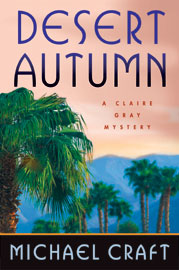
Michael Craft, Desert Autumn
Claire Gray, a renowned Broadway theater director, accepts a position heading the theater department at Desert Arts College near Palm Springs. Before the school year even begins, she stumbles across a dead body and finds herself drawn into solving the murder using her theatrical expertise and understanding of human nature.
***