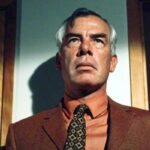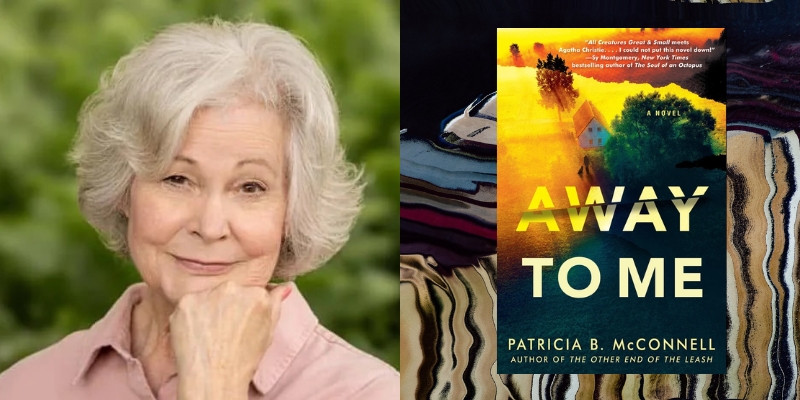
Last night I took a photo of my television screen—because maybe, just maybe, the guy on Wheel of Fortune could be a model for a new character I’m envisioning in my next novel, a follow up to Away To Me.
That morning, I mentally took note of an older guy at a breakfast joint. His big belly filled out an old Green Bay Packer sweatshirt, his hair straggled out of a ball cap in all directions, and he had on shorts. It was 13 degrees outside.
This kind of attention to the details of someone’s appearance is not something I’ve ever done when writing nonfiction books. In each of them, The Other End of the Leash, For the Love of a Dog, and The Education of Will, I had specific information I wanted to convey. I started every section with a story—we are a species obsessed with stories after all—but all my examples came from real life. A dog I’d seen almost die on a highway, a client’s dog whose eyes turned hard when I went to take a dead bird out of his mouth. Every story needed a basis in fact, because facts were part of what I wanted to convey.
But when you write fiction, you get to, no have to, make everything up. I remember feeling a liberating lightness when I first started working on some scenes that might become a novel. Unlike in non-fiction, anything can happen! Wheee! However, it soon became clear that such freedom is both a blessing and a curse. You have to make EVERYTHING up.
You have to create an entire universe, deciding time and place, to bring characters to life, to write believable dialogue, and construct a plot with a narrative arc that will keep people turning the pages. All of this underscored, as is all writing, by the need to write really well, to understand that less is more, that every word matters.
It’s a lot. I’ve always cared deeply about my books being well-written, and I am proud of much of the writing in my previous books. But creating a new world is a challenge unto itself, and is no doubt why I based much of Away To Me on things I already know a lot about. In the novel, protagonist Maddie McGowan is an animal behaviorist who lives on a small sheep farm in southern Wisconsin and competes in sheepdog trials as a hobby. Same.
I figured that, knowing nothing about creating a plot for a murder mystery, not to mention the logistics of a murder (thankfully), I should stick to what I know, at least for part of it. I know that chickadees sing “Woo Hee” in early spring in a wood’s edge in the Midwest, what it smells like when you drive past a field of newly mown hay, that sheep let their ears get floppy when they feel safe enough to rest under an oak tree in the afternoon. I know what it’s like to be an animal behaviorist and work with dogs who crash through windows in fear of thunder, or attack other dogs walking by their yard.
That left me the space to create the plot of a murder mystery, which was hard and fun and required endless amounts of rewrites and advice from generous and talented who gave freely of their time.
What I didn’t know when I started was how the characters I created would come to life as the novel progressed, each one like a photograph developing in a darkroom, becoming sharper and more colorful as I wrote. I didn’t know how fond I would become of them; how the death of one still saddens me, how they became so real to me that I can practically see them in the room beside me as I write.
I didn’t know, although it’s obvious when you think about it, how critical it is that each character, and all that they do, must be based on something that the reader finds believable and true. Which is why I find myself paying more attention to tiny details of how the guy in the diner is dressed, on what the cashier says when she is clearly out of patience. I didn’t know that you are always writing a novel, scrawling notes about a plot point here, taking a photo of a television screen there.
I didn’t know how hard it is to write good fiction, but I didn’t know how fun it was either. I’ve already started writing the second book of a trilogy about Maddie and the dogs of Lonely Owl Farm, and I can’t wait to get back to it.
***