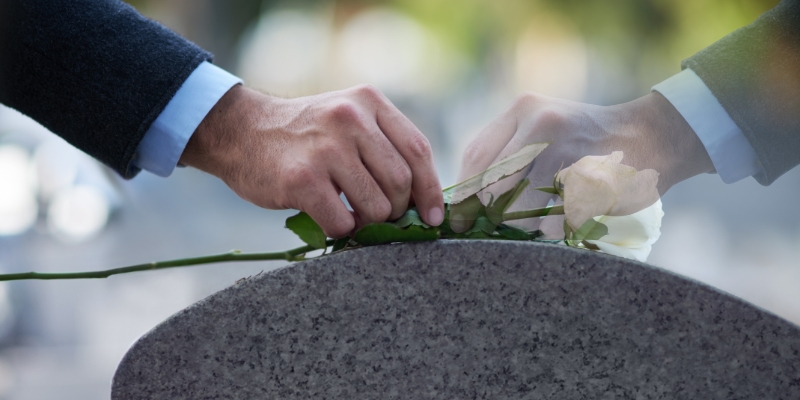
I wish I could talk to the dead. Not as a medium—I won’t be hosting a séance anytime soon. But I’ve definitely had the urge to communicate with the people I’ve lost. I often seek guidance from my late grandma. And in the months after losing a close friend to suicide, I wanted nothing more than to ask her why.
In real life, we don’t always get answers. But in stories, we can.
From classics like The Lovely Bones to recent hits like Holly Jackson’s Not Quite Dead Yet, stories that let the dead talk back offer readers something we rarely get in life: closure, truth, and insight from beyond the grave.
I didn’t fully understand the power of posthumous narration until I wrote from the perspective of one of literature’s most famous dead girls—Beth March from Little Women.
In Louisa May Alcott’s classic novel, Beth March dies from the effects of scarlet fever—and she seems to accept her fate. Her life ends “like the tide going out,” and she’s remembered in our collective hearts as sweet and gentle, even passive. But what happens when a character like Beth—once silenced by her own gentleness—is able to speak?
I discovered the answer as I wrote my debut novel, a modern reimagining of Little Women as a mystery-thriller called Beth Is Dead. In my story, Beth March is found dead in chapter one, forcing her sisters to grapple with her loss for the rest of the novel. Jo, Meg, and Amy process Beth’s death as they work tirelessly to uncover her killer, their grief and suspicion threatening their bond.
But the novel also includes Beth’s perspective in flashback, a choice that taught me more about her character than I ever imagined it would.
I’ve always been intrigued by stories that pull back the curtain of death. My fascination began with Ruth May Price, a child who (spoiler incoming…) dies toward the end of Barbara Kingsolver’s The Poisonwood Bible but continues to narrate posthumously, her voice becoming wiser and more transcendent, like her spirit has merged with nature. I’ll never forget mourning Ruth May’s passing only to turn the page and meet her again, as if a departed friend had risen to tap me on the shoulder.
There’s something terrifying and magical about communing with the dead in fiction. It allows us to imagine that the people we’ve lost are still with us, and it gives us a chance to continue learning from them even after they’re gone.
Posthumous narration can be particularly illuminating in a murder mystery where the victim typically goes to the grave with the very answers the reader craves. Few novels capture this better than The Lovely Bones.
The Lovely Bones is hard to categorize (Is it mystery, fantasy, horror, or all of the above?), but it starts with a murder which means it starts with questions—questions that are answered by Susie Salmon, the victim herself, as she narrates from her own personal heaven.
“I was fourteen when I was murdered.” Now, that’s an opening line I’ll never shake. From page one, we’re offered a strange and uncommon gift—the opportunity to enter the mind of a murder victim.
Hearing directly from Susie isn’t easy. She describes begging her murderer to stop like, “yelling, ‘I’ve got it, I’ve got it, I’ve got it,’ as a softball goes sailing over you into the stands.” Reading from her perspective is heartbreaking—but it offers invaluable truth and insight into what really happened to her, how it really felt, and why it really matters.
My version of Beth March doesn’t narrate from the afterlife like Susie Salmon, but we know she’s been killed before we ever hear her voice, so it has a similar effect and it granted me the opportunity to answer similar questions. What really happened to Beth March? How did it really feel? And why does it really matter?
In real life, we tend to idealize both the dead and the act of dying, cushioning grief with phrases like “don’t speak ill of the dead” and “they’re in a better place.” Literature often reflects this phenomenon, softening death until it’s almost aesthetic.
Consider stories like The Virgin Suicides by Jeffery Eugenides which is narrated by a chorus of neighborhood boys who can’t stop romanticizing the Lisbon sisters. The novel turns the girls and their horrifying deaths into objects of fascination and even beauty. It’s a striking counterpoint to stories where victims narrate their own experience.
Take Holly Jackson’s Not Quite Dead Yet for example. This story is narrated by Jet Mason, a murder victim who is—you guessed it—not quite dead yet. Following a violent attack, Jet has seven days to solve her own murder before she dies of a brain injury.
Because Jet narrates, we get the gruesome details of her murder from her perspective, skull-crunching and all. Then we ride the rollercoaster of denial, anger, and resistance as she comes to terms with her own impending death.
My version of Beth March’s story culminates with her own murder as it happens through her eyes. It’s not an easy scene to stomach, but writing it helped me understand the brutality of Beth’s original death by illness.
Beth didn’t choose to die young. It can’t have been easy to wither away. If she went peacefully, “like the tide going out,” it was because she faced death bravely, not because she welcomed it.
This is the magic of posthumous narration. It allows us to learn from the dead even after they’re gone. Whether they speak from another timeline, from some kind of heaven, or from “the eyes of the trees” like Ruth May Price, they continue to reveal themselves and tell us what their stories really mean.
Writing Beth Is Dead taught me that Beth March’s story was never one of quiet defeat but one of triumph. By letting her speak, I finally heard her.
***