Readers often ask me some version of the same question: How can I stand writing survival thrillers when there’s already so much terror and stress to survive in the real world?
It’s a fair question. Between the twenty-four-hour news cycle, the Internet, and social media, most of us are living in a constant state of low-grade panic. Most days, I read at least a handful of truly disturbing headlines before my morning coffee. So why, on top of all that, would anyone choose to pick up (or write, cough) a book about being hunted, trapped, abducted, or chased down a rural highway?
I’ve learned a lot about the answer to that question over the past five years, since I started writing thrillers full-time.
I’m already an anxious person in my day-to-day life. And honestly, I expected my anxiety to skyrocket with my new career path. (To be fair, it still does when I’m writing a particularly suspenseful or scary scene.) But here’s the thing I always intuitively knew as a reader, that I’ve learned even more as a writer: Survival thrillers do something real life doesn’t.
They have a beginning, a middle, and an end. There is no limbo.
It’s all over in a night, if you binge that book.
In everyday life, anxiety can feel shapeless and never-ending. It follows us to work, to sleep, to the grocery store, to the car, even on vacation. Thrillers take that fear and anxiety and give it a shape. They lay out the danger, the person facing it, the ordeal to survive, and the resolution. And for those of us who live with that constant hum of anxiety, experiencing that narrative arc is priceless.
I write thrillers for the same reason I read them. Not because I enjoy the idea of human suffering, but because I crave the experience of moving through that fear and suffering to the other side.
When I wrote my third thriller, Run on Red, I opened the novel with an experience that really happened to me. Just like in the book, my friend Anna and I were headed out on a Friday night in her crappy green Volvo. I had to work that night, so we were going to be the last ones arriving at the bonfire up the canyon near Lucky Peak in Idaho. It was the early 2000s, so I had my flip phone with me, but there was no service once we got into the hills.
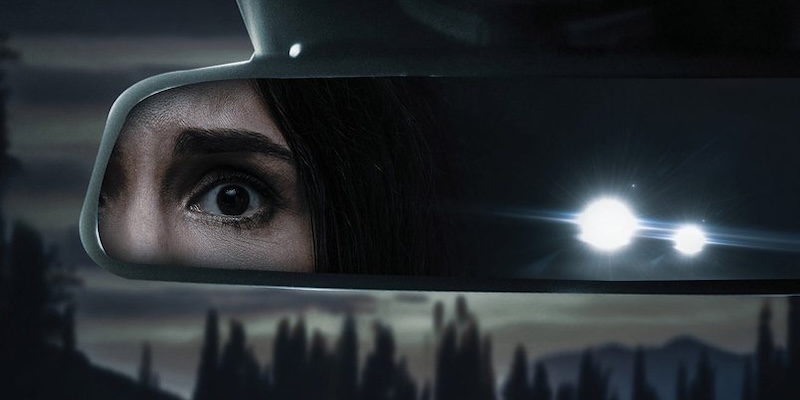
That was about the time we saw headlights behind us. At first, we thought it might be someone else running late, who recognized Anna’s iconic Volvo. But when the car behind us started driving erratically, flashing its headlights, zooming up close as if to hit our bumper, we started getting scared.
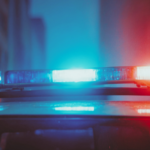
Then, right before a curve in the road, the other car zipped around us. Good, we thought. They just wanted to pass. But when I looked out the window to get a glimpse of the other drivers as they sped by, I saw two men with their hoodies pulled up to hide their faces.
The other car zoomed ahead of us, and around the next bend in the road. And when we took that bend, maybe fifteen seconds later, we saw that the driver had stopped—and positioned his vehicle across both lanes, forcing us to stop, too.
That was when we decided we weren’t interested in getting to the bonfire anymore. We just wanted to get home alive.
And we did—after managing a multi-point turn on that dangerous, dark bend in the road, while the other car did the same and chased us all the way back down to the city while I desperately tried to call the police with a NO SERVICE message blinking at me.
I still don’t know who those men were or what they wanted. But I think about that experience every time I drive down a dark highway, with spotty cell service. And, of course, it became the inspiration for the opening scenes of Run on Red. Only this time, while I wrote, I didn’t feel scared—even when the story unfolded into something far more horrific than what I experienced that day in the hills.
This time, I knew there would be an end to the story that I controlled. This time, I was in the driver’s seat, so to speak. Not the creepy men wearing hoodies to hide their faces. And this time, there was some meaning to the story, instead of just a random scary event.
Honestly, I think that’s the second reason readers keep coming back to this genre, even in a world so full of real fear. Not only do these stories have an ending, but they help us believe that there’s actually meaning to be found in some of the senseless and terrifying things in the world.
Most of us will (thankfully) never be chased through the woods, stranded on a rural highway, or trapped with someone who intends to do us harm. But we do know what it feels like to live in a world where those things happen. And most of us, especially those of us who are women, have first-hand experience with some degree of violence and fear. We know that one in four women will be assaulted during the course of her lifetime.
That’s why survival thrillers matter. They let us shadowbox with our fear—and then experience what real life so often withholds: meaning, resolution, and survival. We close the book shaken, but also with something of a system reset.
And maybe, just maybe, in the best books, we feel a little bit inspired to keep fighting, enduring, surviving whatever battles we’ve got ahead of us that day.
***