One of the most enduring international literary pantheons when it comes to suspense and thrills are royal murder mysteries, many of which have gone unsolved for centuries. In fact, some royal intrigues remain unresolved to some extent even today, with evidence often pointing heavily in one direction but still not giving complete full-circle closure.
There are even cases where a mystery has been put to rest but still provides intrigue for many, such as the legend behind Anastasia Romanov: when Tsar Nicholas II of Russia and his family were murdered in 1918, initially Anastasia was thought to have possibly survived the assassination and escaped.
Countless films and books came out embracing these rumors and legends, and there were even some famed impostors claiming to be Anastasia, such as Anna Anderson. DNA evidence in recent years confirmed that Anastasia was indeed murdered along with her other family members. Nevertheless, probably because the motif of a royal member’s narrow escape from death is so compelling, some people continue to believe in the myth of her disappearance.
Since these criminal conundrums continue to remain in the public consciousness (and sometimes getting a boost in popularity when a new discovery is made), there’s also a lot of compelling reading to be had for those who love a good juicy monarchical intrigue.
Royal murder riddles date back as far as ancient Egypt, such as the tale of Ramesses III. A succession plot surrounded this pharaoh, with legend having it that wives, in particular Tiy, in Rameses III’s harem plotted to murder the pharaoh and have his son Pentaware take over the throne. For years, it was uncertain if this was in fact the cause of Ramesses III’s death and was a 3000-year old cold case. Was Ramesses III actually murdered by Tiy or one of her associates?
Initially, evidence on Ramesses’ mummy did not point to murder and it was thought he died a natural death, but more recent scans that have found severe neck wounds indicate that he was indeed murdered. To add to the suspense, additional scans have proven that another mummy found together with Rameses III was a blood relative—and extremely likely to be Pentaware, with injuries indicated that this prince was forced to kill himself after a potential failed coup.
There are some entertaining reads out there on the topic, such as Ramses’ Revenge by Fiona Deal and the Battle of Kadesh by Christian Jacq, but it’s certainly a subject that has almost been underutilized when it comes to mysteries, true crime and thrillers of the ancient world (if any aspiring authors want to take note for further ideas).
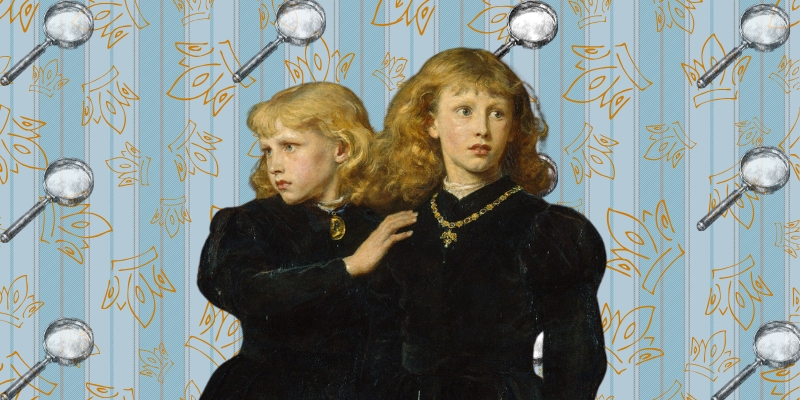
It’s safe to say that the disappearance mystery of the “princes in the Tower,” namely Edward V and his brother Richard has been a long-running intrigue in historical circles and has cropped up in innumerable literary works, perhaps the most famed piece being Shakespeare’s Richard III. The two young boys were placed into the Tower of London in 1483, and the main suspect in their disappearance was their ruling uncle, King Richard III.
In 1674 two skeletons were found at the Tower that were clearly children’s skeletons; however, this is still considered to be circumstantial evidence that they were murdered. And of course, the question remains, if they were indeed murdered, whodunnit? Was it in fact Richard III, or perhaps another suspect like Henry Tudor or Henry Stafford?
Besides Shakespeare’s masterpiece, many other works of fiction delve into the intrigue, such as A Dangerous Inheritance and The Princes in the Tower by Alison Weir.
Amy Robsart’s death is another unsolved Tudor/Elizabethan royal mystery that still draws interest and intrigue to this day. The first wife of the earl Robert Dudley, Elizabeth I’s Master of the Horse and a long-time royal favorite of Elizabeth (he did pursue her hand in marriage for a while as well), Amy was discovered dead at the bottom of the stairs at Cumnor Place in 1560 with a broken neck.
Though the overall contemporary consensus is that her death was most likely accidental and also potentially the result of physical weakening due to disease, at the end of the day, her cause of death is still a historical enigma that led to public distrust of Robert Dudley after the fact- did Dudley have her murdered to free himself up for Elizabeth I?
One fiction book that explores Amy’s story is The Forgotten Sister by Nicola Cornick, blending a thrilling contemporary relationship tale with dives into the past via Amy and Dudley- an engaging read for those who love a good historical fiction mystery as well as a bit of romance. For a nonfiction but fast-paced true crime take, another book to explore is The Death of Amy Robsart by Sarah Beth Watkins, which delves into all the possibilities of how her sad fate came about.
So, mystery lovers, what are you waiting for? Historical true crime fiction and intrigue awaits!
***