When I was first sought to hone my craft as a novelist, I took a few screenplay writing classes. I had heard such lessons were a great way to learn about plotting, how to build a three-act structure that makes a story compelling. Yet, what I took most from that education was not how to construct a riveting plot, but how to craft a character who a reader will follow to the ends of the earth for one simple reason:
Because you’ve created a deep emotional bond with them.
If you dangle your hero over a cliff, you’d better hope a reader cares if they fall. If not, no matter what wild rollercoaster you build, the story and tension will fall flat. But how do you achieve that bond? How do you build sympathy for your character?
There are seven ways to achieve this. I keep this list handy when starting a story. I use it to analyze ways to build a deeper level of sympathy between a reader and a character. This may sound crude, but after you read this list, look to your favorite books or movies, and you’ll see a writer utilizing these tools.
Show that your character is a talented expert in their field.
We all have an innate respect for someone who excels in their profession. Even the most unlikable, flawed character earns a measure of awe if they’re confident, even rebellious, in their talent. For example, in the television drama “House,” the main character is a mean, drug-addicted physician, but because he solves the unsolvable case, we come to respect, and even love, the doctor. You can see the same in many crime and mystery novels, where the detective is severely flawed, but again solves the unsolvable.
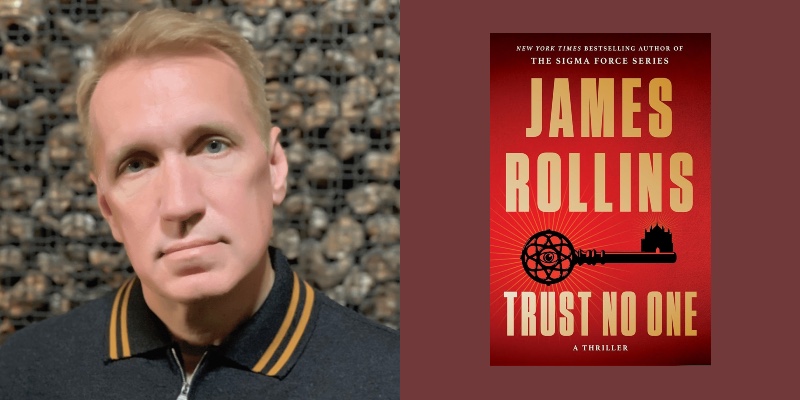
In my thriller Trust No One, Duncan Maxwell is sixteenth in line to the British Crown and has a pompous side that can be grating, but he is a savant with encryptions, and his skill is vital to uncovering the mysteries locked in a centuries-old alchemist’s diary. As the story unfolds, other aspects of his character (some from this list) reveal a more complicated man.
Have your character demonstrate a sense of humor.
Life is hard—and even harder in a thriller. During times of stress, we always appreciate someone who can break the tension or cut the legs out from under a miscreant with a barbed line. We all wish we could come up with the perfect retort under pressure. Seeing a character achieve this earns our respect and affection. In Trust No One, I added a couple of characters who are perfect sparring partners—both with each other and the world at large.
Your character has a history of undeserved misfortune.
We can all relate to the tides of fate that can suddenly upturn a life: a sudden accident, a devastating diagnosis, a natural disaster, or simply a string of bad luck. Seeing a character suffer the same engenders our sympathy. In Trust No One, the main character, Sharyn Karr, was raised by an alcoholic father—a police officer who died and left the family destitute—but to protect his daughter from his own abusive nature, he taught Sharyn the skills she would need to survive a chase across Europe while being hunted from all sides.
Give your character a physical, mental, or education handicap.
It is in human nature to root for the underdog. To see someone overcome an obstacle in life and succeed against all odds warms the heart. Or better yet, show how what seems like a handicap can actually be an asset in life. In Trust No One, one of the students on the run, Tag McKnight, is a young man with cerebral palsy—and over the course of the novel, he will find strength where others only see affliction.
Have your character treat others well.
When surrounded by the harshness of the world, acts of kindness always shine brighter. By having a character demonstrate this, especially with no expected gain or thanks, we grow to respect that individual and hope to see such goodwill rewarded down the line. But what’s even more powerful is a caveat to this point—which brings us to the sixth item in this list.
Have your character be kind to pets, children, or the elderly.
When a character treats the most vulnerable with appreciation and love, a reader can’t help but want that character to succeed. In Trust No One, a caretaker nurses an injured raven, and a wildlife biologist attempts to rehabilitate a mountain lynx. Such selfless dedication—not to mention the animals themselves—draws a reader closer to the story and its characters.
Simply have other people in your novel love or respect the main character.
I found this one hard to believe, but it does work. Why? Humans are natural mimics. We have the tendency to assume the posture of someone we speak to…or when someone yawns, we’re more likely to yawn. This is due to the firing of mirror neurons in our brains. So take advantage of this biological quirk by having other characters express or show sympathy for the main character, and a reader will strangely follow suit.
Now, please don’t imbue your character with ALL seven of these traits, or it will strain credibility and ruin what you’re attempting to accomplish. Two or three is enough. That leaves plenty of room to expand the depth of your characters by showing their flaws, insecurities, and foibles—but still leave a reader rooting for your character to succeed against all odds.
***