How many sociopathic women have you enjoyed meeting lately? If you watch TV or read, the likelihood is that you will have met quite a few. And, you may have even grow fond of some of them, despite their favorite past times of getting away with murder.
In fact, you may even have your own favorite antiheroine. There are plenty to choose from, these days. We are, in fact, a little spoilt—from my own character Lalla Rook to a huge range of wonderful creations—Amy Dunne, Villanelle, Georgia Miller, Wednesday Addams, Grace Bernard, Millie Calloway, Kitty Collins, Ayoola Abede, Sweetpea, and many more.
The truth is that the popularity of the super-intelligent, effortlessly stylish, all-powerful, guilt-free fictional antiheroine with a penchant for violence and revenge, continues to grow. So what’s behind this wonderful surge of women who stand outside social norms and expectations and take life (and lives) into their own hands?
There have always been badly behaved women in fiction, of course. There are the monsters—abusive characters and mothers, or some form of the “woman in the attic” whose struggles or ill-treatment turn ferocious.
But the modern sociopath is different; she is not just a monster, she is in control, often aspirational, and frequently avenges ill-treatment or simply asserts dominance over a male-dominated world. And this begs a question—are female sociopaths a fantasy of moral freedom or superwomen reflecting the anxieties of our age?
Lalla Rook, the anti-heroine of my book, A Sociopath’s Guide to a Successful Marriage, is a sociopath and she can’t be trusted even if you’re her best friend. But her manipulation and scheming, however, are not only stylishly cold and unemotional, but directed to things we can relate to – achieving the house of her dreams, a good school for her children, and a great job for her husband.
The thing is she’s very relatable, even if she sometimes kills and just gets on with her day-to-day tasks. There is something delicious about following a woman who goes for what she wants, and smashes through all frustrations without a flicker of guilt or shame.
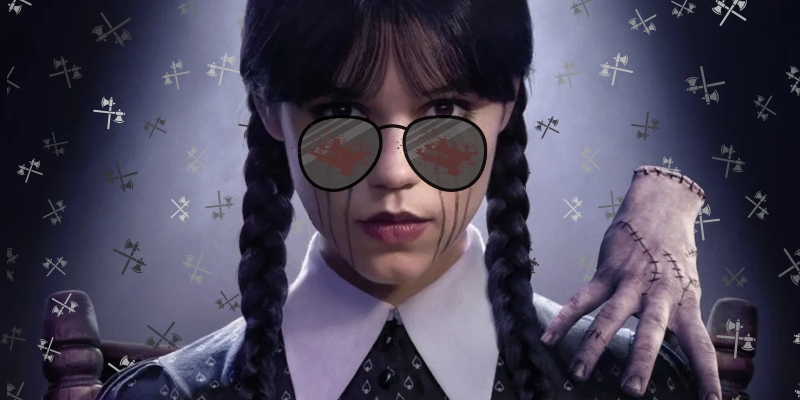
It’s this commitment to inventively immoral behavior alongside outrageously-achieved success that makes characters like Wednesday Addams so enduringly likable. While Kitty Collins’ solutions to problems are a great deal more violent than most of us would be comfortable with, it is easy to relate to her anger at the abusive, predatory and toxic men in her life
Amy Dunne of Gone Girl reinvented the trope as an outrageously narcissistic, unapologetic, high-functioning sociopath, and brought her to a mass audience. We might have questioned her morality, but we can’t help but be impressed by her imaginative ambition and organizational skills.
And there are several other hugely compelling incarnations, each with a different niche: Villanelle embraces glamour, Georgia Miller rocks motherhood, Grace Bernard embraces family, Sweetpea employs invisibility, and Ayoola Abede leans on sisterly support. But what connects them all, is that they kill men (mostly) and kill repeatedly, and don’t seem to be remotely bothered about their behavior.
What a relief these character represent in an age in which we are made to control and second-guess ourselves at every turn!
How do we understand this new breed of female killer? They act as superheroes while employing the methods of the sociopaths. Back in 1930s and 1940s, the cult of the Superhero was born at a time of huge social and global distress and horror which left people with a deep sense of their own vulnerability.
Did the Superhero, that invulnerable paragons of virtue and strength, appear as a reaction to this sense of being disempowered and in danger? Was it the imaginative fight-back of immigrants denied other more lucrative opportunities in life?
The popularity of a stylish, super-powerful, guilt-free anti-heroine—capable of extreme violence, yet still emotionally fulfilled—might, therefore be something of a wish fulfillment in an age in which people feel deeply vulnerable.
So while these characters are fantasies, they may also comment satirically on the state of the world. In fact, these urgent characters may point out some of the hypocritical aspects of the way we live, and highlight underlying anxieties that many women feel daily.
The world we inhabit can be fraught with dangers, real and imagined, and those dangers are not the same for men and women. So, do sociopathic females attempt to even the score, if only imaginatively?
Are these characters popular because they address an enduring sense of vulnerability and offer a response to living under threat? If so, they offer freedom, not only of standing outside of the social norms, but of living without the requirement for empathy. They may speak to the many cultural pressures that women feel, the constant need to be aware of threat, while offering an experience of moral freedom.
It might also be because we’ve seen enough of male killers, and have become tired or even angry about the way fiction has repeatedly made women the victims of violence. These characters are not like their male counterparts not only because their victims aren’t women, but because in some crucial ways they are fighting aspects of social convention and social injustice.
These very dangerous women may well be a very important ally. If you’re exhausted by empathy, sick of violence against women, racked with guilt over things that are not your fault, tired of being responsible for an unfair portion of the world’s tasks, burdened by a nameless sense of anxiety, and judged for how you look, maybe a friendly sociopath is just what you need to feel yourself again—a best friend who can free you from life’s many limitations.
***