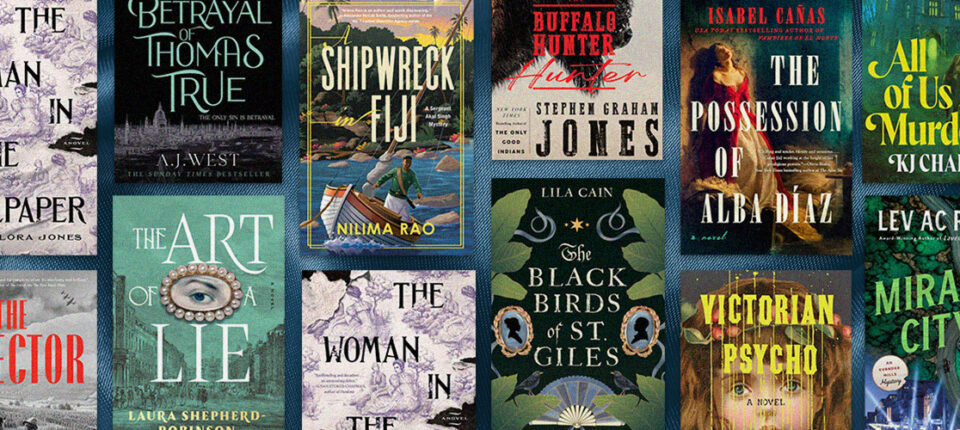
As the new Gilded Age continues, income inequality soars, and more and more public institutions are dismantled for private riches, historical fiction can read as rather contemporary. Perhaps that is why the 18th and 19th centuries feature so prominently in the list below (although if we must be burdened with the policies of these eras, we could at least gain access to their hats). Strongly represented is also the intersection of space, culture, and politics, with heavy use of symbolism to connect private environments to the wider world.
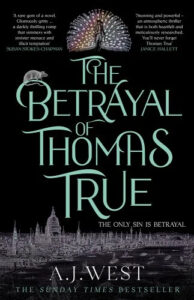
The Betrayal of Thomas True, AJ West
(Orenda)
Setting: Early Georgian England
The Betrayal of Thomas True has an incredible setting: the Molly Houses of Georgian England, spaces for male sex workers to safely ply their trade and host to the queer luminaries of London and their spectacular salons and performances. A bouncer for the most famed Molly House is tasked with solving a series of murders threatening their community, as he falls deeply in love with a newcomer to the city. Historical crime fiction perfection!
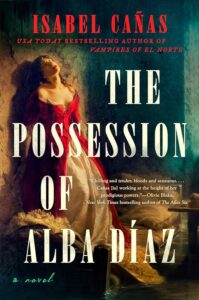
The Possession of Alba Díaz, Isabel Cañas
(Berkley)
Setting: Zacatecas, 18th Century
In mid-18th century New Spain, a plague in Zacatecas sends a young woman and her family to her fiancés remote silver mine, where an ancient evil awaits. Isabel Cañas has quickly become a superstar of historical fiction, and this one is her best yet!
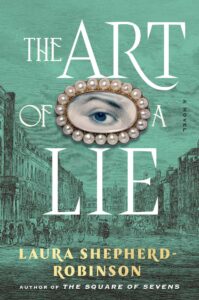
The Art of a Lie, Laura Shepherd-Robinson
(Atria)
Setting: London, Late 18th Century
This book has a notably perfect ending. In Laura Shepherd-Robinson’s new historical mystery, a con artist targets the newly wealthy widow of a pastry shop owner in a Lonely Hearts scheme, not knowing that his mark is responsible for her husband’s untimely demise. A flirtatious cat-and-mouse game ensues, with heart-rending results.
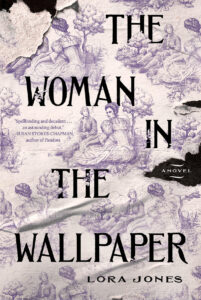
The Woman in the Wallpaper, Lora Jones
(Union Square)
Setting: France, Late 18th Century
In this Ancien-Regime-set parable of greed and good, two sisters and their widowed mother go to work at a fabled wallpaper factory haunted by ghostly presences and awash with revolutionary foment. As conditions deteriorate at the factory, and anger grows over poor treatment of workers, strange figures appear in the wallpaper’s intricate designs hinting at dark deeds. Atmospheric, moody, and with an ending that packs a punch, The Woman in the Wallpaper is one of the year’s strongest historical fiction entries.
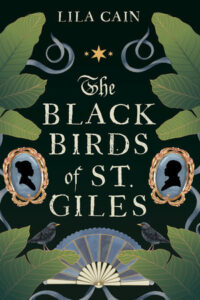
The Blackbirds of St Giles, Lila Cain
(Dafina)
Setting: Early 19th Century London
A Black soldier who served with the British during the American Revolution heads to England with his sister to claim his inheritance after a surprise windfall. Instead, the two siblings find themselves robbed and stranded in the poorest section of turn-of-the-century London, a slum known as the “rookery”, and fall under the tyrannical sway of the local crime boss. Full of compelling characters, rich detail, and lush set-pieces, Cain’s novel paints a fascinating and immersive portrait of London’s substantial Black community in the late Georgian Era.
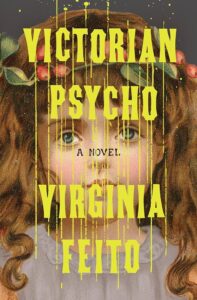
Virginia Feito, Victorian Psycho
(Liveright)
Setting: Victorian Era English Countryside
This book is so nasty, in the best way. A governess with a host of secrets begins a new job corralling a wealthy family’s ill-behaved brats, ready to give them her lackadaisical all, but her bad luck, strange behaviors, and even stranger appetites can only result in a delightfully vicious bloodbath. Feito’s novel reads like Henry James on steroids.
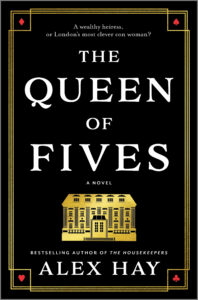
The Queen of Fives, Alex Hay
(Graydon House)
Setting: Victorian England
Perhaps 2025 is the year of the heist, especially given the IRL increase in property crimes against the uberwealthy (excuse me while I go in search of the world’s tiniest violin, which would probably be locked up in a billionaire’s art collection or a Swiss warehouse). Alex Hay already won me over with the impeccably crafted Housekeepers, and The Queen of Fives should cement Hay’s reputation as the underworld king of Victorian capers, featuring a long con for the ages, a queer-coded marriage plot, and plenty of outfit changes.

The Buffalo Hunter Hunter, Stephen Graham Jones
(Saga)
Setting: turn-of-the-century Montana
Stephen Graham Jones’ historical vampire epic is, well, exactly as awesome as that sounds. In The Buffalo Hunter Hunter, a diary from 1912 reveals a slow-burn tale of suffering and vengeance not for the faint-hearted. This book was basically perfect.
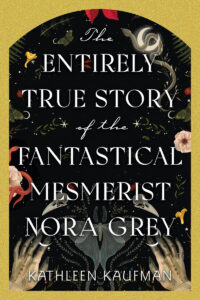
The Entirely True Story of the Fantastical Mesmerist Nora Grey, Kathleen Kaufman
(Kensington)
Setting: turn-of-the-century England
As the tongue-in-cheek title indicates, Kaufman’s scammer Nora Grey is not exactly the genuine artifact when it comes to seances. She is, however, quite good at tricking others, and leverages all her talent for deceit in service of survival. I love a good confession novel, especially one with such an unrepentant storyteller, and fans of such classics as Vanity Fair will find the titular heroine exceedingly easy to root for.

A Shipwreck in Fiji, Nilima Rao
(Soho)
Setting: Fiji, 1917
In the second installment of her absurdly charming new series, Nilima Rao takes us to Ovalau, a neighboring island, where rumors of German soldiers doing reconnaissance abound, and a missing Fijian could throw the delicate colonialist politics of the nation into disarray. Rao once again blends history, humor, and heartfelt drama for what has quickly become my favorite historical series of the last ten years.
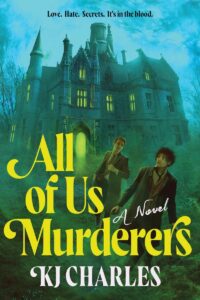
All of Us Murderers, KJ Charles
(Poisoned Pen Press)
Setting: English Countryside, 1920s
I loved this book so much, from the gender-queered Georgette Heyer cover to the last thrilling line. At the turn of the 20th century, the fractious and estranged Wyckham clan gathers at a dilapidated country estate to dispute their future inheritance. Soon enough, the guests start dropping like flies, whether from jealous relations or supernatural entities, and you’ll have to finish the book to find out if anyone’s left alive by the end of the weekend.
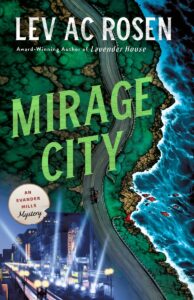
Mirage City, Lev Rosen
(Minotaur)
Setting: Los Angeles, 1950s
Rosen’s historical series featuring queer PI Evander Mills has quickly become one of the best historical series around, and the new novel is no exception. Rosen’s ex-cop-turned-detective is usually more buttoned up than his clients, relying on new encounters to inform his approach to the rapidly developing queer subculture of mid-century America. Things take a turn in Rosen’s latest, where Mills finds himself investigating a series of disappearances for the Mattachine Society, a group committed to seeking gay rights through not rocking the boat, already a controversial goal even before the dawn of the queer liberation movement.

The Director, Daniel Kehlmann
Translated by Ross Benjamin
(Simon and Schuster / Summit Books)
Setting: Austria, WWII
The new novel from the internationally renowned Kehlmann centers on the turbulent life and art of G.W. Pabst, the Austrian screenwriter and director. Kehlmann’s novel traces Pabst’s journey fleeing from Nazi Germany, through the Hollywood doldrums, and back to Austria, where he’s soon recruited by Joseph Goebbels to produce propaganda films for the Reich. –Dwyer Murphy
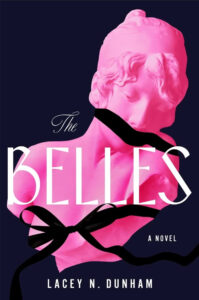
The Belles, Lacey N. Dunham
(Atria)
Setting: Virginia, 1950s
Dunham explores the stifling world of mid-century women’s colleges in this folk-horror-infused take on dark academia. In The Belles, a close-knit group of friends engage in secretive, wicked, and eventually deadly games in violation of the rules of their carefully controlled campus. Flash-forward sequences take us to their 50 year reunion, a gathering that may finally play host to the long-concealed truths of both characters and setting.
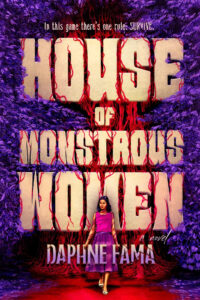
House of Monstrous Women, Daphne Fama
(Berkley)
Setting: Phillippines, 1986
I really hope the title of this book is an ode to the cult classic film studies memoir, House of Psychotic Women, although the subject matter has little in common. Set in the Philippines in the 1980s, at the tail end of a dictator’s long reign, the novel follows three young people playing a game that may secure one of them the future of their dreams. In order to win, they must play at hide and seek in an enormous old home full of monstrous collections and built atop an ancient altar. Outside the remote villa, protesters gather their strength, and the current regime will soon be toppled—but what comes next?