The horror revival continues! And it’s so damn hard to narrow down my favorites, which is why this list has twenty titles. There are epic historicals, cutting satires, folk horror, religious horror, cultural reckonings, and so much more. Without further ado, behold!
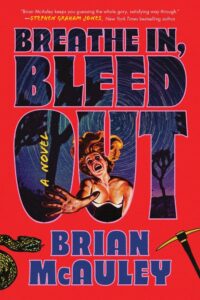
Breathe In, Bleed Out, Brian McCauley
(Poisoned Pen Press)
Murder at a yoga retreat in Joshua Tree! So, basically, the murder of everyone you’ve ever been annoyed by. A wellness retreat in the desert turns into a free-for-all bloodbath in a perfect horror send-off of Southern California and tech culture. An excellent and rather hilarious novel!
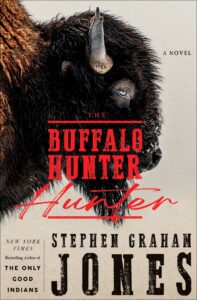
The Buffalo Hunter Hunter, Stephen Graham Jones
(Saga)
Stephen Graham Jones’ historical vampire epic is, well, exactly as awesome as that sounds. In The Buffalo Hunter Hunter, a diary from 1912 reveals a slow-burn tale of suffering and vengeance not for the faint-hearted. This book was basically perfect.
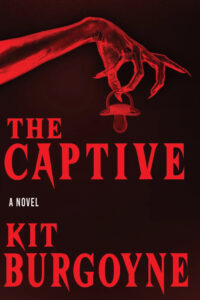
The Captive, Kit Burgoyne
(Hell’s Hundred)
Rosemary’s Baby, but make it Patty Hearst! In The Captive, a group of ecoterrorists kidnaps the heiress to a family fortune built on the violent exploitation of labor and the land, only to find out that their victim is pregnant with the devil’s baby, and has no intention of returning to her family. Come for the set-up, stay for the garden party. You’ll know it when you see it.
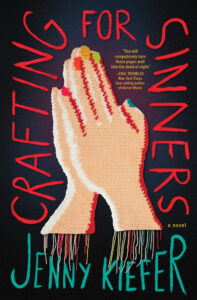
Crafting for Sinners, Jennifer Kiefer
(Quirk)
Crafting horror!!!!!! This book is for everyone who’s used their five-finger discount at you know which crafting store, because of their terrible politics and lack of cameras. Fired from a church-owned crafting store after being outed, the heroine at the center of Crafting for Sinners goes back to her old employer to pick up a few skeins of yarn, only to find herself fighting for her life against her old coworkers using only the items available on the store’s shelves. You’ll never think about superglue the same way again…
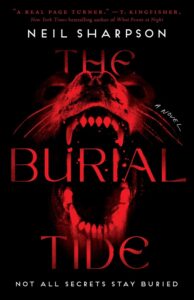
The Burial Tide, Neil Sharpson
(Zando)
Hot off the heels of Knock, Knock, Open Wide, Neil Sharpson has crafted another slow-burn horror story infused with Irish folklore—this one featuring selkies and exploring the true consequence of immortality: boredom. Also, the costs of immortality? Not so great, either. Sharpson is an incredibly agile writer, shifting between humor, pathos, and terror easily, often on the same page, and this latest entry proves him as a writer to watch.
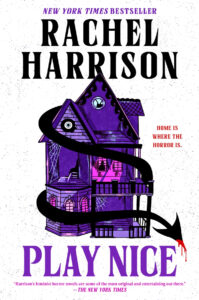
Play Nice, Rachel Harrison
(Berkley)
Rachel Harrison can take on any subgenre and make it her own, and Play Nice is no exception. A poltergeist tends to appear in close proximity to stifled housewives, repressed adolescents, and other victims of the patriarchy, making haunted houses perfect for feminist storytelling. In Play Nice, a young influencer returns to her mother’s haunted home in order to flip the property and finally put her childhood demons to rest, only to discover she’s been gaslit about her mother her whole life. Harrison’s best yet!
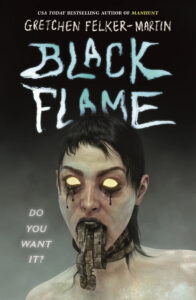
Black Flame, Gretchen Felker-Martin
(Tor Nightfire)
Felker-Martin’s obvious brilliance and erudite scholarship are on full display in this taut, lyrical explosion of a novel. Black Flame takes place in the 1980s and follows a film restorationist as she works on a long-lost masterpiece of queer cinema and tries to quell her own desires. I took my time with this read, each sentence a world of its own, and each reference an ode to defiant art. Read it. You know you want to.
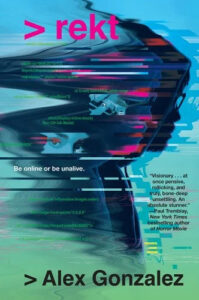
Alex Gonzalez, rekt
(Erewhon)
Alex Gonzalez has perfectly captured the horrors of the dark web in this dark exploration of grief, trauma, and violence. After Sammy loses his girlfriend of almost a decade to a shocking car accident, he finds himself drawn to the worst possible content online, trying to numb himself to personal misery through dedicated consumption of public tragedies. When he finds himself on a site that appears to show not just how someone died, but all the ways they could have died, he can’t look away. Who are the people responsible for such a sick exercise in creativity? And does he want to stop them, or join them? This book was probably the most disturbing one on this list, and that’s saying something.
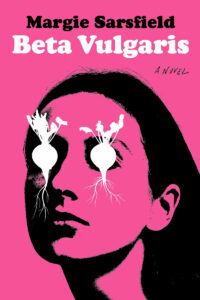
Beta Vulgaris, Margie Sarsfield
(Norton)
When you stare into the beet pile, it stares back at you…In Beta Vulgaris, a couple of Brooklyn hipsters head to the Michigan’s upper peninsula to work on a sugar beet farm, which sounds like the set-up to a joke but is actually a deadly serious and emotionally devastating horror novel. Sarsfield’s insecure narrator has spent her whole life restricting calories, controlling her sexual appetites, and living within her extremely limited means, while her privileged boyfriend is a profligate spender and an ungenerous lover. As the harvest begins, and the blood-red beets sing their tempting songs, more and more workers vanish. Did they follow the siren song into the middle of the frozen beet piles? Or has something even stranger and more sinister occurred? The ending absolutely wrecked me, in a quiet, hopeless, sublimely beautiful way.
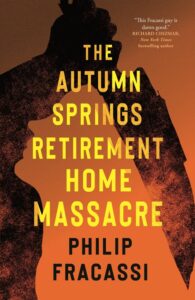
The Autumn Springs Retirement Home Massacre, Philip Fracassi
(Tor Nightfire)
While 2025 is positively peppered with crime-solving elders, this one takes the trend into horror territory. Retirement home resident Rose is contemplating moving in with her daughter and waffling on a romance with a kind neighbor when a series of brutal killings rocks her quiet community. They’re used to death, but they’re certainly not used to this kind of death, and the residents of Autumn Springs will not go gently into that good night if it’s a slasher sending them there. Fracassi avoids characterizing his retirees as sassy grandmas or spry grandpas, choosing instead to portray aging with grace, dignity, and a whole lot of badassery.
Dark Sisters, Kristi Demeester
(St. Martin’s)
Dark Sisters takes place in a New England town in which patriarchs prosper while women are laid low by a mysterious disease. The community revolves around their evangelical church, a place designed to control women’s behavior and ensure continuity of tradition. The community believes their prosperity stems from secret rituals, performed on the eve of the Purity Ball, a night of dancing, merriment, oaths of virginity, and….some weird stuff at the end that no one quite remembers. A parable of feminist vengeance with a truly badass conclusion!
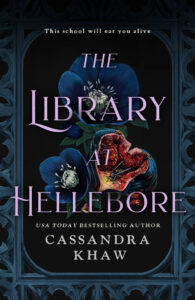
The Library at Hellebore, Cassandra Khaw
(Tor Nightfire)
Dark academia comes to its most logical, brutal conclusion in Cassandra Khaw’s splatterpunk take on college in the underworld. Are the professors there to teach, or do they have more disturbing plans for their students? Find out in the bloodiest graduation ceremony since the third season of Buffy.
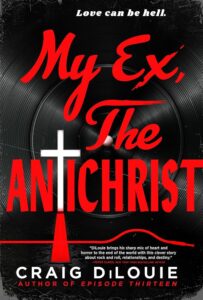
My Ex, The Antichrist, Craig DiLouie
(Run for It)
Craig DiLouie’s new novel is a particularly fun take on the rise of religious horror. Metal band The Shivers, self-described as a “demon disco” ensemble, find out their lead guitarist is the antichrist after a series of violent riots break out at their live shows. When the guitarist leaves to form another band, the Shivers must pivot to the only musical style capable of preventing the apocalypse: pop punk. Honestly, makes sense!
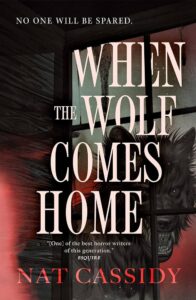
When the Wolf Comes Home, Nat Cassidy
(Tor Nightfire)
When FDR said “the only thing we have to fear is fear itself,” he could never have imagined someone would take that thought to so logical—and extreme—a conclusion as this, and yet Cassidy’s latest works well on every level. Cassidy’s protagonist is a struggling improv comedian working graveyard shifts at the local diner and wondering how she’ll make rent. Within the first few pages, she’s transformed into the protector of a lost little boy with terrifying enemies & even more terrifying powers. The conclusion feels shattering, inevitable, and completely of our time—by which I mean, very bleak indeed.
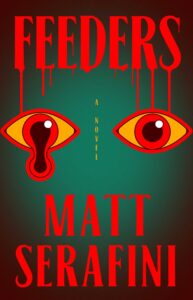
Feeders, Matt Serafini
(Gallery)
One of several books out this year that interrogates how far people are willing to go in the name of social media views, but by far the most graphically disturbing (yes, the dog does die). When a wannabe influencer gains access to an exclusive new social media site, she soon discovers that to go viral with viewers, she needs to go extreme with her content. Truly vicious and not for the faint of heart—just like the social media metrics that inspired it.
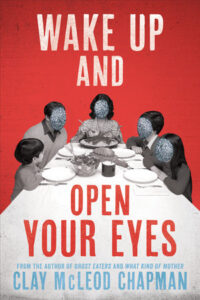
Wake Up and Open Your Eyes, Clay McLeod Chapman
(Quirk)
Clay McLeod Chapman’s upcoming horror novel is the perfect post-Election read: namely, in that it features demonic forces taking possession of their viewers through the TV network Fax News (Just the Fax!) The ways in which the story evolves take the plot in directions that make all of us understand our complicity in the toxicity of today.
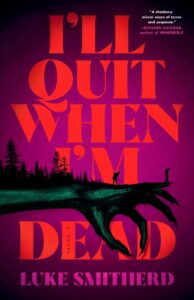
I’ll Quit When I’m Dead, Luke Smitherd
(Mulholland)
Finally! A book to recommend to your friends who won’t shut up about cross-fit. In Smitherd’s sharply observed parody of self-improvement and its discontents, two strivers—a musician with stage fright and a young woman ready to manifest her future—join a program that promises motivation and complete transformation, but at what cost?
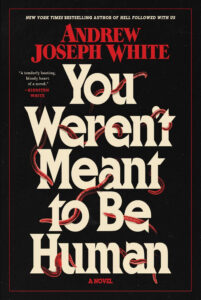
You Weren’t Meant to Be Human, Andrew Joseph White
(Saga)
In a year of gore-filled nightmares, Andrew Joseph White’s tale of flies and worms might outdo them all them with its poetic grotesquerie. You Weren’t Mean to Be Human follows a young autistic trans man who believes he’s found a safe home when he’s welcomed by sentient bugs and their followers into their rotting nest. There, he can be himself, as long as he also feeds his new overlords plenty of rotting flesh. But when he finds himself pregnant, the flies and worms won’t let him terminate the pregnancy: they have plans for the child.
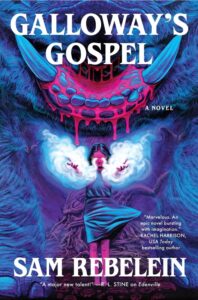
Galloway’s Gospel, Sam Rebelein
(William Morrow)
This book is so bat shit. Or shall I say, pig shit and bat puke? You’ll get that reference when you read it. Sam Rebelein has been quietly crafting his own horrifying mythology, a cursed valley known as Renfield in which evil, like pollution, gets worse the further you go down stream. But Renfield County—and in particular, the town of Burnskidde—is facing far worse than the runoff from the paper factory in Rebelein’s epic tale of doodles and nightmares.
Galloway’s Gospel begins with the bored Rachel Galloway drawing in the margins of her history notebook. When her classmates, and the townspeople, begin to embrace her absurd illustrations as gospel for a new religion, things start to get truly wild. Be warned: there are more missing limbs in this than in Snowpiercer and Geek Love combined.
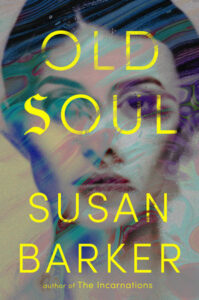
Old Soul, Susan Barker
(Putnam)
Old Soul feels like if Thomas Pynchon’s V was a Georgia O’Keefe painting. At the start of Barker’s latest, two strangers who miss their flight discover a strange supernatural mystery in common: each lost a loved one suddenly and inexplicably, and each of their objects of grief had encountered an unsettling woman just before their untimely demise: a woman who appears never to age and who insists on taking photographs of her chosen victims. What follows is an epic chase around the world to track down evidence of a malevolent killer in hopes of eventually finding the woman herself.