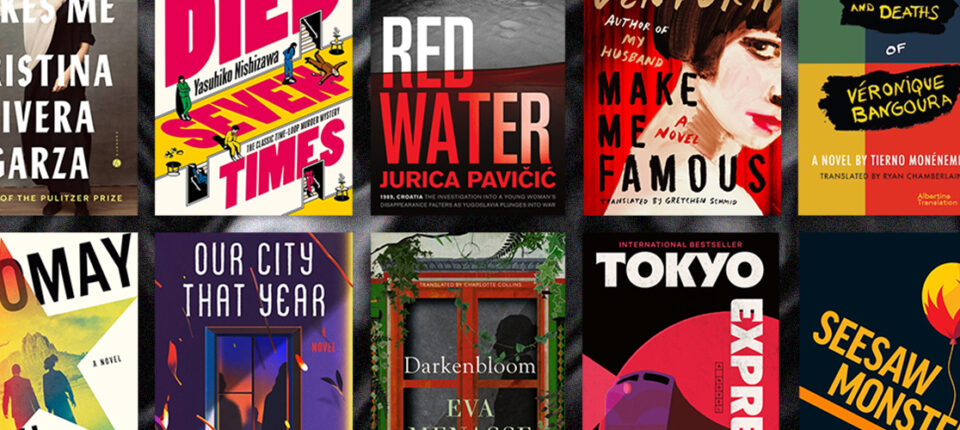
The best crime fiction in translation of 2025 is defined by its variety: speculative, psychological, and political thrillers, plus noir, metafiction, and a classic puzzle mystery. Of particular note are several reissued titles, including a Japanese mystery from 1963, a bleak Ethiopian espionage thriller from 1983, and a shocking work of Indian political fiction from 1998. Those looking to escape our present discontents through an exercise in armchair travel can’t go wrong with the works below.
Death Takes Me, Cristina Rivera Garza
Translated by Robin Myers and Sarah Booker
(Hogarth)
Cristina Rivera Garza has crafted a brilliant meta-mystery with Death Takes Me, both an exploration of gendered violence and a clever reversal of its expectations, in which a professor stumbles across the body of a mutilated man only to find that the city is strewn with recently castrated corpses, each found next to a line of verse. Brutal, complex, and intellectually fascinating.
The Man Who Died Seven Times, Yasuhiko Nishizawa
Translated by Jesse Kirkwood
(Pushkin Vertigo)
In a murder mystery take on Groundhog Day, a high schooler has seven chances to save his grandfather’s life. Nishizawa’s young hero has always possessed a strange talent: some days are repeated, up to nine times, and whatever happens on the last iteration of the repeating day becomes the new reality. The Man Who Died Seven Times is a metaphysical masterpiece that never hesitates to show both humor and heart.
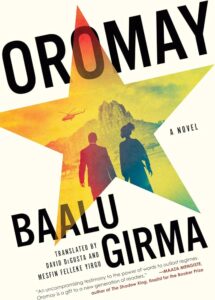
Oromay, Baalu Girma
Translated by David Degusta and Mesfin Felleke Yirgu
(Soho)
Baalu Girma worked as a journalist during the conflict between Ethiopia and Eritrea and wrote this novel just before he vanished, presumed murdered. In his magnum opus, translated into English for the first time, a cynical journalist helms a vast propaganda effort aimed at convincing Eritrea’s rebel forces to capitulate, while struggling to contain his growing disillusionment. Despite its heavy subject matter, Oromay is full of dark humor and heartfelt sentiment, and to read it is to gain a sense of the dynamism and liveliness of its author, making his fate all the more tragic to contemplate.
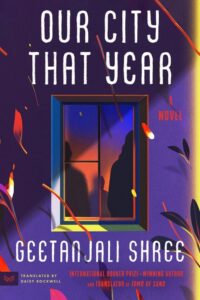
Our City That Year, Geetanjali Shree
Translated by Daisy Rockwell
(HarperVia)
Written in 1998, Shree’s novel issues a prescient warning against rising nationalism and the slippery slope to unspeakable crimes, a subject that feels straight out of today’s headlines. Our City That Year takes place over a single year of steadily increasing tensions between communities and a growing likelihood of anti-Muslim atrocities, as three horrified intellectuals and one knowing old man try to make sense of the moment. Can they bear witness to its unfolding disasters, while retaining their sense of humanity? I highlighted just about every line in this book, and I can’t think of a better novel to make sense of our current era.
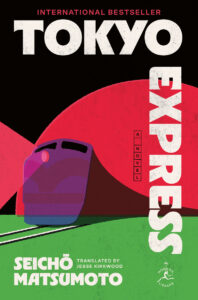
Tokyo Express, Seicho Matsumoto
Translated by Jesse Kirkwood
(Modern Library)
A classic Japanese puzzle mystery of Hitchcockian proportions, Tokyo Express is newly available in lovely Modern Library edition featuring an introduction from Amor Towles. In Tokyo Express, a suspicious double suicide leads a hardened detective down a spiraling rabbithole of government corruption, bribery scandals, and the dark underworld of the hostess industry, set against a backdrop of recovering post-war Japan. The descriptions are elegant, the plotting even moreso, with complex characterizations that belie the slim size of the volume. If you read one reissue this year, pick up this one.
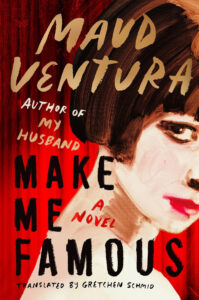
Make Me Famous, Maud Ventura
Translated by Gretchen Schmid
(HarperVia)
In this gripping saga of a pop star’s grueling rise to the top, fame is not for the faint-hearted. Maud Ventura blew me away with My Husband (especially that last page!) and Make Me Famous, a Highsmith-esque thriller following a singer’s brutal, callous efforts to become pop star royalty, is just as viciously delightful.
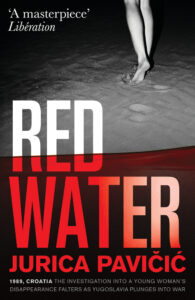
Red Water, Jurica Pavičic
Translated by Matt Robinson
(Bitter Lemon Press)
In this epic tale, a family’s thirty-year quest to discover the fate of their missing daughter intertwines with the saga of Yugoslavia’s violent dissolution and the following rapacious rush to fill Croatia’s Dalmatian Coast with luxury resorts. When 17-year-old Silva first vanishes in 1989, the investigation is soon stymied by the vast upheavals of the 1990s, and it will take decades of searching before we learn the final, heart-breaking answer. The novel’s strengths lie in its relentless drive, clear-eyed judgement, and focus on empathy: every action is understandable, yet none are forgivable.
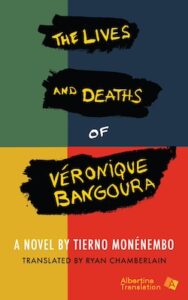
The Lives and Deaths of Véronique Bangoura, Tierno Monénembo
Translated by Ryan Chamberlain
(Schaeffner Press)
In this epic tale of violence and vengeance, the young Véronique kills her father in self-defense, entering into a life of petty crime and prostitution with her eccentric found family, as all suffer together under a dictator’s oppressive regime. Much later in her life, she’s fled to France under an assumed name, but when a comrade recognizes her, she decides to finally recount, and process, the strange details of her long life.

Darkenbloom, Eva Menasse
Translated by Charlotte Collins
(Scribe)
In the sleepy town of Darkenbloom, located on the border between Austria and Hungary, a seemingly bucolic surface covers a dark history of unspeakable crimes. Those who suffered under the Nazis (at least, those who survived) live side-by-side with their former tormenters in a fragile detente. Their peace is shattered by the end of the cold war and the Pan-European Picnic, in which hundreds of East Germans on holiday in Hungary fled across the border, seeking asylum and unwittingly opening old wounds. Meanwhile, a mysterious visitor to the insular community is poking around in the past, a past much of the town would prefer not to recall. Stunning & shattering, Darkenbloom is also the rare historical novel to make full use of its setting. It’s also a disturbingly relevant piece of fiction, as we watch our friends and neighbors being taken away by governmental forces hell-bent on enforcing brutal and deeply damaging policies with no purpose beyond bigotry.
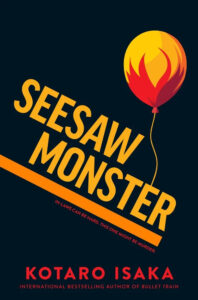
Seesaw Monster, Kotaro Isaka
Translated by Sam Malissa
(Overlook)
Kotaro Isaka’s previous novels are distinguished by their breakneck pacing and highly stylized choreography, as well as an off-beat sense of humor that transforms violent assassins into relatable charmers and menacing enforcers into hapless stumblers. Seesaw Monster is quite different—and far more ambitious. Isaka’s latest to be translated into English pits a mother-in-law against her husband’s new spouse. As the conflict heats up, we begin to learn of its ancient, mystical origins: the battle between people of the sea and people of the mountains, eternally set against each other in ways that become ever stranger as the book shifts to a near-future timeline where disaster looms and portents abound. Also, there are spies. I swear, this all makes sense once you start reading it.