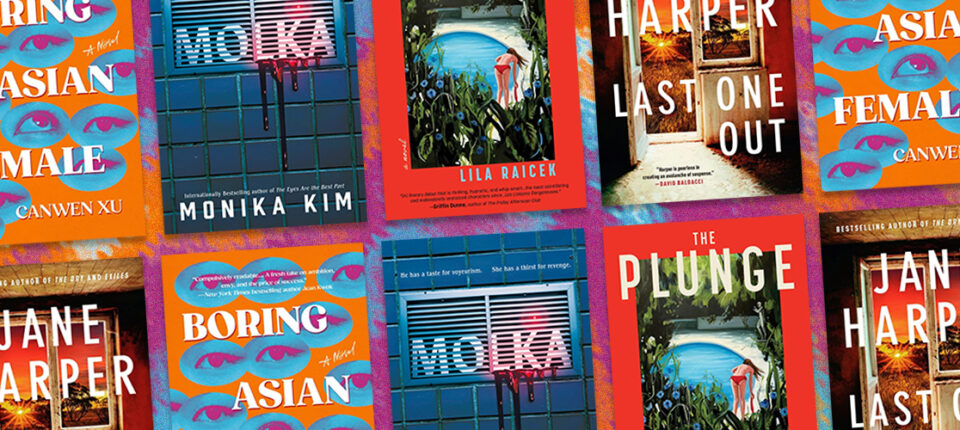
This month’s crew of psychological thrillers features new novels from Aussie superstar Jane Harper and rising horror voice Monika Kim, as well as two stunning debuts from Canwen Xu and Lila Raicek, both of which are sure to make it into our best debuts column this month. While I’ve only selected four titles for April’s highlighted thrillers, I’m sure readers should find plenty of variety in the works below, all of which have one very important thing in common: they are all rip-roaring reads that should keep you turning pages late into the night (coincidentally, the same hours in which I wrote most of the following blurbs). Without further ado…behold, the best psychological fiction of the month!
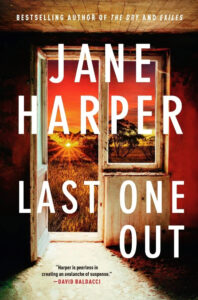
Jane Harper, Last One Out
(Flatiron: Pine & Cedar)
Harper’s sixth novel takes us to a small Australian town in the process of being swallowed up by a mine, and a cold case that could have disturbing implications for the entire community. Could the people there have resisted the destruction of their homes and the despoilation of their land, if they had only banded together? Could they have held out against the mining conglomerate’s increasingly aggressive (and increasingly pitiful) offerings to buy their homes? And was a student from a local family murdered for what he knew of his neighbors’ complicity? As we see scrappy locales across the United States rebelling against water-wasting, grid-destroying data centers, as eminent domain and voracious billionaires swallow up large swathes of the remaining public land in the nation, and as the wholesale environmental destruction of the country intensifies in the wake of the EPA’s dismantling, the lessons learned in Last One Out are not abstractions but painfully relevant.
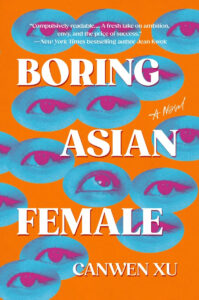
Canwen Xu, Boring Asian Female
(Berkley)
This book was terribly true to our nastiest, pettiest, most deranged obsessions, in that way that only psychological thrillers can capture (and only capitalism can create). Elizabeth Zhang, the protagonist of Boring Asian Female, wants only one thing: a spot at Harvard Law. She’s also convinced that had another Asian student not been selected from her graduating class, she would have won that spot. If she can get her rival out of the way, maybe Harvard will reconsider. This book has one of the best “be careful what you wish for” endings I’ve ever come across. It’s also an insightful and cutting expose of the steady erosion of solidarity, in a time that turns potential allies into vicious competitors.
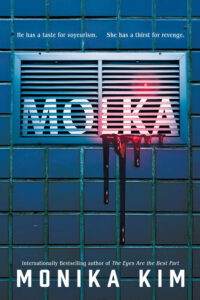
Monika Kim, Molka
(Erewhon)
Monika Kim’s sophomore horror novel was inspired by a rash of real-life scandals in South Korea involving molkas (hidden cameras, originally from a game show similar to Candid Camera, now used to spy on unsuspecting women). Those caught with camera feeds experienced few consequences, sparking an upswell in feminist ire and class-conscious critiques of pervasive patriarchy. In Kim’s rage-fueled tale of injustice and comeuppance, an office worker steadily loses her mind and seeks bloody vengeance after being preyed upon by a wealthy playboy and an incel security guard. I adored Kim’s elegantly grotesque debut, The Eyes are the Best Part, and Molka establishes her as one of the most compelling new voices in the genre.
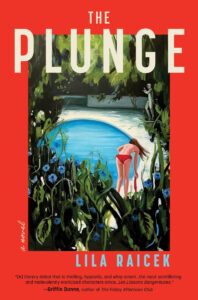
Lila Raicek, The Plunge
(Park Row)
After her famous boyfriend’s infamous suicide, the depressed narrator holes up in a moldy extra bedroom in Grenwich Village to contemplate her newly reduced existence. When an old neighbor (and the source of a lingering frisson of tension) calls her up for a rarified evening with the literati, she finds herself drawn to him, and to his elegant older friend, in a way that threatens to destroy all three. Meanwhile, the vultures are circling, getting closer to discovering how her lover really died, and what part she may have played in both his crimes and his comeuppance. That cover alone demands readers, and the story lives up to its promise (and then some).