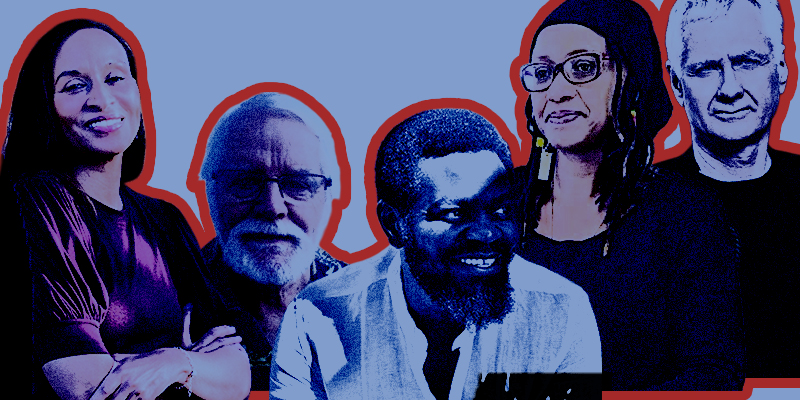
For #ReadingAfrica Week, an annual celebration of African literature founded by Catalyst Press, we put together a panel of excellent African mystery and thriller writers and threw out some questions for discussion. The focus is around what is special about African crime novels, how do local and international readers react to it, and what is the societal impact. Anyone who enjoys the genre or, indeed, reading out of the box will find the discussion really interesting.
Introducing the panel:
Michael Sears (moderator): I write the Detective Kubu mysteries with Stanley Trollip under the name Michael Stanley. The books are set in Botswana and the backstories are real issues relevant to southern Africa such as blood diamonds, murders for witchcraft, the plight of the San people. Books in the series have been shortlisted for a variety of awards including an Edgar. Our latest book is A Deadly Covenant, a prequel with Kubu as a young detective. Skeletons from an ancient massacre are discovered. Kubu and the pathologist go to investigate what they believe is a cold case, but then new murders happen.
Mike Nicol: For the last two decades I’ve been writing crime fiction as well as running an online group called The Writers’ Masterclass which, I’m pleased to say, has seen 30+ books published in its 13 year existence. As far as my own writing is concerned, the first book—Falls the Shadows—in a new series featuring a female cop who cops the cops appears in February 2026. Book two—Firing Line—is written and scheduled for the February after that and book three, well, let’s say that I’ve just finished writing and my Red Pen editor is having a go at it. I shall probably sulk for a couple of days once she’s finished.
Iris Mwanza: I’m a Zambian American author and gender equality advocate. My debut, The Lions’ Den, is a legal thriller based on a case where a fierce young, lawyer Grace Zulu is defending a queer teenager Bessy Mulenga, charged with crimes against the order of nature (the Zambian law criminalizing same-sex relations). When Bessy disappears from police custody, Grace’s case becomes a larger quest for justice, and she must confront larger forces—the legal system, government, corruption, religion and the societal norms that allow and enable discrimination and human rights abuses.
Leye Adenle: I’m a Nigerian crime thriller author who also dabbles in speculative fiction. My latest crime novel, Unfinished Business, is the third book in my Amaka Thriller Series. Amaka is a Nigerian woman who runs a charity that looks out for sex workers. Her job exposes her to the dangers that await the women of the night and the oppressive power their powerful clients wield and use to keep their affairs secret.
In Unfinished Business, Amaka is in London when one of the women sends her a distress call from Lagos. The young lady has witnessed a high-profile double murder, and she has gone into hiding. Amaka must return to Lagos to rescue her before the assassins, their bosses, and the police find her friend.
Ciku Kimani-Mwaniki: I’m a newspaper columnist (byline Ciku Kimani-Mwaniki) and an author of five novels, under the byline Empress Ciku Kimani-Mwaniki. Often, I’m known as the Cocktail Empress, because all my book titles, although stories are independent of each other, contain the word Cocktail. It’s all about branding. My latest book, Nairobbery Cocktail, is a story of underground Nairobi, the web of crime that connects rogue law enforcement officers, the street vendors, the street kids and the prostitutes.
_____________
Several of you have written in other genres. What brought you to writing mysteries/thrillers?
_____________
Leye Adenle: I write what I enjoy reading. Thrillers are particularly satisfying because they keep me glued to the page or to the screen. I consider fiction to be a panacea for whatever is going on in real life that one needs some respite from. If this is so, then it’s my job to totally and fully immerse the reader in the fictive dream from the first sentence until the denouement. Few genres are as adept at achieving this important objective as thrillers.
Iris Mwanza: I’ve also always loved reading thrillers and knew that if I could pull this off, this book was going to entertain and be an exciting, new way to explore gender and identity in all its complexity.
Ciku Kimani-Mwaniki: My genre of choice is romance. Not your typical good-girl next door type. I write about love lives of the so-called society pariahs. Damaged people, if I may. When I decided to write Nairobbery Cocktail, the idea was to write about the love lives of criminals. I wanted to play with the idea of humanising them. What ended up happening was the book becoming more of a crime novel than a romance. I’m still surprised.
Mike Nicol: I started out writing magical realism but after four novels, and South Africa moving from an apartheid state to a mafia state, I switched to crime fiction as the political novel fits well into this genre. A question for Ciku: apart from the catchy title of your novel that immediately demands to be read, how was writing about the love lives of criminals different to writing about, say, an illicit affair? Were the stakes higher?
Ciku Kimani-Mwaniki: Yes, it was different to write about love lives of criminals, but it helped that I have never really written about holier than thou characters. Rightfully so, we are supposed to hate criminals but you cannot humanize someone you hate. It was a thin line between making crime sexy (they were attractive characters) and humanizing them just enough to make the reader forget for a moment that they are terrible people, so I could delve into their love lives.
What ended up happening was the reader, for most of the time, forgot they were bad people and started rooting for them. Even when I killed some, readers were sad.
I am borderline ashamed to admit that writing about criminals was nearly fun—it shouldn’t be, but in my line of work, many times I have come across these criminals who in my opinion would not have been criminals, were it not for society pushing them hard towards that direction.
_____________
We write for ourselves, our home readers, and also for international readers. How much do you consider your reading audiences (home and abroad) when you are writing?
_____________
Ciku Kimani-Mwaniki: This may be a good or bad thing, but I do not consider my audience when I write. I feel like if I did, I would be too careful, and unsure, and might lose the gist of the story. Because I use real places, I know my audience at home identifies with it. For those abroad, it’s a chance to have an imaginative tour. Some of us were introduced to the western world through books. I loved it.
Mike Nicol: To be honest readers are not top of mind when writing. That said, I use a fair amount of local lingo in my dialogue so I guess that means I’m writing for a home audience. A glossary helps those in other language jurisdictions.
Leye Adenle: I write a story first and foremost for myself because, once the idea comes to me—a theme, a character, a twist, a monologue—I am overtaken by a panic to capture it on paper (bytes) before I expire. As self-indulgent as this sounds, and with a good dollop of self-importance too, I hold that it’s the job of every artist to birth the creations that have landed in their minds. We are artists. We are creators. We supply humankind with what makes us human. Just imagine the lockdown without art.Iris Mwanza: Not at all. As a debut author, I didn’t know if the book would ever be published much less find an audience. I’m delighted that it did, but as I work on my second book, I feel that worrying about an audience saps away my creativity. I must write the story that is speaking to me loudest and insisting on being written. If I’m true to that, I feel the audience will come.
_____________
Nature and nurture. Human nature is pretty much the same everywhere, but culture will affect character, behavior, aspirations, and motives. How central is this in your work? Do you feel constrained by social attitudes whether self-imposed or legal?
_____________
Ciku Kimani-Mwaniki: I do. Kenya has over forty tribes and although the cultures cross, there are things that one culture considers kosher and another one haram. I use Kenyan names, and I have to make sure that if I use a certain name, that character will not misrepresent the culture the name is from.
Iris Mwanza: I don’t feel constrained as a writer, but I do feel it’s important to capture how culture and context shape my characters and drive their behaviors.
Mike Nicol: Culture and social behaviour are hugely important for me in creating characters. And while I don’t feel constrained there are words regarded as hate speech which cannot be used in South Africa. Given our history this is understandable. But I’ve got to ask Iris, is there really nothing unmentionable? No censorship or self-censorship constraining you?
Iris Mwanza: In my life, yes! Absolutely! I live in the US where I’m experiencing in real time what happens when legal protection, justice and social norms around equality, fairness and basic decency are under attack. It’s terrible and frightening to live through; however, I feel that the work of a writer is to explore the dark interiors of characters in ways that can explain and expose how these things happen. In my novel, the lead character Grace is someone with a strong moral compass and sense of justice who takes on corrupt people and systems, but I could also see making the same strong case for social justice through a lead character who was the opposite—immoral and depraved. For me authenticity is the key to unlocking a character and so censorship, especially self-censorship, is furthest from my mind.
Leye Adenle: This is a PhD thesis on its own. I actively challenge social attitudes in my writing. As a Nigerian, I come from a country infested with the ‘get out of jail free card’ of prayer. There is not one national disaster, natural or engineered, that does not result in elected officials calling for prayers, offering prayers, or stating—on national TV no less—how fervently they have been praying for the country.
This insult to the collective intelligence of the electorate rankles, and I’ve made it a point to expose the ungodly men who rule in the name of a god they do not believe in. Cultures shape everything. We better start moulding culture into a shape that serves all of humanity.
_____________
How much does setting drive your stories? Could you imagine setting your books anywhere else?
_____________
Mike Nicol: I have set scenes in other foreign cities, but South Africa—and specifically Cape Town—is my setting of choice. Cape Town has everything: sea, beaches, surf, harbour, mountains, city, lush suburbs, townships, shacklands, industrial zones. Fortunately, the car means all these places can be connected—and have to be—within each novel or the city becomes one-dimensional.
Leye Adenle: Considering that I have set my stories in Lagos in Nigeria, on the moon, in various impossible dimensions, in Berlin, and lately in London, I would say that the setting and the story are, for me, sometimes inseparable but, with tiny tweaks, could be made to work anywhere on Earth.
In the Amaka thriller series, I set out to write about violence against women, thieving corrupt politicians, and police brutality, but as I’m not American, I decided to set my work in Lagos.
Ciku Kimani-Mwaniki: Setting doesn’t matter for me, as long as I understand the place. One of my books is set in London, because I understand enough, having lived there for a while. I would love to write a book set in Nigeria somewhere. Nigeria fascinates me, but I don’t know enough of its geography to attempt it.
Iris Mwanza: For The Lions’ Den, place (Zambia) and time (late 1980s) were important to the telling of this story, but I don’t feel bound in any way to only write stories set in Zambia. There is something exciting about African storytelling for sure, but I also feel that the freedom to write about any place, real or imagined, is the best part of creativity.
_____________
Your books all involve local issues that are real and serious. It’s been suggested that African crime fiction is about social justice issues. Would you agree with that? How does it affect readers abroad?
_____________
Mike Nicol: Absolutely agree with that. Crime fiction has both a political and a historical dimension. This might make things challenging for readers elsewhere as South African crime fiction doesn’t plough the serial killers and drug lords furrows. Well, not often and only as part of larger stories. One of my concerns is that because of the social justice issues, African crime fiction might not find a ready market elsewhere on the grounds that our societies are too complex and different for the Western readership. Leye, have you found this to be a factor in the marketing of your books? Perhaps Iris and Ciku could comment too.
Leye Adenle: Not really. I seem to do a lot better in France than I do in the UK, where I actually live. I think crime is crime, and the more exotic it is, the more alluring it becomes to people who find joy in reading and watching crime. I do wonder if we, readers and writers, are criminals at heart.
Ciku Kimani-Mwaniki: I also agree. In Nairobbery Cocktail, I wanted to make society take responsibility for how its people turn out to be. All my characters in the book have some kind of trauma from the past to deal with. The question is, if they had not gone through the trauma, if the trauma had been handled differently, would they still have become what they became?
Iris Mwanza: For me it’s important to write about issues I care deeply about, but I’m not opposed to writers who choose frivolity and fun. I’ve met a broad spectrum of readers abroad: some have little knowledge about Africa, and even less about smaller countries like Zambia, so I’m happy to expose and educate; others who have a greater knowledge of the country, find my work thought-provoking; and others find it just provoking! I’m fine with it all.
Picking up on Mike’s point, I’m based in the US and my publishing houses (Canongate and Greydon House) are both western, so strange as it may seem, I’ve had the harder time marketing my book on the African continent. That the book tackles LGBTQ+ rights is an added layer of complexity for marketing the book in conservative countries like Zambia. It’s been painful not to be widely embraced by audiences in my home country, but I’ve been determined to make inroads, and slowly but surely my efforts are bearing fruit. Fundamentally I don’t think the biggest challenge is complexity of difference, many readers I’ve encountered enjoy being transported to another culture, I think it is a lack of exposure. Publishing houses are slashing marketing budgets, so authors are increasingly expected to both write and sell books. As much as I like to grouse about inadequate marketing support, social media does create new opportunities to present our work directly to audiences. I wish I had more social media savvy to share but I’m still learning the ropes myself.
Leye Adenle: If you want to learn about the social economic conditions of any city at any point in history, all you need do is read the fiction created about that place during that time. Want to know how morally corrupt, inhumane, and deathly bleak London was in Victorian England? Read Oliver Twist. Wondering what life was like in colonial Lagos? Read Itan Segilola (The Story of Segilola), a Yoruba-language novel by Isaac Babalola Thomas written in 1929.
It’s practically impossible to write a crime novel without discussing the social and economic conditions prevailing in the setting at the time.
Yes, African crime fiction is usually about social justice issues, but what crime fiction isn’t?
In a world shrunk to the pixels of a mobile device, the plight of Palestinians undergoing an ongoing genocide ought to be just as visible as the horrors of the genocide in the Congo or in Sudan or in Yemen. Conscious, intentional crime fiction can redress this imbalance. In fact, I call on all writers who are anti-fascist to start writing a new kind of fiction set in a post-capitalist world. Let’s normalise seeing the humanity in all humans and accepting the undeniable truth that there is one Earth and it belongs equally to all that reside on it: humans, animals, plants, everything. Let’s start to imagine a different world, one in which the philosophy that holds one race superior and another inferior is finally and permanently discredited and abandoned. And then, when they accuse us of always writing about social justice issues, we will say yes. And why aren’t you?
_____________
Finally, would you suggest an African crime writer or particular novel that you personally like and would recommend?
_____________
Leye Adenle: Femi Kayode’s Light Seekers.
Iris Mwanza: Present company excluded, I would recommend Mukuka Chipanta’s Five Nights before the Summit.
Ciku Kimani-Mwaniki: I do have a Kenyan crime writer I love. Nducu wa Ngugi who also happens to be the son of one of Africa’s fathers of literature, Ngugi wa Thiong’o. Nducu has written two crime books, City Murders and The Dead Came Calling. I’m always on the lookout for his next crime book.
Mike Nicol: I was going to recommend Leye, but as he is part of this discussion I guess that excludes him. So Femi Kayode and the two novels in his Philip Taiwo series Lightseekers and Gaslight. And, of course, the crime fiction of my compatriot, Angela Makolwa.
Michael Sears: Thanks to everyone on the panel for participating. I’ve read many of their novels and I highly recommend them. If you haven’t read these authors yet, grab their books. You’re in for a treat!
***
About the contributors:
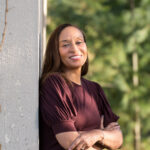 Iris Mwanza is an author and gender equality advocate. Born and raised in Zambia, Iris’ early exposure to social injustice was the driving force for a career that has spanned law, global health and, most recently, gender equality – the subject of her debut legal thriller The Lion’s Den, longlisted for the Center for Fiction’s First Novel Prize, and a TIMES 100 Must Read-Books of 2024.
Iris has an M.A. and a Ph.D. in international relations from the Johns Hopkins UniversitySchool of Advanced International Studies, and law degrees from Cornell University andthe University of Zambia. She is an experienced fundraiser and has worked in national and global organizations including nonprofits, the World Bank, and the Gates Foundation in the Gender Equality Division. She serves on the Board of Directors of WWF-US and is chair of the Audit Committee. Iris is currently on a writing sabbatical to focus on creative projects, including her next book and a screenplay.
 Michael Sears writes with Stanley Trollip under the name Michael Stanley. Their Detective Kubu mysteries are set in Botswana and based around real issues affecting southern Africa. They won a Barry Award for Death of the Mantis and have been finalists for other awards including an Edgar award, a CWA dagger, and an International Thriller Writers award.
Michael is a regular contributor to ITW’s The Big Thrill, focussing on reviewing mysteries set in Africa and interviewing their authors. In another life, he was a professor of mathematics and computer science and lectured in South Africa and the US. He now lives in Knysna, a small coastal town in South Africa.
Website: www.michaelstanleybooks.com
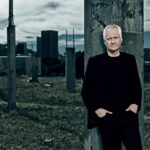 Mike Nicol is an author, online writing teacher, journalist and editor. In recent years he has published a number of crime novels. The first of a new crime series—Falls the Shadow—is published in February 2026 by Catalyst Press and PanMacmillan. He has also published poetry and various works of non-fiction. He lives in Cape Town.
 Leye Adenle is an award-winning Nigerian novelist and short-story writer. His debut, Easy Motion Tourist (2016), a gritty Lagos crime thriller, won the inaugural Prix Marianne. He continued the series with When Trouble Sleeps (2018) and Unfinished Business (2022), earning acclaim for sharp plotting and vivid portrayals of urban corruption.
Venturing into speculative fiction, Adenle wrote The Beautiful Side of the Moon (2020), a fusion of sci-fi and cultural myth, and contributed “The Assassination” to Sunshine Noir, a finalist for the 2017 CWA Short Story Dagger.
In 2024, he won the Lawrence Prize from the Michigan Quarterly Review for “The House of Oluawo,” celebrated for its gripping opening and emotional resonance.
Adenle’s writing—haunting, atmospheric, and socially astute—has been featured on BBC Radio and praised by crime-fiction greats including Lee Child and James Ellroy, as well as The Guardian.
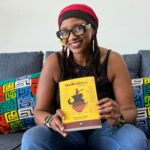 Empress Ciku Kimani-Mwaniki, also known as The Cocktail Empress, is a Kenyan author and journalist based in Limuru. Ciku has been writing for newspapers since 2004 when she lived in London. Only in 2014 did she venture into books and become one of the pioneers of self-publishing in Kenya, but has since signed a deal with Mvua Press, a publishing house based in Kenya.
Ciku’s first four books, Nairobi Cocktail, Immigrant Cocktail, Cocktail from the Savannah and A Cocktail of Unlikely Tales (last one is a collection of eight novellas) are purely romance, but she is known to avoid the good-girl-good-boy next door type of romance and chooses to focus on the so-called pariahs of the society, especially those dealing with childhood traumas.
Her latest book, Nairobbery Cocktail and the only one under a publisher, is a romance/crime novel that delves into love lives of hardcore criminals.
Ciku is also a Gíkúyú language interpreter/transcriber, ghost-writer, editor, host of YouTube channel – Author’s Feet, a village life enthusiast, and an avid mountaineer.
Empress is married, and is a mother of two girls.