More than ever before, we crave authenticity. In a world of filters, algorithms, and deepfakes, we seek out honesty and integrity. Fortunately, crime fiction can satisfy that craving.
What is real in 2026? Where are the genuine human stories? Somewhat ironically, many of them are to be found in fiction. When I switch on my phone I am greeted with a torrent of AI-generated slop. It never seems to end. Wave after unsolicited wave of so-called “content” specifically designed to keep my eyes glued to my device.
I succumb on occasion; we all do. But when I seek out an alternative, a cure, a beautiful antidote, I tend to reach for a crime or thriller novel. The grittier, the better.
We read for many reasons. To feel, to understand, to empathize, to travel virtually through space and time. I don’t know about you, but when I read stories, I like to sense a connection, in a very real sense, to the author. An unspoken gut-feeling that on some level, I am being granted access to some of the memories, experiences, lessons, troubles and triumphs that shaped a person’s imagination, shining through their heroes and villains, their settings and themes.
What I do not desire, in any way whatsoever, is some amalgamated, dystopian, code-derived approximation of that beloved experience.
If AI novels evolve to become accomplished on a prose level, or carve out mind-blowing endings to new locked-room mysteries, or create suspenseful narratives to surpass Hitchcock, with rich multi-layered characters to die for, and those books were to be completely free to read, I would still shun them.
No question.
Would I choose to watch a tennis match between two humanoid robots, each of whom can serve the ball at 300mph and beat any Grand Slam victor with one cold, unfeeling hand tied behind its back? No, thanks. Not interested.
Would I wish to observe a chess match between two supercomputers who can beat every Grandmaster who ever lived? Thank you, but no. Get it away from me. My niece and nephew playing underarm tennis with plastic rackets, on the other hand? I’m in. Two local enthusiastic elders playing chess in the shade of a tree in a park? Allow me to pull up a chair.
Carbon over silicon. I admit, I am fiercely pro-human. In fact, fiercely pro-natural life. Mammals, amphibians, birds, the lot. Big dogs, especially.
Crime fiction can highlight a moral dilemma we never even thought about. How would you react in this hideous situation? What might you decide to do? That’s useful. It makes your organic, wondrous, fatty brain work overtime.
The online world, and this seemingly runaway-train AI revolution, makes me look for slow-burn crime fiction and character-driven stories. If those stories come with grit—regional dialects, social issues, family drama, real-life struggles, psychological complexity—more the better.
I am not anti-AI. I’m enthusiastic about so-called Narrow AI, especially fields such as medicine and material science. But technology should work for us. If we keep running full speed down this road, it may turn out that the opposite will become true.
The arts are incredibly important while also being difficult to value. We’re not sure why they are so important. It is challenging to articulate their worth merely in dollars and cents. And yet we all know, instinctively, deep in our imperfect, breakable bones, that arts and culture are vital to our individual and collective wellbeing, and that we need our neighbors, friends, heroes, and children to be the creators.
I already see AI-generated songs being released and hyped. I don’t wish to listen to them. They are the fast food of music: all filler, no soul.
When I choose to listen to a song, I want that song to have been written and composed and performed by a person, by one of my eight billion distant cousins. They create, and I experience their creation, and we are both enriched in myriad ways from that miraculous interaction. If and when the music becomes, according to some arbitrary yardstick, better, that human-made equivalents, I will still avoid it.
The same for goes for artwork, sculpture, poetry, film, novels. If the best mid-thriller twist ever constructed comes from the silicon-based “mind” of a trillion-dollar large language model I will quietly ignore it.
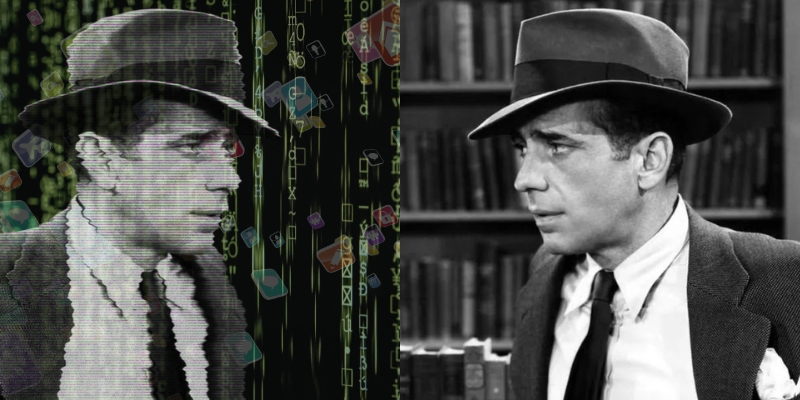
In the real world, I’m all in favor of detectives using AI tools to assist with forensics, for example. Advancements such as this will also make it onto the page, but I don’t want an advancement to write the page. We still need the next generation of Bosch, Holmes, Marples, Rebus, Gamache, Robicheaux, Wyndham, Maigret, Spade, Chopra, Warchawski, Brodie, Pirie, and Marlowe out there making mistakes, using technology, having complicated relationships with their colleagues, and ultimately cracking cases.
I would rather not watch an actor pretend to cry in a movie. I prefer to see tears. Better still, sometimes I’d like to watch the play: to witness their emotion, the vapor of their breath, the way the boards of the stage creak when they walk.
Realness. Crime fiction, in all its many shapes and forms, excels at this. Realism and holding up a mirror to the way we actually live. It is an antidote to fakery.
If we’re deluged with hyper-fast, auto-scrolling video content, lets fight back with long paragraphs of inclement weather and a cop inner-monologuing her way through a tough investigation. Slow it all down and show us some heart.
Genuine, over perfect. Steady, over trying to make us all drink from a firehose. Thoughts, over data.
We read for many reasons. One of them is to understand what it means to be human. Will AI assist in that ephemeral and never-ending quest? I doubt it. Let’s read human stories written by humans so we can learn from each other and mentally prepare for whatever comes next. If there’s a balm available, it is the rich, diverse, thriving world of crime fiction, and I’m here for it.
***