This past weekend, we lost the great playwright and screenwriter Tom Stoppard. I can wax long and hard about how Stoppard was one of the greatest creative scholars of literary history, how he was both a brilliant reader and writer of literature, how his Oscar-winning screenplay Shakespeare in Love (co-won with the script’s original author Marc Norman) is one of the greatest scripts ever written.
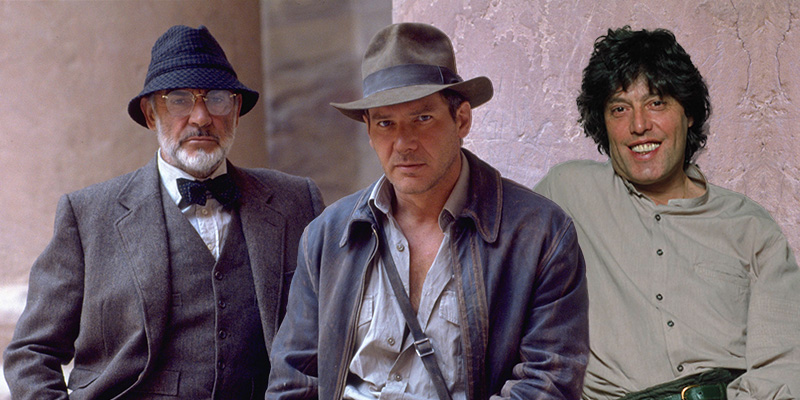
But I learned this weekend of another of Stoppard’s gifts to humankind. I did not know that he was an uncredited script doctor on some of Hollywood’s most seminal films… including one of my favorite films (and a film I have long championed as perfectly written), Steven Spielberg’s Indiana Jones and the Last Crusade (1989).
According to The New York Times, “Spielberg tapped him to give ‘Indiana Jones and the Last Crusade’ a bit more heart — but not too much. ‘It was an emotional story, but I didn’t want to get sentimental,’ Spielberg told Empire magazine in a 2006 oral history. ‘And it gave Tom Stoppard, who was uncredited, a lot to write. Tom is pretty much responsible for every line of dialogue.’”
This means that we have Tom Stoppard to thank for this brilliant exchange, among others:
The Times article continues to note,
“A side-by-side comparison of Stoppard’s “Last Crusade” screenplay with an earlier one from Jeffrey Boam, the credited screenwriter, unearths further changes. Stoppard (who was credited pseudonymously as Barry Watson) cuts several superfluous characters and introduces the audience-pleasing role of Jones’s father, played by Sean Connery, 23 pages earlier. According to the performance-based pay structure that the Stoppard biographer Hermione Lee dug up in an “Indiana Jones” memo, his rewrite earned him nearly $2 million.”
Stoppard continued to do script rewrites for Spielberg and other directors, retooling dialogue for films like Hook (1992),Beethoven (1992),Sleepy Hollow (1999), 102 Dalmatians (2000), The Bourne Ultimatum (2007), and even a little bit of Star Wars: Revenge of the Sith (2005).
Thank you, Sir Stoppard, for making movies that much better-written.