
My family is cursed.
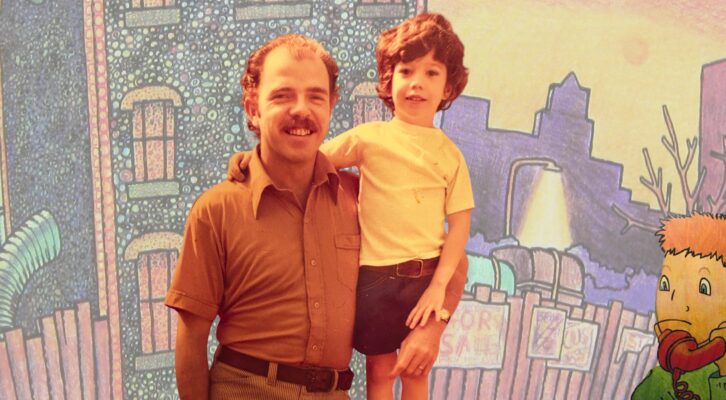
At least, that’s what my nonna always used to say. Back in Italy, before she was even born, her grandfather caught a witch on his property one night. Suspecting the crone of evildoing, he was determined to punish her, until she promised to put a blessing on his family for seven generations in exchange for her freedom.
My trisnonno knew a good offer when he heard it, and so he accepted. However, in the years that followed, with misfortunes piling up, he started to suspect that the witch had played a trick and in fact had worked a hex upon him instead.
Five generations in, here I am – not significantly more or less lucky than anyone else, by my own estimation. I suspect that the witch was in fact just a frightened woman, thinking quickly under pressure for a way to get this strange, angry man to unhand her. But it certainly makes for a good ice-breaker at parties, and is probably the reason that I am so drawn to stories about generational curses.
These tales tend to follow a particular pattern. There is normally an ancestor who has done something bad, for which they have gone unpunished, or who – like Trisnonno – has made a dangerous deal with a supernatural entity. In Netflix’s The Fall of the House of Usher, for example, siblings Madeline and Roderick barter for power and wealth at the cost of the lives of their descendants.
As a result of whatever this past action may be, the wronged party, or the deal-maker, or the universe in general, takes it out on future generations. This is the case in Oyinkan Braithwaite’s recent sophomore novel, Cursed Daughters, which follows a family of women who are fated never to keep a man.
Ultimately, either the bloodline must come to an end, or some specific condition or loophole has to be met. To return to a modern classic, in Holes by Louis Sacher, Stanley must atone for the sins of his great-great-grandfather by carrying the descendant of the woman he wronged up the side of a mountain.
Ignoring the curse won’t stop it from coming for you, but the irony is that often trying to outrun it will also bring it right back upon your head in a twist of self-fulfilling prophecy (on this, see Final Destination: Blood Lines).
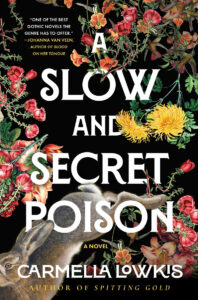
These plot beats make curses a perfect subject for the horror and thriller genres. I should know: my latest novel, A Slow and Secret Poison, is a gothic mystery that features a cursed heiress. The last survivor of a line of British aristocrats, Lady Arabella Lascy believes that her family have been killed one by one by a malevolent supernatural force – and that she is next in line to die. The mysterious secrets behind how a curse starts, combined with the impending threat of a grisly fate that draws ever closer, creates a perfect cocktail of suspense for an author to play around with.
Yet curse stories aren’t always just about spinning a good yarn. They often explore questions of inheritance and legacy. The Fall of the House of Usher concerns itself with the poisonous influences of wealth and power, especially when they have not been earned. Cursed Daughters looks at the trauma that comes from repeated heartbreak. My book, A Slow and Secret Poison, is about social class. Even Final Destination: Bloodlines – mostly just a fun gore-fest – has something pertinent to say about how we cannot deny our own biological realities.
But turning back to ‘real-life’ curses for a moment: my family aren’t the only ones to have one. The Kennedys are famously dogged by misfortune. The Guinesses, too, are known for their tragedies. My personal favourites are the House of Habsburg: the Austrian royal dynasty who, after supposedly angering a flock of ravens in the 12th century, were subjected to centuries of poor mental health and physical ailments, including the trademark ‘Habsburg jaw’ that makes them pretty easy to spot in any portrait gallery. In addition to these genetic markers, the family also suffered plenty of gruesome premature deaths. Notable among these were Marie Antoinette (beheaded), Archduchess Mathilde of Austria (accidentally self-immolated), Empress Elisabeth of Austria (stabbed by an anarchist), Crown Prince Rudolf (murder-suicide), and Franz Ferdinand (assassinated, thus causing the First World War). It would be hard to find a more troubled lineage.
However, when delving a little further into the facts about the Habsburgs, it becomes clear that what initially looks like a curse can be equally explained away as a mixture of the inevitable health consequences that come with generations of serious inbreeding, alongside the precarious position that is occupied by all controversial royal figures and celebrities.
We humans love to find patterns and use them to create narratives. This must be exactly how the concept of generational curses came to be in the first place. There are, after all, very real things that are passed down to us through the family line. Physical and mental health conditions, social position, reputation, debt, trauma – all of these can be handed to us by our parents without our consent. It’s so tempting to start constructing meaning, rather than admitting that most of the time the bad hand has been dealt to us completely at random. I think this is why my nonna so enjoyed the story of our own family curse: even if she didn’t really believe in it, it was a comforting way to explain and rationalise the hardships that she had faced in her life.
Well, if a curse is upon me, there isn’t much that I can do about it at this point – unless anyone reading this happens to be the descendent of an Italian witch from the 19th century? Until then, all I can really hope to do is to enjoy the story.
***