5 Psychological Thrillers You Should Read This October
Missing husbands, murdered trainers, and feminist revenge killers.
Well, readers, here in Toronto fall has struck. Our first pandemic autumn will go by in a flash, followed by our long pandemic winter during which I predict unraveling on a mass scale: like, literally, people are going to be losing it in droves after a year of this. Clearly, we are not built for austerity or long-term world crises: the Baby Boomers can’t believe how this is messing with their golf games and their standing mani/pedis. My own cohort, Gen X, is not inclined to introspection, we really just want to hang out. This does make the pandemic a bummer. However, we are also now sandwiched between demanding aging parents and demanding resentful children. As for the Millennials, I’m sure they’ve totally got this and they’ll make sure everyone is woke while reminiscing about Snapchat and picking up dinner at Impossible Burger.
But we have psychological thrillers to read! For as many people (read: writers) I have heard grumbling about reading I have heard people (read: readers) say they are getting a lot more reading done now that we can’t have dinner parties or concerts or swingers’ gatherings or sporting events etc. If you too have picked up some reading momentum, and you’d like a vicarious gaslighting rather than the all too real one the American president is attempting, consider these October books.
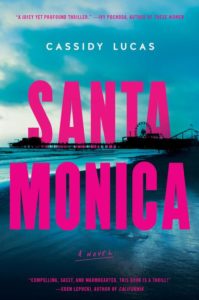
Cassidy Lucas, Santa Monica (Harper Perennial)
Rarely does a book grab me from its premise but this one did: handsome, elite trainer to the rich and fabulous women of Santa Monica found murdered on his gym floor. I would have written this more like a game of Clue—Mrs. Anderson did it in the locker room with a dumbbell!—but the duo of best friends Julia Fierro and Caeli Wolfson Widger have taken a more sophisticated approach, with the dark secrets of the sun-kissed ladies spilling out as the investigation proceeds. Santa Monica is Liane Moriarty in LA (as opposed Big Little Lies, which was filmed as Liane Moriarty in Monterey). Wherever you are it’s a good time.

Rose Carlyle, The Girl in the Mirror (William Morrow)
Carlyle’s debut uses one of my favorite everyday things that get creepy if you put them in a book: twins! Everyone goes with clowns, but twins can be totally unnerving. They are the uncanny embodied, a facsimile of the self. The twins in Mirror have two faces: the placid, happy Summer, married to the wonderful Adam; and her sister, Iris, jealous and angry (I like her better). There’s a part with a yacht—this is Liv Constantine territory, country club rich but not Dominick Dunne rich—and a Parent Trap-style switch but, you know, darker.

emily danforth, Plain Bad Heroines (William Morrow)
Any book called a queer gothic has my attention, and Heroines also cleverly engages with the history of the novel as a corrupting force for women. If you’ve spent any time reading Samuel Richardson’s delightful rape romp Pamela and its offspring—basically, novels—you will recognize the territory danforth is treading upon. In skewering the tradition of the novel and worries about the purity of its heroines—there were unlikeable women in novels since, well, Pamela—danforth delivers a clever and refreshing book.
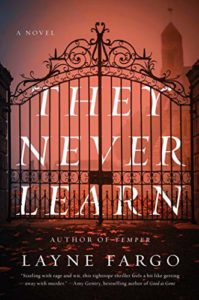
Layne Fargo, They Never Learn (Gallery/Scout)
I just did a sex roundtable with Layne and you know what they say: once you do a sex roundtable with a crime writer you are sorority sisters for life. No, really, Layne is as funny and dry and dirty as her books. They Never Learn is poised to be her breakout, as the film deal was just announced with the author attached, Megan Abbott-style. Her debut, Temper, was an insiders’ look at a theater company where everyone was sleeping with everyone or had slept with them or would if there were a couple of drinks involved. Learn is set on a college campus where Professor Scarlett Clark has been getting rid of the sexist predators of the English department. A student embarks on the same road of revenge, and Clark gets sloppy—who will be revealed as the murderer, or will they join forces and become a feminist serial killing machine?
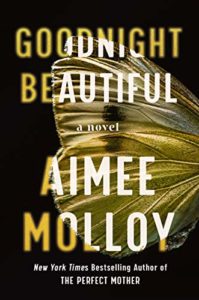
Aimee Malloy, Goodnight Beautiful (Harper)
Malloy’s The Perfect Mother struck a chord in the zeitgeist: a new mother in a stylish Brooklyn neighborhood who barely goes out gets a little loopy while out with her mommy group and wham, baby is gone. The premise of Goodnight also brings us a woman who feels isolated: Annie Potter (I kept seeing Annie Potts from Designing Women in my head) has moved upstate with her therapist husband, Sam Statler. From her upstairs room, Annie can hear all of Sam’s sessions. Hijinks ensue when the French woman in a green Mini Cooper shows up, and Sam disappears.

Lisa Levy
Lisa Levy is a critic and essayist. She has written for many publications, including the New York Times Book Review, the New Republic, the CBC, the Walrus, and the Believer. She is currently working on three books: one about feminism, rebellion, and Gone Girl. THE IMPATIENT is a study of her chronic migraines, the myths about migraine, and how we think and write about pain, time, and art. She is a contributing editor at Lit Hub, where she started crime coverage, and a contributing editor and columnist at Crime Reads, which she helped found. She won a Notable in Best American Essays 2021 for her essay “We Are All Modern,” which is part of a book project on modernism and biography.