
S.J. Bennett on the brilliance of 1960s British mysteries and thrillers
A look at Len Deighton, Frederick Forsyth, and more from the author of Death on the Royal Yacht
My first date with my husband, twenty-five years ago, was a series of tests. Do you like Blackadder, and agree that series 4 is the best? Are you a fan of Bladerunner? The Hitchhiker’s Guide to the Galaxy? And, very importantly, did you read Len Deighton as a teenager? Luckily for our future son, we both passed.
Deighton’s unpredictable protagonists, and his propulsive writing style, were a revelation to sixteen year-old me. I always think of his heroes in cars, on the run from something awful, on the way to something worse.
Growing up in the 80s, I was a fan of the classics, of P.G. Wodehouse and Jilly Cooper. People behaved badly, very badly sometimes, but their role in the moral universe was clear. Then, in books written at around the time I was born, as the dust was finally settling from WW II, I found myself in the cynical, murky world of double agents and double-crossing, inspired in part by the Noir of the 30s, but updated to the Cold War: we can’t trust the men in charge, and the world may be about to end.
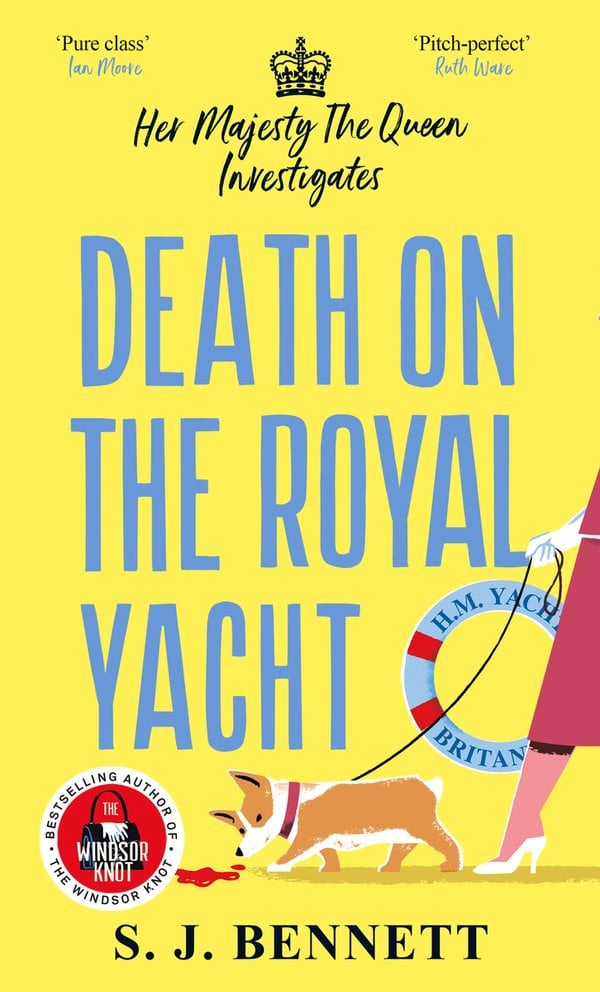
In the historical series that I’m writing featuring the late Queen, I’ve reached the mid-60s. The last book was set at the height of the space race in 1961, and the new one takes place in the Caribbean in 1966. I think of this as a sunny highlight: the Swinging Sixties, The Beatles, Carnaby Street, the young Rolling Stones….
But research quickly reminded me that it was the time of Vietnam, the Bay of Pigs, the call for independence among many of the UK’s old colonies, of drugs and disillusion, fear and paranoia. This is the world that Deighton explored in Funeral in Berlin.
His unnamed protagonist, played by Michael Caine and given the name Harry Palmer in the films (because it was the most boring one they could jointly come up with), had already had two outings, in The IPCRESS File and Horse Under Water. Both are a bit bonkers. Funeral in Berlin, published in 1964, was where Deighton really got into his stride.
The Berlin Wall had only gone up three years before. I lived there in the 80s, when the Wall went round the back of our garden and there was a Russian sentry post a few meters beyond. People were still dying in the attempt to get across, but by then, the Wall had its own mythology.
When Deighton was writing, the weird cruelty of streets and even houses being cut in half by barbed wire and concrete was still fresh, and bled into the text. I equally loved John Le Carré for his more cerebral evocation of the times, but Deighton’s working-class anti-hero, at odds with the Establishment and unwilling to look away, was the one who really got me into the genre.
How does Frederick Forsyth get away with the plot of The Day of the Jackal? Set in 1962, in the aftermath of the Algerian war of independence, it’s a story in which we already know the outcome—the assassin must surely fail to kill Charles de Gaulle, who didn’t die until 1970—and yet we’re gripped as we watch him regularly outwit the authorities, who are no slouches in tracking him down.
Inserting a false narrative into real events is what I do with my own series, so I’m with him as Forsyth tightly interweaves the two. I always used to feel that the final-final twist, where a character we think is dead shows up unexpectedly, didn’t quite make sense. However, when I recently relistened to the audiobook version, I realized that it had been set up that way all along. It makes the reader completely rethink the middle section, paying tribute to the value of dogged police work, even when the odds against success seem overwhelming.
The novel also pits a middle-class hero, the police deputy commissioner Claude Lebel, against a dismissive, upper-class superior. The moment when Lebel gets his revenge is very satisfying. Like Deighton, Forsyth was no fan of the old-school ruling classes, although he had an obvious respect for methodical assassins.
James Bond (another iconic spy name designed to be as boring as possible) evolved gradually as a character. He was based in part on old Etonian Ian Fleming himself, partly on some of the men he encountered in wartime naval intelligence, and later on the director of Dr No on screen, the refined and sophisticated Terence Young, It was Young who gave him his sharp tailoring from Anthony Sinclair, his taste for martinis and elegant way with cigarettes.
But the first man to play him, with a panther-like grace that got him the part, grew up in a tenement in Edinburgh, leaving home to work as a bricklayer, lorry driver and coffin polisher, among other things. Would Bond have been as interesting if he hadn’t had the magnetism that Sean Connery brought to the role? At a time of great social mobility, he was a stand-out star.
Connery didn’t play Bond in the film of On Her Majesty’s Secret Service. By 1969, he’d given up on the carnival of publicity around his life. But he was filming Dr No near Fleming’s Goldeneye estate in 1962 when Fleming wrote the novel.
Fleming probably had Connery (and those Anthony Sinclair suits) in mind for the Bond who pretends to be Sir Hilary Bray from the London College of Arms. In the end, though, the part went to the actor George Lazenby, who made the somewhat premature decision that James Bond would be a busted flush in the 1970s, and turned down a chance to return.
In this book, Blofeld is the villain, and the plot moves on from classic Cold War territory to a more generalized tech-driven anxiety, in which a bio-war is about to be unleashed by unsuspecting female debutantes. It’s not the most feminist of plots, but I love the novel for Bond’s female companion, Tracy di Vicenzo, the only woman in the Bond canon—apart from Vesper Lynd—who I think holds her own in a three-dimensional way.
Played to perfection by Diana Rigg onscreen, Tracy is smart, well-connected (her father is a very serious crime boss), reckless, resourceful, quick-thinking and athletic. Having created a woman who’s a worthy match for Bond, the series obviously couldn’t keep her. The ending of is so tragic and unexpected that it’s still gut-wrenching, even now.
On the whole, I’d say we don’t think of Agatha Christie when we think of the 1960s. The perennial films and TV series conjure inter-war fashions, Miss Marple’s Edwardian correctness, old-fashioned country houses, and the Art Deco smartness of Hercule Poirot.
But her success spanned decades. The Pale Horse, published in 1961, was partly inspired by the very popular novels by Dennis Wheatley, which often featured the supernatural. In Christie’s version we have foggy nights, witches, deserted country lanes and several predicted deaths in seemingly-impossible circumstances.
One of the secrets of Christie’s success was how cutting-edge she was with her murder methods. She loved to know about new poisons and the latest gadgets. Think of the role a Dictaphone plays in one of her most famous early books—Dictaphone as a company had only been created three years before it was published in the 1920s.
And true to the Christie formula, the solution to the Pale Horse mystery contains an up-to-date knowledge of chemistry. It works both as an out-of-time, spooky novel and a contemporary, 1960s plot.
In my books, Queen Elizabeth II occasionally has a Dick Francis novel at her bedside, and she was a big fan in real life. As a jockey, Francis was closely connected with the royal family. He was riding the Queen Mother’s horse, Devon Loch, towards victory in the 1956 Grand National, when the horse inexplicably fell. This was when he retired to become a writer.
Dead Cert, which came out in 1962, was his first novel. It’s centered around great horses falling in important races, and Francis’s visceral first-hand experience lights up the page. But there’s more to his books than horses. As Britain’s post-war economy took off, he branched out with his wife, Mary, to research a wide range of industries. exploring the glamour and danger of his age.
Like Deighton’s, I read his books in the 1980s, when Proof grabbed my attention. I’m drawn to Francis’s vulnerable heroes, so gentle with horses, so outrageously lucky or unlucky with women, so tough at withstanding injuries of all kinds (as the author was) and beatings from his sadistic villains. I have to read through half-closed eyelids, but still, I have to read on.
One of the things I like about Dick Francis’ career is that it took time to take off. Like Ian Fleming’s, his early books sold well enough, but there weren’t any fireworks. It was only as the series progressed that publicity grew, and he became the crimewriting juggernaut his estate still is today. There’s a lesson for publishers there, perhaps: have faith in your writers. Stick with them. Fandom comes with time and repetition.
It’s a lesson another British spy novelist embodies. Mick Herron’s Slough House books languished in the also-rans for years, until a US publisher spotted them and they got a new lease of life.
This autumn, season 6 of Slow Horses returns triumphantly to our screens. It contains many of the tropes of its 1960s predecessors: downtrodden heroes, defying the odds and besting upper class antagonists; realistically dingy streets and double-crossing; up-to-date technology and an overarching sense of anxiety. We can’t trust the men in charge, and the world may be about to end. Plus ça change.
***

S.J. Bennett
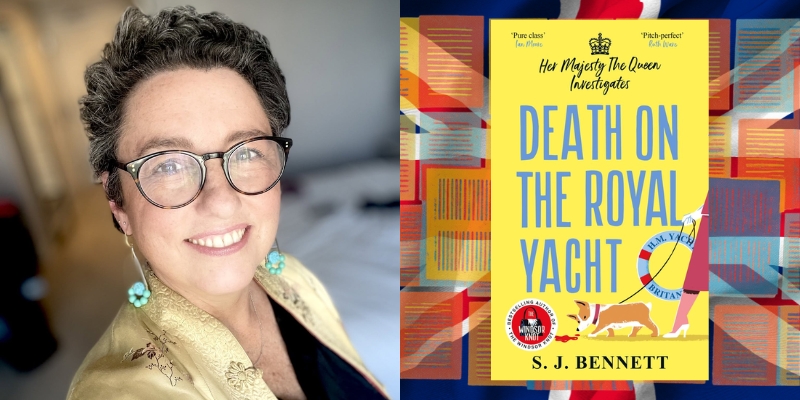
S. J. Bennett was born in Yorkshire, England, and lives in London. An army child, she grew up traveling around the world. Her first novel was published when she was forty-two, after a varied career and lots of procrastination. She is the award-winning author of several books for children and teaches and podcasts about writing.