
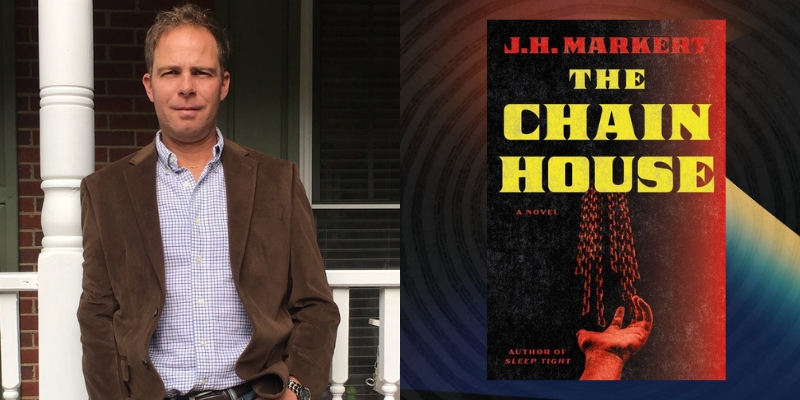
J.H. Markert on the Cult Leaders That Inspired His New Novel
The author of The Chain House reflects on Jim Jones, Marshall Applewhite, and others
I wasn’t scared easily as a child, but I watched two things early on in my life that certainly managed to do the trick. And they weren’t just “scares” that came and went; they lingered. One was watching the movie, The Exorcist, at the age of twelve. Too young, for sure, and to this day, I’ve never been able to finish the book, despite trying on three separate occasions to do so. The other was watching the 1987 TODAY Show/NBC interview with Charles Manson.
I was a young teen at that point, and didn’t even know what cults were, but believe me in saying I’ve been intrigued by cults ever since—not to the point of ever wanting to join one, of course, because that could never happen to me, right? —and I’ve been especially terrified of Manson to this day. (Yeah, I know he’s dead, but even so.)
 Charles Manson
That interview, back then, made me instantly feel uneasy, first because he simply freaked me out—those eyes, his intensity, his quirky movements, bizarre mannerisms, and outlandish beliefs—but then, the true unease came after learning about how cults formed and with how easily people were swayed by the often-times charismatic yet diabolical leaders of them.
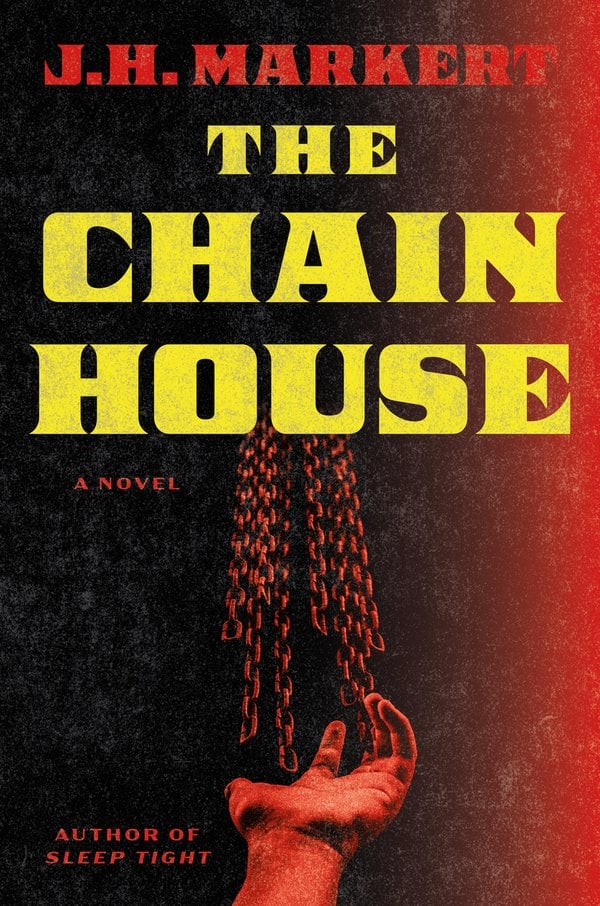
I knew I would at some point write my Cult Book, which became my latest novel, The Chain House, and create my own cult leader in Sal Batise, who was heavily influenced by Charles Manson.
But while Manson’s influence was always there in the background and foreground and in every creative nuance in between—especially the high-profile murder of Sharon Tate in 1969—I did, in my research, come across other cult leaders who were equally as bad, if not worse. Once I went down that rabbit hole, it was hard to come back up for air, and even harder to pick only five cult leaders for this article.
In no real order of importance—they were all maniacal, controlling, manipulative, narcissistic experts at brainwashing, and I’d rather not rank them—I’ll start with Jim Jones.
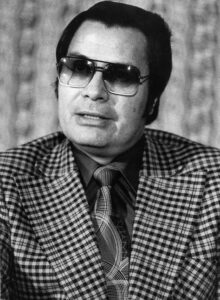 Jim Jones
 founded a religious organization based on racial equality and social awareness in Indiana in the 1950s called the Peoples Temple. He pressured members into giving their homes and money to the church and, in an attempt at total control, began punishing those who attempted to associate with anyone he deemed an “outsider.” His organization quickly grew, and after preaching to them about the vision he’d had of a nuclear apocalypse, he convinced them all to move to California, where they’d be safe from a nuclear attack.
As he became more controlling and manipulative and protective of his flock, Jones relocated again, this time to a settlement in Guyana that he infamously named Jonestown. Not very arrogant of him, right?
In 1978, a U.S. Representative and several others were killed after investigating reports of abuse on the settlement. Later that day, over 900 members of his Jonestown cult died by cyanide, while Jones was found dead by a gunshot.
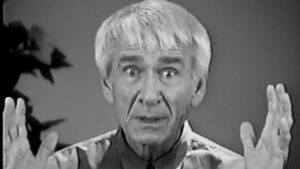 Marshall Applewhite
’s cult, Heaven’s Gate, which he co-founded with Bonnie Nettles in the 1970s, was based on the belief that they were meant to witness apocalypse from the Book of Revelations. In my mind, Heaven’s Gate—which believed an alien spacecraft was hiding behind a comet called Hale-Bopp, and said spacecraft was set to take them to a higher level of existence—was about as bizarre as a cult can get, but at the same time hammered home how thoroughly brainwashed some people can get when desperate and gullible and lost and looking for answers.
Applewhite, known as Do to his members, convinced them that they could leave their human bodies to reach extraterrestrial levels of existence, and this spacecraft would take them where they needed to go. Unfortunately for them, the spacecraft never arrived, and in 1997, Applewhite and 38 of his followers were found dead in a California home after committing mass suicide.
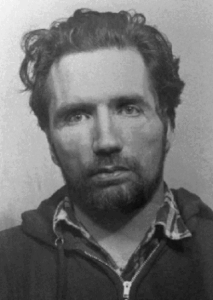 Gary Heidnik
 leans more toward serial killer than cult leader, but with the way he used his pseudo-church he called the United Church of the Ministers of God in the mid-1980s to lure his victims into his evil embrace, he could be considered very cultlike. Using his fake church as a tax shelter to get rich, Heidnik, a self-proclaimed bishop, dug a pit beneath his house—the same house inside which he held his “church” gatherings—and imprisoned, abused, and tortured women there until he was arrested in 1987.
Heidnik, who was executed by lethal injection in 1999, was believed to be an inspiration for the Buffalo Bill character in The Silence of the Lambs.
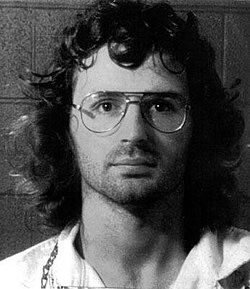 David Koresh
As the most recent from this short list of cult leaders, David Koresh (real name Vernon Howell), the leader of the Branch Davidians religious group near Waco, Texas, was most well-known for the gunfight and fifty-one-day standoff with federal agents, after they attempted to execute search and arrest warrants at his Mount Carmel Center compound in February of 1993.
On a visit to Israel, Koresh—as many cult leaders did before him—claimed to have seen a vision. His vision (according to…him) revealed him as the modern-day incarnation of the prophet Cyrus. He legally changed his name to David Koresh, with the first name referencing King David and his last name being that of Cyrus’s biblical name.
Koresh preached of sick “spiritual weddings,” which, in his mind, made it legal to bed female followers, no matter the age, if God had chosen them for him. He, of course, played the part of God in these decisions, and it was believed he had as many as twenty wives and at least twelve children when his compound burned in April of 1993, killing dozens of Branch Davidians, as well as Koresh.
*
There’s a popular saying, truth is stranger than fiction, and it fits perfectly with most cults and their leaders, because how could someone create such as thing and still sleep at night?
Well, these particular leaders believed they could, and then did it, although not without failing a time or two; so I wrote my novel, The Chain House, with the hope that it could be just as strange and frightening as the truth, and here’s to it one day gathering a nice cult following of its own.
***

J.H. Markert
J. H. Markert is a producer, screenwriter, husband, and father of two from Louisville, Kentucky, where he was also a tennis pro for twenty-five years, before hanging up the rackets for good in 2020. He graduated with a degree in history from the University of Louisville in 1997 and has been writing ever since.