
The Backlist: Sarah Weinman on a Classic Domestic Thriller, 'The Hours Before Dawn'
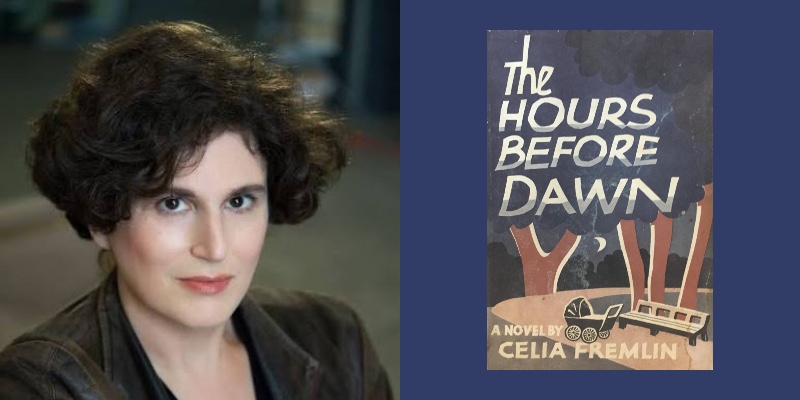
Weinman and Polly Stewart discuss Celia Fremlin's 1958 novel.
The expression “so many books, so little time” doesn’t seem to apply to the writer and New York Times crime fiction columnist Sarah Weinman. Every time I’ve had the opportunity to talk with her about a specific book or specific writer, she ends up mentioning ten or twenty other novels that I immediately vow to add to my TBR. She has a truly encyclopedic knowledge of both crime fiction and true crime, one that’s evident not only in her reviews but also in her work as a writer and editor, which has included nonfiction like Without Consent and The Real Lolita, as well as several anthologies of true crime and domestic suspense. Her website describes her as a “writer, editor, crime lady,” and perhaps that’s the best description of one of the foremost authorities on the genre of our time. It was a pleasure to speak with her about one of the novels that first got her thinking about the development of domestic suspense, Celia Fremlin’s Edgar-winning classic The Hours Before Dawn.
Why did you choose The Hours Before Dawn by Celia Fremlin?
I first read it in 2011. I’d been solicited to write an essay for the magazine Tin House, which regrettably no longer exists. I was thinking about novels that didn’t quite fit in with Golden Age detective fiction, and also didn’t fit in with the hard-boiled and noir fiction that was predominantly American. These were novels that were primarily by women, and tended to be more on the domestic side. They tended to deal with the affairs of the home and the terror of marriage and motherhood. The examples that I used for the piece were Elizabeth Sanxay Holding’s The Blank Wall, which came out in 1944, and which I would late include in a two-volume set on women crime writers of the 40s and 50s that I edited for the Library of America, and the other one was The Hours Before Dawn.
I think I first found it because I was looking into past winners of the Edgar Award. I thought it looked interesting, and when I started reading, I thought, “Oh my God, this is amazing!” The first line just grabbed me: “I’d give anything—anything—for a good night’s sleep.” I’ve never been a mother, but I’ve been around enough mothers and children to know what it’s like when a kid is up and screaming and you can’t tell what’s wrong. All they can do is scream, and screaming can mean anything. The child in the novel is probably a perfectly happy baby, but he screams a lot and keeps his family awake. The mother is the one who’s expected to tend to him, so she’s extremely sleep-deprived, and as the story progresses, she begins to doubt her sanity.
The reader is immediately catapulted into an empathetic relationship with the mother, Louise, because the baby isn’t her only problem. Her elder daughter, Margery, is clearly very anxious, and the younger daughter, Harriet, is more mischievous and gets into trouble. She has these awful friends who keep dropping off their kids with her or showing up at her house and hanging out until midnight. On one level, we want to say to her, “Just assert yourself,” but it’s clear that she’s never been socialized to do that. Her husband has no interest in helping, and doesn’t seem to even understand what she’s going through. At one point, he comes home in the middle of the day just to see how she is, and then expects her to make his lunch. When the book opens, Louise has decided that they should take in a lodger to make extra money, and that’s how we get to Vera Brandon.
Vera Brandon is a schoolteacher, and at first glance, she seems independent and capable and not particularly suspicious, but from the reader’s perspective, she’s very much in the tradition of the mysterious stranger. Another novel that I’ve compared it to is The Lodger by Marie Belloc Lowndes, which became the basis for an early Hitchcock film. The conceit is that in 1888, when the Ripper is active in London, a mysterious male lodger shows up at the home of a couple who is in financial straits. They quickly become suspicious of him, but they also need his money. Fremlin doesn’t deal with financial necessity in quite such an overt way, but it’s clear that Vera is there to defray the costs of having an extra mouth to feed. Then the question is whether Vera is up to something, or is Louise so addled from lack of sleep that she’s basically in a state of hysteria? When I was rereading the novel for this interview, I remembered how clearly the characters were drawn, but I’d totally forgotten the twist, which made it kind of shocking and delightful when I got to the end.
Toward the beginning of the novel, the protagonist, Louise, thinks: “to neglect one’s own tastes was more labor-saving than any vacuum cleaner, and it was a form of neglect about which nobody would call you to account.” There’s definitely plenty of fiction from feminists of this period that looks at the drudgery of women’s lives–I think of the work of Tillie Olsen or (ugh) Alice Munro–but I wonder if Fremlin was the first to see how well this type of experience lends itself to the form of the thriller. Is that accurate?
I don’t know if she thought about that in those terms at all. The edition I have is a reissue that came out in the UK in 2017 from Faber and Faber, and there’s a really interesting afterword by Chris Simmons, who runs the site crimesquad.com. He quotes Fremlin in the introduction to an edition that came out in 1988: “The original inspiration for this book was my second baby, whose name was Geraldine. She was one of those babies who, perfectly content and happy all day, simply don’t sleep through the night. Soon after midnight, she would wake, and again at half past two, and again at four. As the months went by, I found myself quite distracted by lack of sleep. My eyes would fall shut while I peeled the potatoes or ironed shirts. I remember one night sitting on the bottom step of the stairs, my baby awake and lively in my arms. It dawned on me: this is a major human experience. Why hasn’t someone written about it? It seemed to me that a serious novel should be written with this experience at its center. Then it occurred to me, why don’t I write one?”
By my calculations, she would have had this realization sometime in the 1940s, during the war or just after, but by the time she had actual headspace to work on it, it was closer to the mid 1950s. Clearly this marinated in her mind for a very long time, and it wouldn’t surprise me if, as happens to many an author, it was only after the book was done and about to be published that someone said, “Oh, you’ve written a suspense novel.” I imagine this was news to her, because she probably thought she was writing a social novel.
How influential do you think this novel has been for other writers, and how does it fit into the timeline of what we now call domestic or psychological suspense?
I don’t know if it’s directly influential. I know that when I published the essay in Tin House, that was the first time it had been written about at any length for a while. That essay led to the first anthology I ever edited, titled Troubled Daughters, Twisted Wives, which was my attempt to put the term domestic suspense in a historical context. To me, the first wave of domestic suspense ends with the publication of Where Are the Children? by Mary Higgins Clark in 1975. That novel ushered in the next wave that both ended and restarted with Gone Girl, and it remains to be seen what the next inflection point is going to be.
It seems to me that a lot of contemporary domestic suspense has lost the focus on character that makes Fremlin’s work so compelling. I pick up a lot of novels that move from exciting plot point to exciting plot point without, it seems, much of an understanding of how a person would get from one to another. Do you agree, and if so, what went wrong?
A lot of contemporary writers may be missing what makes a great work of domestic suspense so great, but I’d put it down to the writing in general. Tony Scott wrote a piece for the Times where he did a close read of the opening paragraphs of Gone Girl, and you could see that Gillian Flynn is operating at a level that’s just so far above those who have tried to copy her. The authors that make a mark are those who work out from their own obsessions and compulsions, who care about character, who care about writing, who care about a real sense of place, who care about larger issues. Gone Girl is as much a marriage thriller as it is one of the best books about what it was like to deal with the recession. It’s a downward mobility novel. That second-half reveal is just so good, and what people forget is that you can’t copy something that essentially reinvented a genre. I don’t think it’s just a problem in psychological suspense, but there are definitely times when I’m reading a novel and I’ll think, “Oh, you’re not reading enough.” It’s really important to read as widely as possible, because you have to give your brain a chance to make connections between things that might not seem related on the surface. If you look at the books that I designate as the best of, what they have in common is the quality of the writing.
Speaking of reading a lot, one thing I loved about this novel is how it’s in conversation with the nineteenth-century novel. There’s a wonderful meta-moment about halfway through that I can’t stop thinking about. Louise senses a sympathetic response from her awful nosy neighbor, and Fremlin compares it to “the warm, genuine sorrow that an author can feel for his heroine when he is about to plunge her into yet worse disaster.” I don’t think I’d be brave enough to include a moment like this, but I love the way that it hearkens back to writers like Trollope, and there are definite Jane Eyre vibes in the ending.
Yes, and Greek tragedy is in there too. Throughout the novel, Vera Brandon keeps mentioning Medea, and you could say that in a way, Fremlin was trying to update Medea for the contemporary era. As I said, I don’t know if Fremlin was reading crime fiction when she wrote this book. I think she was just so interested in domestic life and figuring out the darkness that lay not so far beneath the surface, and that was what she was preoccupied with. I think at one point she said that her favorite things were gossip and what people were up to, and just the day-to-day vagaries of life. This was somebody who really drew a lot of inspiration from what we might characterize as “mundane,” but clearly she saw so much rich material to mine in those situations.
I can think of a lot of recent titles that have to do with the months of early motherhood and the hallucinatory strain it can put on the mind and body, but I assume that this novel was one of the first.
That’s true, but I think a lot of these narratives are expressed as horror now as much or more than psychological suspense. That genre has really experienced a boom in the last few years, and a boom that parallels with the cozy and romantasy. It’s a sense of “how do you choose your sense of escape from the real world when the real world makes no narrative sense?” We as humans are primed to create order out of chaos, and for some people horror fiction provides that order, because there’s a level of catharsis. I do wonder if a lot of writers who might have written psychological suspense twenty years ago are now writing female body horror. Look at the proliferation of cannibal narratives. Still, in a sense the kind of psychological suspense that Fremlin wrote is even more palpable and horrific, precisely because it tracks the mundane so well.
The novel won the Edgar Award in 1960, but in a blurb on my edition, Peter Swanson calls it “a lost masterpiece.” Do you have any thoughts on why it isn’t more widely read?
There are some novels, for better for worse, that keep having to be rediscovered for whatever new wave or generation. But this book still has a potent hold on anyone who will seek it out, and I think it’s always going to have a place because, first of all, it’s really good. Secondly, it was an inflection point of psychological suspense and domestic suspense. Ruth Rendell started moving towards psychological thrillers pretty early in her career, and P.D. James’s procedurals with Inspector Dalgleish are very acute psychologically. One could argue that Fremlin was an ancestor of that kind of British crime fiction, and not just by women. She might not have been a direct influence, but she was tapping into something that people could then channel, and that’s often the way that art and literature works.
Is there anything else we haven’t talked about that you’d like to get to?
One thing I was surprised and saddened to learn is that about ten years after The Hours Before Dawn was published, Fremlin suffered two terrible tragedies within a month of each other. Her youngest child died of suicide, and then a month later, her husband also died of suicide. I don’t think it’s an accident that after those tragedies, her work shifted. I bring this up because it’s an indication that much as we like to think that art is separate from life, I don’t think someone like Fremlin could fully divorce herself from whatever was going on in her home. Frankly, I would like to know more about her. I think possibly she found refuge in storytelling because it was better than the life she was actually living.

Polly Stewart
Polly Stewart is the author of The Good Ones. She grew up in the Blue Ridge Mountains of Virginia, where she still lives. Her short fiction has appeared in Best American Mystery Stories, and her nonfiction has appeared in the New York Times, Good Housekeeping, and other publications. She writes the monthly Backlist column for CrimeReads.