
Natalie Kikic on Croatian Folklore, Female Rage, and Writing a Gothic Novel
The author of The Haunting of Lavender House explores the myth of the mora
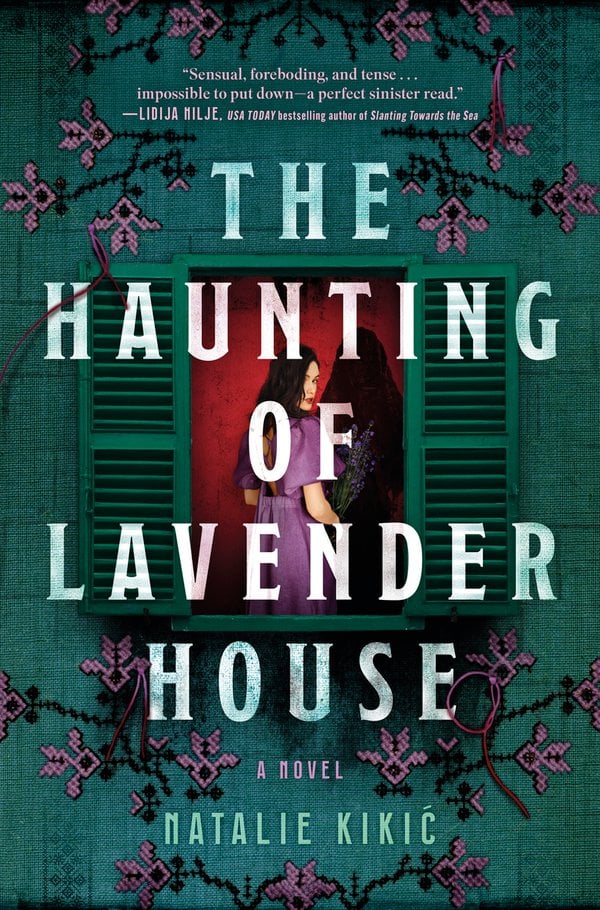
When I first started working on The Haunting of Lavender House, I didn’t set out to write a Croatian gothic novel. But that is what it became.
The story started with a protagonist like me: A Croatian American woman who didn’t feel like she belonged in her parents’ homeland. Because even though both my parents are Croatian, I’ve never really felt at home there.
I attribute this disconnection mainly to my lack of fluency in Croatian—my parents were more focused on assimilating into American culture, and therefore did not teach my sisters and me Croatian growing up. Yet I was intensely curious about my heritage: the breathtaking Adriatic coastline, the complex history, and the mix of cultures.
So much so, that after I visited Croatia for the first time when I was twenty years old, I decided to change my major in university from English to Slavic Languages and Literatures with a focus on Bosnian/Croatian/Serbian.
When I first started crafting the story that would become The Haunting of Lavender House, things weren’t clicking. Something was missing, but I wasn’t sure what. And so, on one of my breaks from the project, I began to research Croatian folklore. I had taken a Slavic folklore class in university and was especially drawn to it as a subject. I liked the idea of stories passed down through generations; stories I may have missed out on by growing up in the U.S.
That’s when I came upon the concept of a mora.
A mora is a supernatural female spirit said to cause nightmares and paralysis by sitting on the chest of a sleeping person. The idea immediately intrigued me. Though I’ve never experienced sleep paralysis, I often become lucid during my nightmares, resulting in half-conscious attempts to scream that inevitably wake my husband. A being that caused nightmares and paralysis seemed especially frightening, and because my story didn’t have a strong antagonist, my mind leapt with ideas on how a mora could add tension and dread to my plot.
As I did more research, I discovered that concepts of sleep paralysis demons or spirits actually exist in several cultures. For example, in Newfoundland, where my husband is from, there are folklore beliefs in the “Old Hag,” a frightening old woman who causes sleep paralysis in a similar way. (Fans of the show Widow’s Bay will find several similarities between this hag and the sea hag in the show).
But one of the core features of a Croatian mora that differentiates it from other interpretations is that this spirit is a young woman. A beautiful one.
To learn more about moras, I relied heavily on the research of Dr. Luka Šešo, primarily his works, “Which Woman is a Witch? The Stereotypic Notions about Witches in Croatian Traditional Beliefs” and Živjeti s Nadnaravnim Bićima: Vukodlaci, Vile i Vještice Hrvatskih Tradicijskih Vjerovanja (Living with Supernatural Beings: Werewolves, Fairies and Witches of Croatian Traditional Beliefs). From him, I learned that in the patriarchal society of Dalmatia (the central coastal region of Croatia), women who defied societal norms in some way were labeled as witches or moras (with the difference being if they were married or widowed; the title of mora was given to unmarried women).
For example, if a young woman was particularly beautiful or forward with men, she was called a mora, as these traits often spurred envy or dislike. Furthermore, women were believed to reveal themselves as moras after experiencing unrequited love or jealousy. A man turned the woman down, or refused to marry her, and so he claimed that she was harassing him supernaturally.
On the other hand, women were also accused of being moras after having sexual relations with a man who later wanted to distance himself from her. He could simply say that she had “bewitched” him, and be free of all responsibility (while the woman was then ostracized). Additionally, labeling a woman as a mora or witch turned them into scapegoats when a troublesome or unexplainable event occurred.
All these findings were naturally a bit infuriating. Women who were labeled as moras were made into monsters simply because they stood out, or because they weren’t behaving as men thought they should, or because society needed someone to blame.
At first, I was fascinated by the mora because of all the haunting elements she could bring to my story. But my motivation to include one began to grow and shift—I didn’t only want to feature a mora as a scary supernatural villain—I also wanted to give the women behind the label justice.
And so I asked myself, who is the person behind this “monster?” And what if she fought back? What if she embraced her label of monstrosity and sought revenge for the stigmatization she faced? Thus the mora in The Haunting of Lavender House took shape. She is not only a villain, but a character in her own right, with a history that unveils itself throughout the novel.
In the end, I realized that her story fits gothic themes very well. After all, gothic heroines often struggle with isolation, anxieties, and the fight for autonomy. All things that defiant women in historical Dalmatia likely faced themselves. By the end of the novel, I want readers to understand where all the mora’s rage and villainy comes from—and to also question if a peculiar or defiant woman is truly the monster when she’s not the master of her own tale.
Though I didn’t set out to write a Croatian gothic novel, I am very proud that it has become that. By incorporating Croatian folklore into my writing, I feel that I have reclaimed something that I missed out on through my life in the U.S. I hope that The Haunting of Lavender House and its mora figure cast some light on the hardships women faced (and continue to face) in patriarchal societies.
And finally, even though the mora brings fear and dread, I also hope it makes readers think, “Good for her.”
***

Natalie Kikić
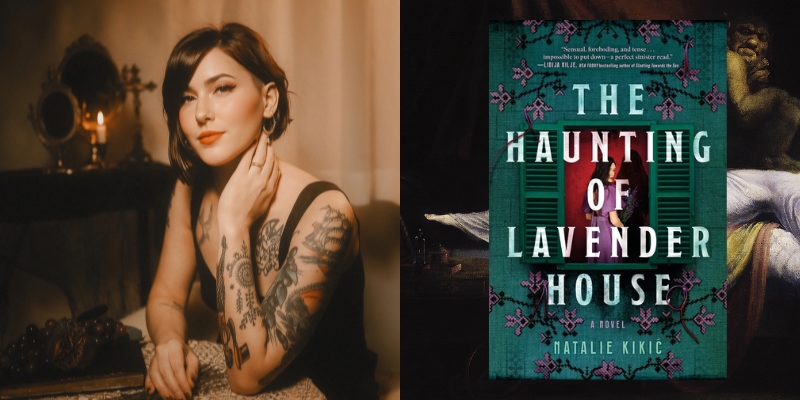
Natalie Kikic is a Croatian American who grew up on stories of her parents' lives in the former Yugoslavia. She holds a Bachelor's in Slavic Languages & Literatures from the University of California, Berkeley and her work explores Balkan folklore, belonging, and hauntings, both ghostly and romantic. Originally from California, she currently resides in Massachusetts with her husband and two polydactyl cats. She is the author of The Haunting of Lavender House.