World War Two ended eighty years ago, but you wouldn’t know it from our bookshelves and blockbuster movies.
Personally, I don’t think we are drawn to tales from this time only because of the period fashions, the film noir, the time before cell phones or TikTok, or for some nostalgia for a time most of us didn’t live through. Nor do I think it is solely because fascism is rearing its ugly head today, and the term “Nazi” has had reason to make an unfortunate comeback into our mainstream news.
Any of these would be reason enough to be interested in this time of victory over the Nazi regime, to be sure, but I think the almost magnetic pull to this time goes even deeper. For me, at least, the resilience and bravery of ordinary people who did extraordinary things in an uncertain world inspires my every day, keeping me going as we face new challenges in a world of shifting global politics, epidemics, uncertain futures and climate change they simply could not prepare us for in school.
Historical fiction allows us the escape of spending time inside other people’s lives, seeing from their perspective how they survived against extraordinary odds and triumphed to live another day. If [insert heroine’s name here] did that, surely, I can do this? Their resistance and survival through ingenuity, bravery and community gives me hope.
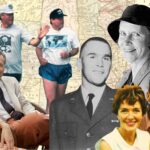
If you’re interested in resilient real-life women who made their mark on difficult times, look no further than these three inspirations for my fictional 1940s heroine Billie Walker, who has been described as a glamorous “fast-talking, fast-driving, champagne-willing Nazi hunter private investigator.” Like these three women, she not only overcomes the odds and lives to fight another day, but find ways to taste the sweet nectar of life while she does.
On my most difficult days, I ask myself, What would these women do?
*
Lee Miller
There is a famous black and white photograph by David E. Scherman of a woman in a bathtub in Adolf Hitler’s apartment. Her clothes are neatly folded on the toilet seat, her heavy boots on a pale bath rug, now filthy. A picture of the fascist dictator who owned the bath is on the edge of frame, and one imagines the enthusiastic perpetrator of genocide (or Génocidaire as the French elegantly call it) gazing at himself with vain pride as he soaked.
But it is not him there, it is this woman, the one who has soiled his carpets with dirt and ash. The woman in the bath is Lee Miller, a former Vogue fashion model and surrealist muse, and by the time of the photograph an accomplished war photographer and correspondent.
The filth on her boots was from documenting the atrocities at Dachau, including thousands of dead bodies, trains full of stacked corpses, skeletal starving prisoners and dead SS guards. The date was April 30, 1945, and the pair were in the Führer’s abandoned apartment in Munich along with a group of G.I.s. She had set the camera up for her lover to take the defiant image.
As Miller’s son, Antony Penrose, told the U.K.’s Telegraph of the photograph: “She was sticking two fingers up at Hitler. On the floor are her boots, covered with the filth of Dachau, which she has trodden all over Hitler’s bathroom floor.”
Lee Miller was one helluva woman. Not only was she one of the first to document Dachau, but at the siege of St. Malo she was the only photographer present, something that got her arrested for violating the terms of her accreditation, which banned her from covering conflict because she was a woman.
Undeterred, a defiant Miller went on to take some of WW2’s most important and memorable images, bringing the Nazis’ atrocities to the awareness of the world.
*
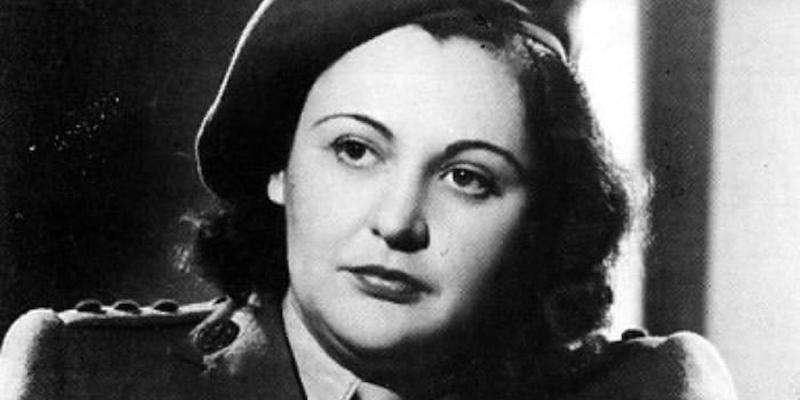
Nancy Wake
Nancy Wake was said to be the real-life inspiration for Charlotte Gray, the character in the novel by Sebastian Faulks, and played by Cate Blanchett in the movie of the same name. As with many women in WW2, it took a while for her own story to be told, but tell it she did : “I killed a lot of Germans, and I am only sorry I didn’t kill more.”
Born in New Zealand with English and Maori ancestry, and raised in Australia, Wake was small, feminine and tough as nails, earning her name “The White Mouse” by the Gestapo, for her ability to elude and escape them. Like my main character Billie Walker, Wake witnessed the rise of Hitler, Nazism and anti-Semitism in Europe in the 1930s, and some of Billie’s recollections in my first historical fiction book The War Widow are based on Wake’s.
But while Walker poured herself into documenting and writing about the war, somewhat like Lee Miller and Martha Gellhorn did, Wake instead joined British Special Operations Executive and was trained in espionage, bomb making and hand to hand combat. She was dropped by parachute into the South of France, and became known for organizing and leading French resistance fighters. Wake once cycled over three hundred miles past Nazi checkpoints to deliver a report, and even killed a Nazi with her bare hands.
Wake received the Medal of Freedom from the United States, the George Medal from the United Kingdom, the Légion d’honneur from France, and medals of recognition from Australia and New Zealand, becoming among the Allied forces most decorated servicewomen of WWII.
When Wake was dropped behind enemy lines she reportedly had her handgun, her satin cushion, and her favorite red lipstick. No word on whether it was Billie’s favorite “Fighting Red,” a true Tussy brand lipstick at the time.
*
My Oma
Growing up, I was mesmerized by stories from my Oma and Opa about their experiences in the war, on the occasions when they were comfortable enough to go back to their memories of that painful time.
One story I have never forgotten was of my Opa being taken by the Nazis during their occupation of Holland. He was forced into slave labour in a munitions factory in Berlin.
With small children at home, his wife, my Oma, smuggled flour and sugar in the hollows of her bicycle and cycled across Holland to Berlin through multiple Nazi check points to deliver those ingredients to him. A baker by trade, he baked bread in the munitions ovens next to the bombs to bribe the Nazi foreman, eventually gaining a day pass to get beyond the high gates to see his family.
He used that pass to escape the Nazis, fleeing on foot as soon as he got out, and walking all the way home to her by cover of night. Now that’s love.
Oma, Lee, and Nancy, I salute you.
***