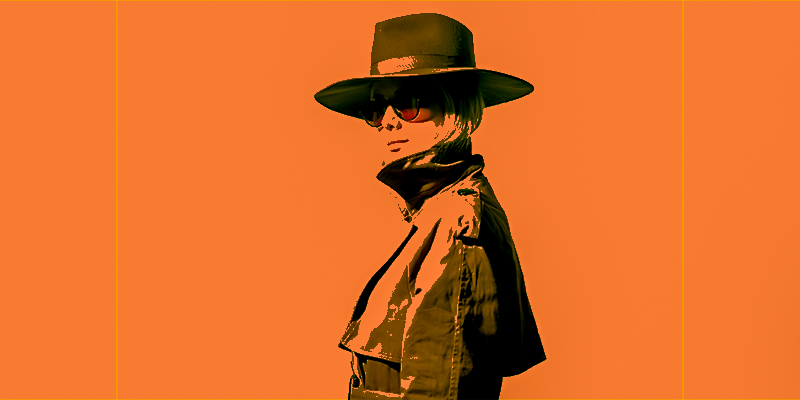
As one who writes a series entitled Her Royal Spyness, you’d expect me to be dwelling in the realm of female spies quite a lot. However, I have to confess that my main character does very little real spying, of the dangerous cloak and dagger kind. Her spying is more of the gentler, domestic variety, not the harrowing tales that other writers focus on.
It is no wonder that women make such good spies. Unless they are young and beautiful they tend to be invisible. They can wheel a bicycle past German sentries without attracting attention. They can sit in a hotel lobby and overhear conversations. (Look at Miss Marple and how successful she was as a detective). But what always astounds me is the bravery. Could I picture myself carrying messages, dining with enemy officers, sending radio signals? I don’t think so. But I do like to read about women who have done these things.
I am so delighted that there are now many stories championing the achievements of female spies—stories often based on true women. For the longest time after World War II the stories all focused on the exploits of men. Women were thought to be keeping the home fires burning and making do with rationing, when in fact women, working behind the scenes, were playing a significant part in winning the war. Now there are so many of these stories and we know how brave these women were.
It’s interesting that there have been female spies throughout the ages, yet they’ve never been mentioned until recently. Many people would not believe that women could be so recklessly brave, and they certainly paid the price. Doing my research for my own book THE PARIS ASSIGNMENT, I was horrified to learn that the survival rate for young women dropped into enemy France was twenty five percent. They knew this and yet they still volunteered. Who can now say that only the men were brave?
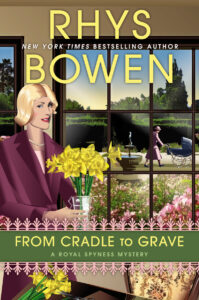
And as for Lady Georgiana, Her Royal Spyness, she does not find herself in danger all the time, but has become a pretty good sleuth in the nineteenth book in the series, From Cradle to Grave. She is handling the challenges of a new baby when she learns of a series of fatal accidents happening to young aristocrats. All these young men are heirs to either a title or a fortune. Is someone trying to eliminate aristocrats, one by one? In which case is her own husband in danger? She will have to balance motherhood with trying to find out the truth.
Here are some of my favorite stories recently:
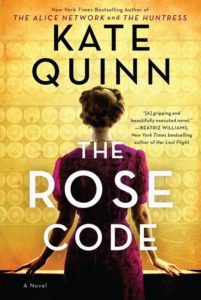
The Rose Code by Kate Quinn
Kate Quinn is the queen of WWII stories. This one involves three code breakers who become unlikely friends after being recruited at Bletchley Park near the beginning of the war, then who must reunite after the war and step back into danger to unmask a traitor in their midst.
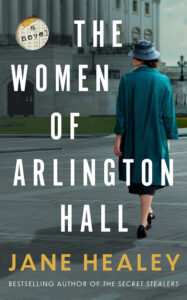
The Women of Arlington Hall, by Jane Healey
In the crucial years after WWII , at the time of the Red Scare, a brilliant young woman joins the girls who work at Arlington Hall, rooting out Soviet spies who have infiltrated the US. The stakes get even higher for her when she falls for an FBI agent, creating huge risks for them both.

The Lost Girls of Paris, by Pam Jenoff
Inspired by a true story a young woman called Grace Healey finds a suitcase in Grand Central Terminal. It contains photographs of young women. Grace discovers the suitcase belonged to the leader of a group of secret agents, deployed to occupied Europe during the war. None of them returned home. Grace wants to find out the truth about what happened to them, and learns shocking stories of bravery and betrayal.

Northern Spy by Flynn Berry
A very different setting for this one: Northern Ireland following the time of the Troubles. The heroine is a producer for the BBC and is reviewing security footage when she sees her own sister with a mask over her face. Has she joined the IRA or has she been abducted?
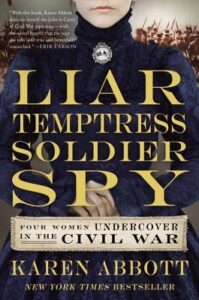
Liar, Temptress, Soldier, Spy by Karen Abbott
This is a true story of four different women in the Civil War who used their feminine charms and a great deal of bravery to act as spies, one of whom cuts her hair and enlists in the Union army, another who seduces Northern politicians to send information to the Confederates. What a revelation!
***