
6 Eclectic Historical Mysteries Set in the Early Modern Era
Jane Bitomsky recommends as many novels as Henry VIII had wives
History, by its very nature, lends itself to mystery. The loss of archival records and living witnesses means we can never have a complete picture of events that occurred centuries ago. Historical fiction serves as a vehicle to try and fill in this picture, and provide possible answers for such mysteries as the lost colony of Roanoke (1590), the man in the iron mask (1669), and the beast of Gévaudan (1764).
Death by Misadventure, my debut historical mystery, follows a beleaguered coroner and a disillusioned young maid as they uncover the peculiar events that led to the death of a naked man—missing a certain piece of his anatomy—found beneath an English village’s waterwheel in 1585. This novel was inspired by the gaps in early modern coronial inquests. In particular, those cases where there was clearly something more at play, but for whatever reason the investigating coroner chose to include scant detail in his report or came to a seemingly erroneous judgment.
For readers who love historical mysteries, here’s an eclectic selection of six titles that I recommend, which are set during the early modern period (c. 1500-1800).
*
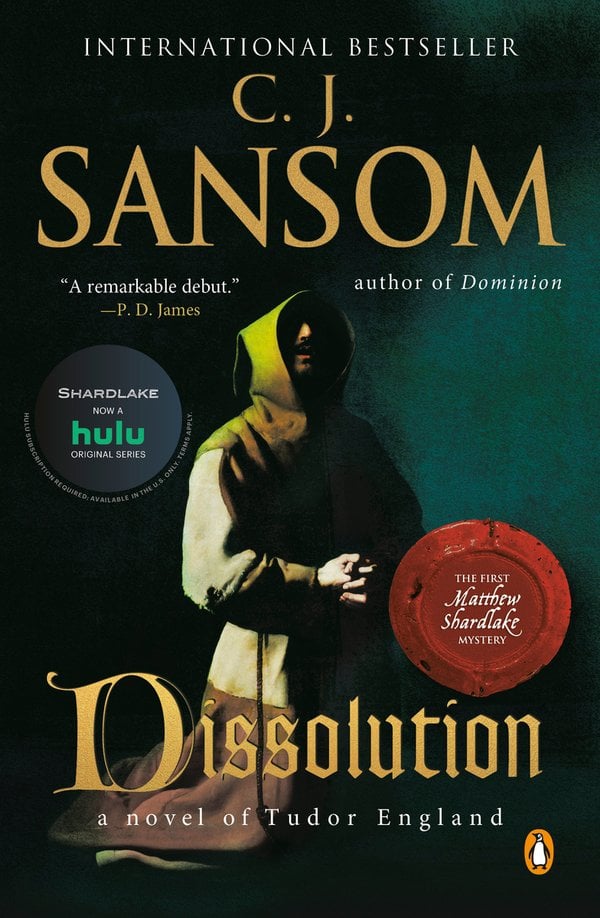
C.J. Sansom, Dissolution
The first entry in Sansom’s lauded Matthew Shardlake series. Here, protagonist Shardlake, a melancholic and hunchbacked lawyer, is tasked by Thomas Cromwell with investigating a murder at a Sussex monastery in 1537.
There’s many of the classic murder mystery tropes—Shardlake’s handsome male assistant, red herrings, two additional murders, an isolated monastery, a missing book which may hold all the answers, and a potential love interest in the attractive young woman who works in the infirmary. The sixteenth-century setting is grounded by meticulous research, and Shardlake’s own struggles with prejudice from his disability add a relatable, human element.
Also, I do enjoy the wry humor interwoven throughout, with such witty lines as, “he would a skin a flea for the fat on its arse.”
Laura Joh Rowland, Shinju
Rowland’s Sano Ichiro series is set in seventeenth-century Japan, and follows a tutor/history scholar turned reluctant yoriki (police commander). At the centre of this story is the apparent shinju (double suicide) of a wealthy woman and a low-born artist, which Sano is tasked with investigating. Despite pressure to close the case, Sano enlists Dr. Ito, a prison doctor, to perform an illicit autopsy to determine whether the shinju is in fact murder, and subsequently uncovers a conspiracy to assassinate the shogun (military commander).
This novel is as much about the shinju, as it is about Sano’s internal conflict of upholding the samurai bushido code of justice while simultaneously showing subservience to his superiors. Sano makes for a captivating protagonist, who is not without foible—take his visit to the ahem pleasure district—and uses his background in education to decipher clues.
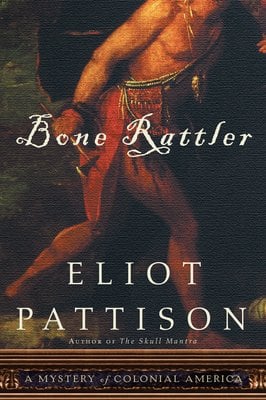
Eliot Pattison, Bone Rattler
This takes us aboard a British convict ship bound for the new world in the 1750s, with our protagonist, Scottish Highlander Duncan McCallum, bearing witness to a series of strange suicides and deaths among his fellow passengers.
Upon the ship’s arrival in New York, we’re put in the maw of the French and Indian War. More deaths ensue, and the oldest daughter of Lord Ramsay, to whom McCallum is indentured, is kidnapped. McCallum forms an alliance with an Iroquois called Conawago to discover what happened to Lord Ramsay’s daughter, and solve the mysterious deaths plaguing the New York woodlands.
This narrative is rife with rich historical detail, intrigue, and mysticism. It also confronts the dispossession of identity and land that McCallum and the Native Americans were facing, with “so many people without true skins.”
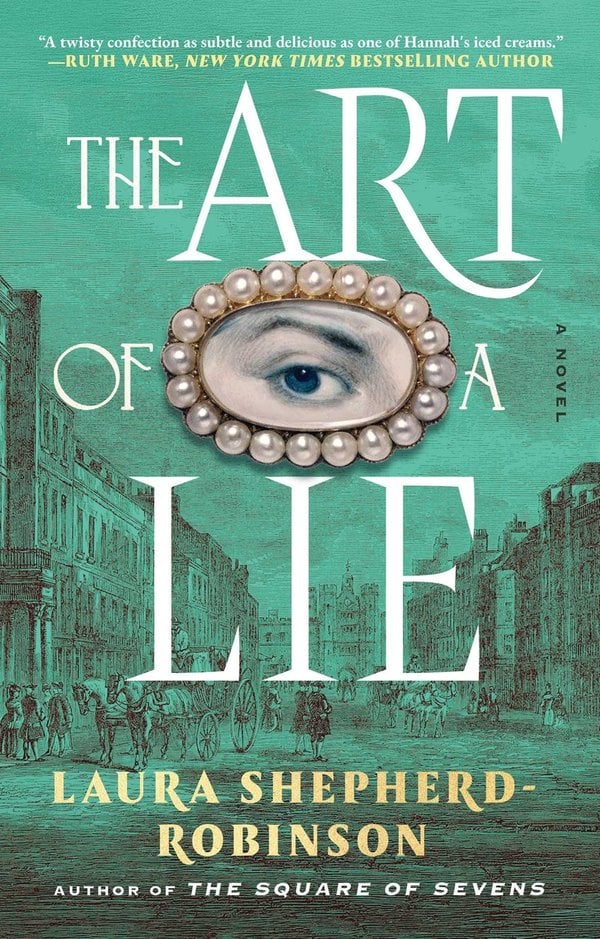
Laura Shepherd–Robinson, The Art of a Lie
As a huge fan of sweets, I had to include this!
Newly widowed Hannah Cole is struggling to keep her confectionery shop, Punchbowl and Pineapple, afloat in Georgian London. Then Magistrate Fielding brings news that the money in her late husband’s bank account was derived by dubious means, and his untimely death during a robbery may have been intentional.
Financial, and potentially romantic, salvation arrives for Hannah in the form of William Devereux, a charismatic friend of her husband. William introduces her to an Italian recipe for “iced cream,” which is a smashing success for the shop. However, there is more than meets the eye with William, and he and Hannah engage in a tense battle of wits, with the novel alternating between their perspectives.
Enticing descriptions of cakes and chocolates, as well as Hannah’s experiments with iced cream, meld well with the twists and turns in this novel. We’re also given a fascinating insight into the misogynistic struggles faced by the ten percent of women who owned businesses in this period.
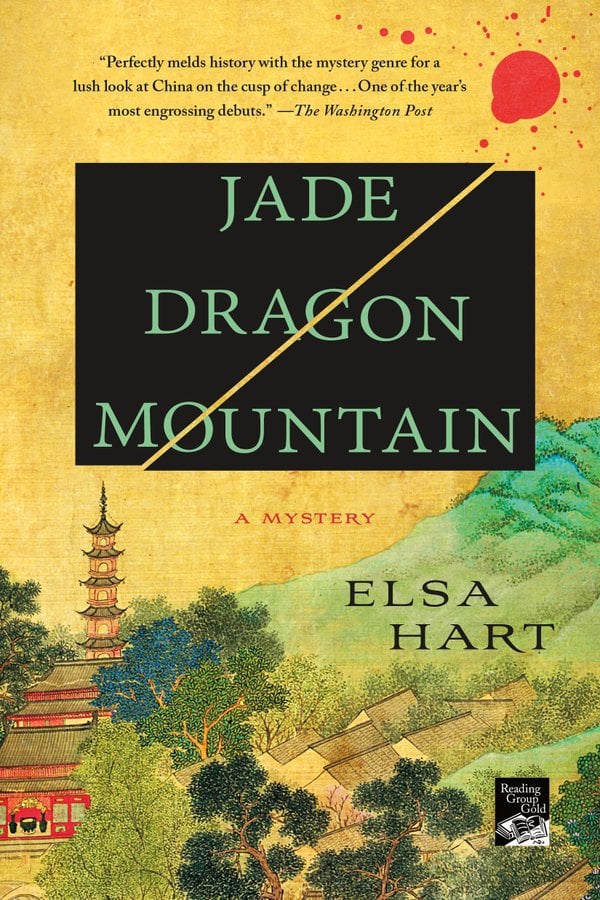
Elsa Hart, Jade Dragon Mountain
Former imperial librarian Li Du arrives in a mountainous Chinese outpost by the Tibetan border to find it teeming with traders, astronomers and soldiers, who are gathered to witness the spectacle of a solar eclipse in 1708. During the celebrations, an elderly Jesuit astronomer, and Li Du’s recent acquaintance, is murdered. The ex-librarian takes it upon himself to investigate.
What ensues is a Poirot-esque whodunit, where Li Du uses a combination of logic and luck to break down the clues, and gather suspects. There’s a colourful cast of side characters, a glimpse into everyday life in eighteenth-century China, and the reader is thoroughly educated on the proper way to prepare tea.
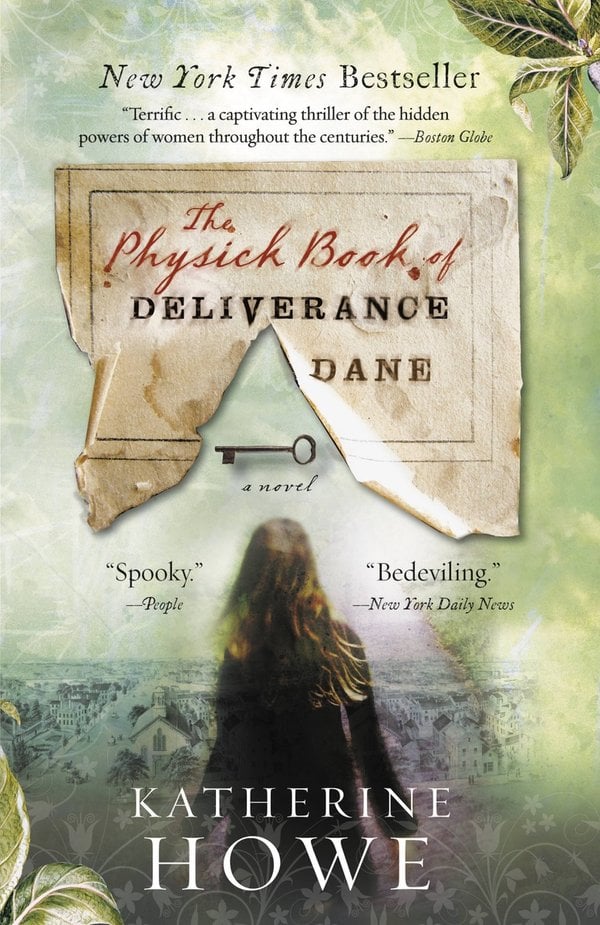
Katherine Howe, The Physick Book of Deliverance Dane
Who doesn’t love witches?
This is a time-split narrative, which jumps between the life of Harvard graduate student Connie Goodwin in the 1990s, and Deliverance Dane, a woman accused of witchcraft in 1690s Salem. In her quest for a dissertation topic, Connie comes across a bible in her late grandmother’s derelict house, which bears Deliverance’s name, and reveals that her ancestor practised witchcraft during the Salem witch trials. On further research, Connie discovers that Deliverance had a spellbook (i.e. physick book), and she sets out to trace through time where the missing spellbook could be now. However, she is not the only one looking for the spellbook.
A seamless interplay of time periods, riveting portrayal of the female victims of the Salem witch trials, and it was fascinating to read about the author’s relation to two of the witches in this story.
***


Jane Bitomsky
Jane Bitomsky is an award-winning author of historical fiction. Born in Australia, Jane attended the University of Queensland, where she attained her BA and LLB degrees with honors and her PhD in early modern English history. Her scholarly writing has appeared in academic journals, and her fictional work has earned accolades in the US and UK, including the 2024 Killer Nashville Claymore Award for Best Historical, Second Prize in the 2023 Yeovil Literary Prize, and Third Prize in the 2022 First Novel Prize. Jane lives with her family in New Zealand, where she volunteers as a baker for Good Bitches Baking, a charity serving people across Aotearoa. Death by Misadventure is her first novel. Her website is www.janebitomskybooks.com.