

7 Books That Take Readers to Extraordinary, Uncharted Regions
Henry Wise recommends Willa Cather, James Hilton, Tim Winton, and more
I find myself drawn to stories that incorporate mystery through little understood places, wildernesses, or unmapped regions. Quite often, these realms host the supernatural, and, at the very least, allow for deviations from what might be considered normal.
I think of Nathaniel Hawthorne’s “Young Goodman Brown,” in which the forest harbors evil, and where the revelation of that evil shatters the protagonist. I also have in mind Roman Polanski’s film, Chinatown, in which the eponymous Chinatown is alluded to only briefly, and yet it is obvious how it is a place that remains enigmatic to Jake Gittes, not least because it has been the setting of tragedy that seems bound to be repeated.
When I set out to write Holy City, I had not yet conceptualized the Snakefoot, a swamp that Will Seems calls “the forgotten backside of our fine forgotten county,” identifying it as not just a mysterious region, but a region within a county that is already lost and somewhat mysterious.
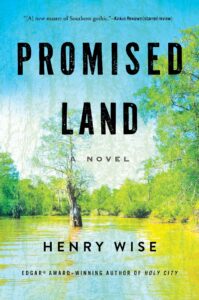
As several readers have observed, the Snakefoot functions more as a kind of character than a place, and it was so intriguing to me that it became the primary setting, and one might say a protagonist, of Promised Land; it harbors runaways and criminals seeking refuge, yet Buck Tomlin comes to learn that “[n]othing ever escape[s] the swamp.” This holding of secrets gives the Snakefoot a quality of consciousness through a kind of memory.
Many of the places in the books on this list are similar in that they seem to be entire worlds that operate by their own rules; they are worlds lost, hidden, or remote; worlds that leave a mark on characters who enter them. These places are rendered as plausible, even if they push the boundaries of our belief, and they almost always lead to some realization, awareness, or disruption significant in each story.
*
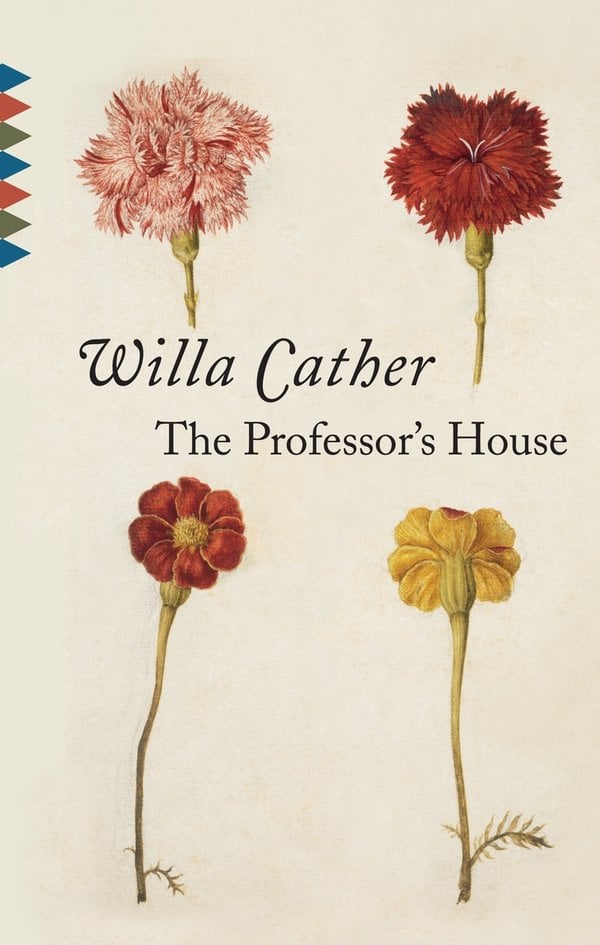
Willa Cather, The Professor’s House
Willa Cather’s The Professor’s House is an outlier among some of her other more famous novels, such as My Antonia and O Pioneers! (both of which are wonderful) in that this one takes place in the Midwest and features the life of a professor in a small university town. It is a quiet book, somewhat domestic in its concerns, but at its center is Professor Godfrey St. Peter’s admiration for, and grief in the loss of, a young man named Tom Outland, whose fresh, ruggedly thoughtful perspective and adventurousness counterbalances the overall narrative of the novel.
Tom tells the professor of a lost city in New Mexico that he once discovered with a friend of his—an event that not only helps shape him, but is also the cause of tension and the ultimate loss of this friendship, because Tom does not want to expose the ruins, and his friend does, for a profit. Like so many of Cather’s novels, there is a subtle, yet profoundly realistic darkness at the center here, and the rift between friends cannot be bridged. The lost city, hidden from the world, within the rugged landscape of Outland’s native New Mexico, serves as a mystery and a choice: how to morally navigate opportunity.
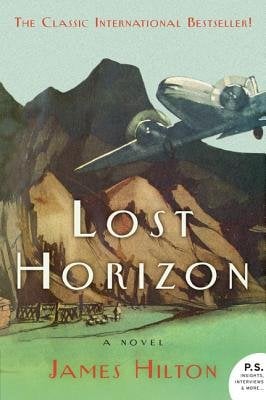
James Hilton, Lost Horizon
What book list about mysterious regions would be complete without one of the most famous, Shangri-La? In high school, I read this on my own time, and it absolutely captivated me. I have returned to Lost Horizon as an adult, thinking that this remote and obviously fictional land of Shangri-La, somewhere in the remote mountains of Tibet, will seem outlandish and too farfetched, but time and again, I am impressed by the plausibility Hinton gives the place.
The book primarily follows Hugh Conway, the British consul to India, who has a bright future in diplomacy. During an evacuation, he, and the other passengers on a small plane, crash in the wilderness of Tibet, where they are rescued and brought to what appears to be paradise to some, prison to others, and promises to become less a utopia than a catalyst.
This book incorporates a blending of Eastern and Western philosophies and takes us into this enchanting region we’re not quite sure what to make of, as the characters aren’t either. It is a book that makes the supernatural, or at least the incredible, entirely possible. Lost Horizon is proof that a great storyteller can do anything they want to, tell any story they like, and make you believe them, or at least want to listen.
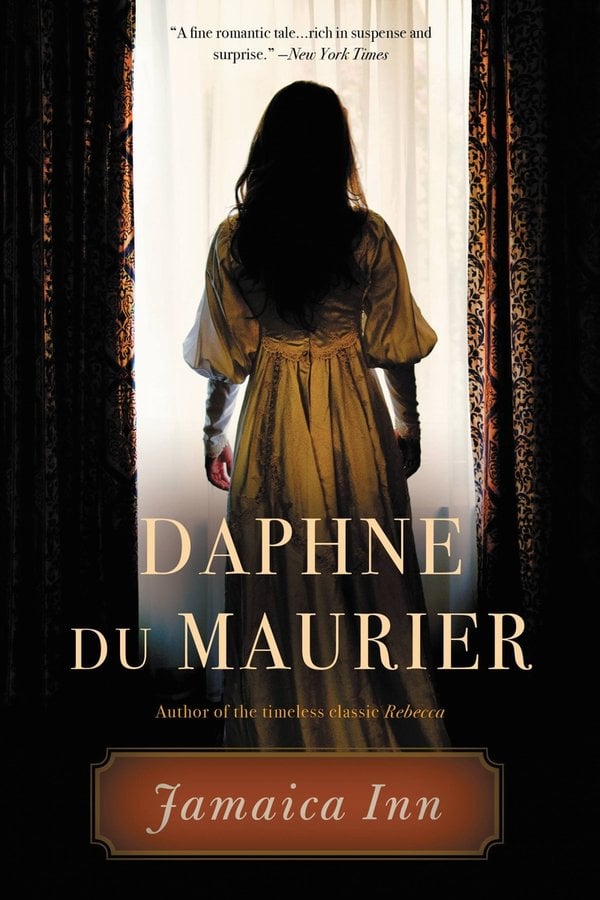
Daphne Du Maurier, Jamaica Inn
Jamaica Inn is not discussed as frequently as Rebecca, but it deserves recognition. The story follows Mary Yellen, who must move in with her Aunt Patience and Uncle Joss in the remote coastline and moors of Cornwall, where she learns her uncle is involved in the wrecking of ships, murdering any survivors, and stealing valuable cargo. This is a tale of crime and corruption, of inner struggle and guilt, of loyalty and faith.
The Cornish coast is remote and treacherous, a sort of lost region of Britain, and it draws some of its mystical aura from its pagan, Celtic origins, which are the basis for an underlying tension between paganism and the Christianity that has, on the surface, replaced it. Even so, it is a somewhat lawless region, where people fear travel because of the land pirates. Jamaica Inn is secluded between two wildernesses: the sea and the disorienting moors, which Mary finds to be the setting of revelation, an unveiling of the source of the evil that has run rampant, which goes far deeper—or higher—than her uncle.
Du Maurier’s novel explores deep evil and deviance through regions that allow for it to occur, and she does so in a way that we even, at times, pity those we despise.
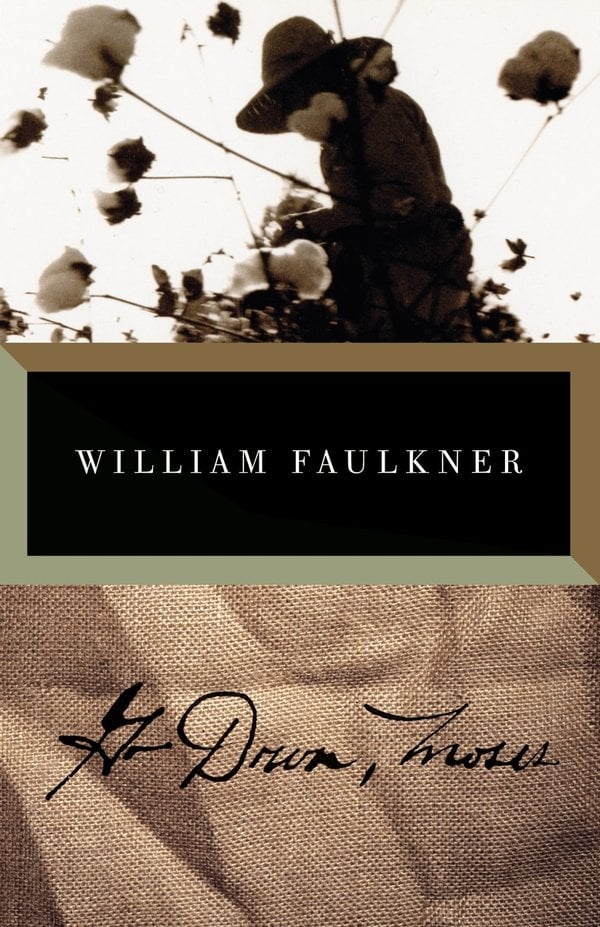
William Faulkner, The Bear (Go Down, Moses)
This novella was the first work of Faulkner’s I ever read, and it made me instantly want to put pen to paper. There were several elements that resonated with me. I grew up hunting, and, though I did not hunt bear, the culture of hunting in the South made sense to me.
Perhaps, more importantly, Faulker grapples with the original sin of the South—slavery and its legacy—through the character of Ike McCaslin, who comes of age as a hunter in the woods, an area called the “Big Bottom,” a lowland frontier where an old bear, Old Ben, serves as a symbol of the woods that, we learn, is destined to be developed, and, thus, destroyed. This novel feels epic in its scope—it tackles the legacy of slavery as well as the harms of modernization—but the center of it is in the “Big Bottom,” which is pure and wild, at least during Ike’s development.
Ike is taught to hunt by a man who is half Black and half Chickasaw, and he learns to be humble as a hunter, to pay his dues, to endure hardship without complaint. The fact that he learns from Sam Fathers is symbolic, because it is only in the woods that this relationship seems possible. In the town, the assumption is that Ike would have the privilege of looking down on Sam. The woods, however, have a way of allowing one’s status to be based on experience, wisdom, and merit, not on the color of one’s skin.
The skills Ike learns from Sam in the woods are critical in preparing him for dealing with a changing South. When he is set to inherit the family land, which was corrupted by his grandfather, Ike makes a sacrifice he can make only because he has been trained to endure hardship as a hunter: he turns down his inheritance.
As a Southerner and as a writer, this book was instrumental in my own development, and Faulkner’s use of the woods makes it all the more effective.
William Gay, Twilight
Certainly a disturbing Southern gothic novel, Twilight is a tale of a young man, Kenneth Tyler, who is pitted against Fenton Breece, an undertaker in their small town, and who finds their dead father was never buried.
What interests me most, however, is Gay’s use of a wilderness, into which Tyler escapes for a time, called the Harrikin, in which all type of lost souls reside. This region serves as a harbor of the supernatural, it seems, and outcasts, and it seems necessary for Tyler to enter it for a time, before confronting the obvious villain of the story.
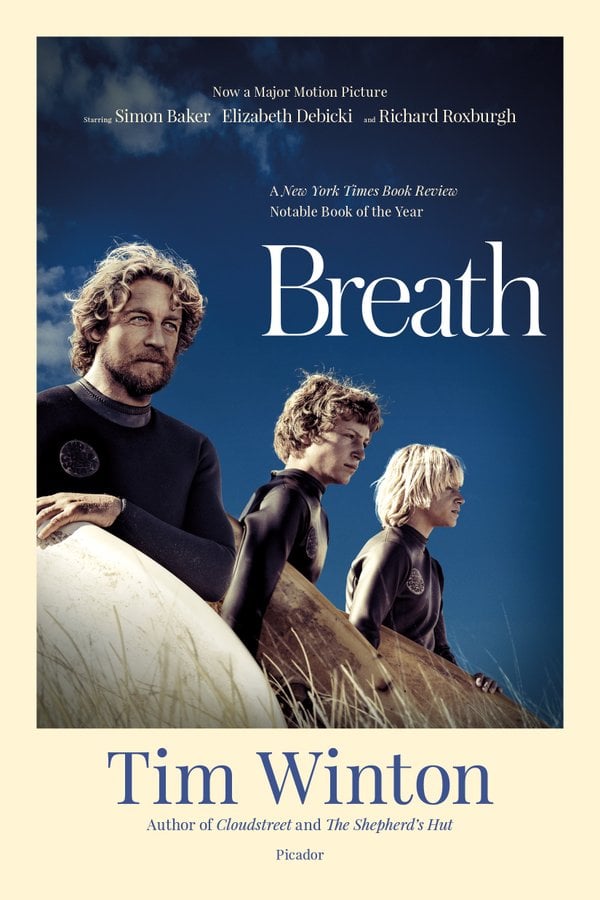
Tim Winton, Breath
Okay, so, this is an odd one to include here, but I’m going to go with it even though it is not typically talked about in crime fiction outlets. This was the first novel I read by Winton, and I return to it from time to time because of Winton’s knack for writing about fear and the courage it takes to face it, as well as adolescent confusion, the power of adrenaline, admiration and the shattering of it, as well as small town life in Western Australia.
By now, it’s obvious that many of the mysterious regions in these books bear a resemblance: they are regions within regions. However, in Breath, I want to focus on surf spots as these mysterious regions. There’s “Old Smokey” and “Barney’s” and “the Nautilus,” to name a few, and they each have their own personalities, their own characteristics, their parameters, their unknowns, both for surfers personally, but also overall.
Some have been pioneered a bit more thoroughly, but each offers to teach the protagonist, Pikelet, more about himself and his friend, Looney, and their guide and guru, Billy Sanderson (“Sando”). These waves serve as benchmarks in a kind of manhood, and Pikelet navigates his own fears and doubts, and, in some cases, sets boundaries for himself, which is a theme of the book: learning to stand on one’s own feet.
These surf spots are important regions of challenge and change for Pikelet and his comrades, and for his understanding of what it means to be alive. They are mysterious, and force Pikelet into an adulthood of solitude, in which he still craves and fears some of that fear and adrenaline, and so they become a large part of who he is as a man. The film by Simon Baker does a wonderful job translating the novel to the screen.
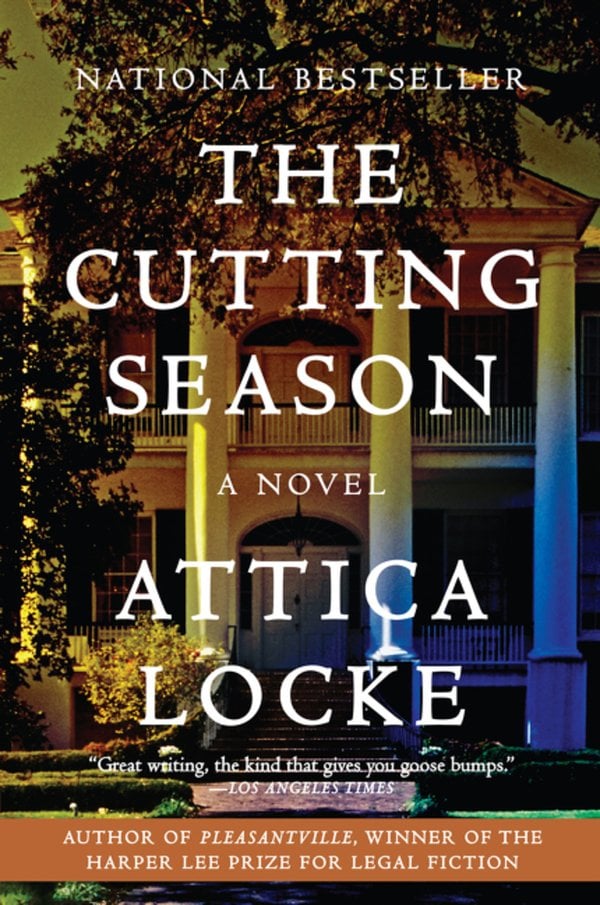
Attica Locke, The Cutting Season
This second novel of Locke’s is a murder mystery set on a plantation in Louisiana. The protagonist, Caren Gray, a Black woman with deep roots on the property—which is now a conference center and museum–now manages it, and this forces her to grapple with a tension she finds within herself to serve the owners of the plantation and to represent those who have worked on it. In this way, personal and cultural history collide.
Also, Locke skillfully incorporates a newer type of worker—migrants—into the story. In fact, the murder of a migrant woman in a sugar cane field propels the story. As Caren navigates her own life while doing her best to manage the plantation during a murder investigation, she becomes increasingly aware of the presence of the spirits of the dead, which she takes to be the ghosts of slaves. The plantation house and grounds are front and center to the novel, and the fact that this setting seems to harbor the dead makes it a kind of mysterious region.
***

Henry Wise
HENRY WISE is a graduate of the Virginia Military Institute and the University of Mississippi MFA Program. His work has appeared in Shenandoah, Nixes Mate, Radar Poetry, Clackamas, and elsewhere. Holy City is his first novel.