
7 idiosyncratic novels that leave Laurie Cass in awe
The author of Murder on Thin Ice shares her love for C. J. Sansom, Alexander Dumas, and others
When I came up with the topic for this post, I thought it would be the work of a few minutes to come up with half a dozen titles, parse out reasons why each one was included in the list, and conclude with a clever sentence or two.
What actually happened was I stared at my computer screen for an absurd amount of time, typing and deleting, typing and deleting. When it became clear that I wasn’t getting anywhere, I got up and wandered over to my bookshelves and sat down in front of them to have a good long think.
The end result is, in retrospect, overwhelmingly obvious: I could never write a book that isn’t mine to write. Discovering what’s in you that can become a book is part of the joy of writing, and what an author brings to a manuscript is what makes it theirs and theirs alone.
That said, there are books—and entire genres—that will forever be out of my authorial reach.
*
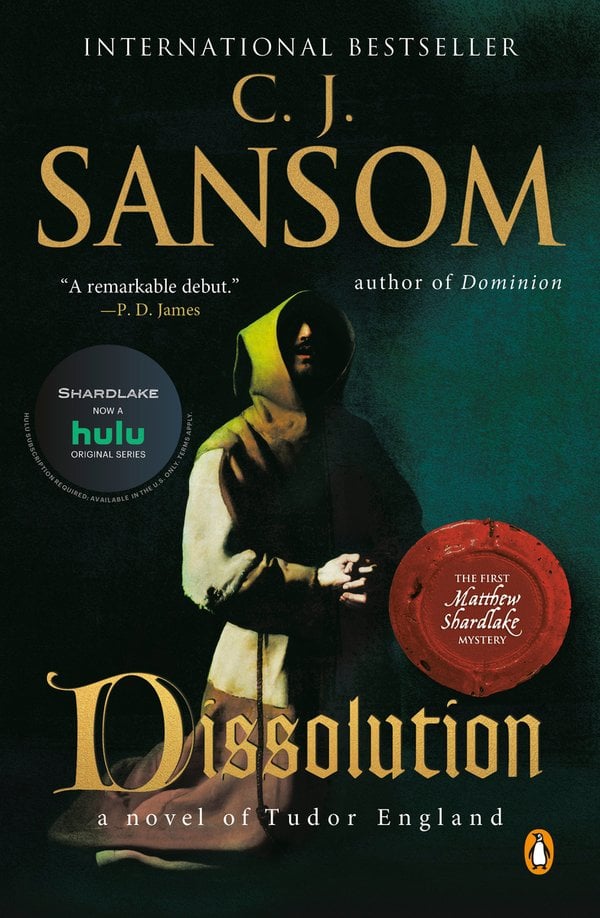
C. J. Sansom, Dissolution
Let’s start with one of my favorite books, Dissolution by C. J. Sansom. The main character of Matthew Shardlake is deeply complex, and his complicated history and personality twist together around and into the intricate plot. It’s set in 1537 England, during the reign of King Henry VIII, a period rife with fear and conflict.
There is no way on this good green earth that I could write a book with anything remotely similar to the complexity of Dissolution. Not the tiniest sliver of a chance. If I didn’t have the same thing for breakfast every weekday, I wouldn’t remember what I had for breakfast; writing a book with so many layers is not something my brain is likely to take kindly to doing.
And then there’s the research factor. Serious amounts of time are required to immerse yourself in the zillions of details it takes to write historicals. I love learning things, but until I retire from my day job, doing in-depth research is not in the cards.

Miles Franklin, My Brilliant Career
Next on the list is My Brilliant Career by Miles Franklin. To write like that? As a teenager? Please. My teenaged writing output was embarrassingly bad poetry that is long lost to the mists of time, exactly where it belongs. Ms. Franklin’s talents were, and are, beyond mine. No way, no how, could I have written that.

Markus Zusa, The Book Thief
Another one on the Beyond Me list has to be The Book Thief by Markus Zusak. A story narrated by Death? That I might be able to write, but a story as bone-deep sad as The Book Thief isn’t something I feel capable of doing. When writing, I tend to inhabit the heads of my main characters, and spending that much time in sorrow, sadness, and despair, would not be good for me on any level.
I admire those who can do so and walk away intact, but writing that intense is far outside my capacities.

Alexander Dumas, The Count of Monte Cristo
I read this book for the first time as a teenager, and I flat out loved it. Reread it numerous times, and then put it away when I went off to college.
When I picked it up a few years ago, I still enjoyed the read and still feel it’s a quality book, but I noticed something I hadn’t as a youngster: there’s nothing funny in it. Not a word. The only things I can write don’t include humor are professional white papers and reports. And it’s possible that funny bits sneak into those, every so often. Writing a full-length novel with a total of no humor is not going to happen.

E. L. James, Fifty Shades of Grey
I included this on my Couldn’t Write list because of its reputation for explicit sex scenes. There are many, many other books that contain the act, and I don’t see how I could have written any of them. In what I write, all that happens off-book, if it happens at all. Fade to black at end of chapter works for me, and until an editor tells me differently, that’s how it’s going to stay.

Andy Weil, Project Hail Mary
I read this book in one sitting. Or more accurately, since I was in a hammock at the time, in one lying, but the point remains. I did not want to do *anything* until I found out what happened. The characters, the pacing, the stakes, the stark wonder of the discoveries—maybe I could wrap one of those elements into a book, two if I was lucky, but all of them together? Nope. That high-concept stuff is way outside my abilities.
Plus there’s the science element. I’m geeky by nature, but the time spent researching would be a massive barrier, similar to the above-mentioned historical research.

Helene Hanff, 84, Charing Cross Road
This book. This. Book. It captured my heart when I first read it decades ago, and it could well be what started me on a lifelong love affair with London. I don’t know what makes it such a lovely, lovely book; the lyrical quality of the correspondence? The gaps left to the reader to fill? The bittersweet tone you can almost taste?
I’m not sure, and it now occurs to me that I haven’t reread 84, Charing Cross Road in years. That whisper I hear, is it calling my name? Why, yes, I think it is. Excuse me, but I have to go.
***


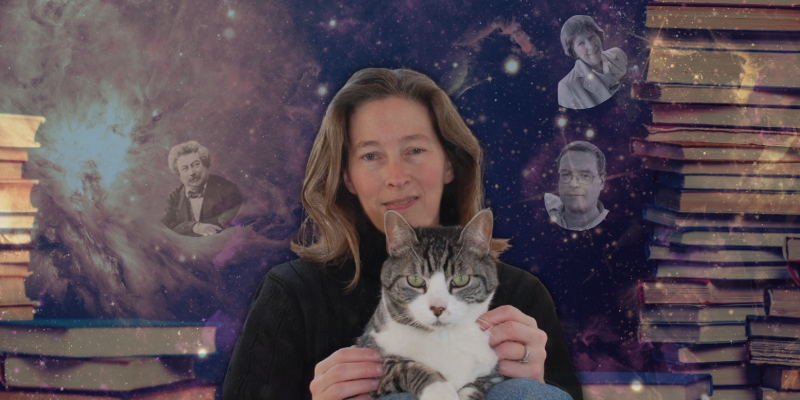
Laurie Cass
Laurie Cass is the national bestselling author of the Bookmobile Cat Mystery series.