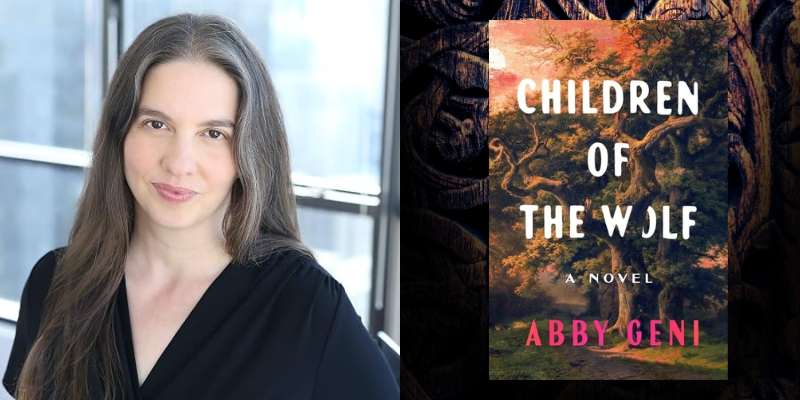
Abby Geni on Mental Hit Lists, Viking Culture, and the Complexity of Empathy
The author of Children of the Wolf explores Norse ethics in her new novel
Most of us have a mental hit list. These are the people we would kill if we could get away with it. Maybe you daydream about murdering an ex, or a childhood bully, or that one coworker who still has not figured out the mute button on Zoom.
My own hit list consists entirely of mortal enemies. It doesn’t matter how long ago they wronged me, or whether the enemy in question is even aware that they are, in fact, my enemy. Like Montresor in “The Cask of Amontillado,” I can hold a grudge forever.
To be clear, I have not actually murdered anyone, nor do I intend to. You probably haven’t either. But it’s a fun intellectual exercise, isn’t it? The holy trinity of any crime is motive, means, and opportunity. I have motive in spades: the people on that list harmed me or someone I love. When I’m in the right (wrong?) mood, I mull dreamily over possible means and opportunities.
According to scientific studies, most people will break the law if the crime is low-risk and, more importantly, victimless. We are happy to steal from a faceless corporation, park illegally, or get creative with our taxes. However, those same studies show that most of us will not commit a crime that harms another person. Even with motive, means, and opportunity—even if we could definitely get away with it—we would never murder the people on our hit lists.
We have too much empathy. We have a conscience, a sense of right and wrong. We cannot bear to break the social contract we are all born into.
Which brings me to the Vikings.
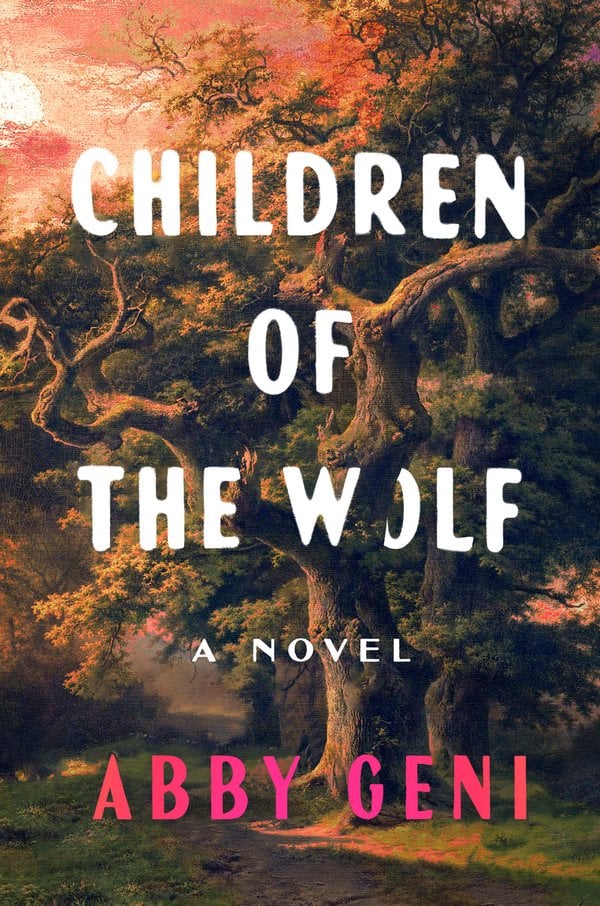
For Children of the Wolf, my most recent novel, I studied Viking culture extensively. The book centers on Liv, a woman who shares a home with her brother Finn in the rural Midwest. Their father, Swedish-born Ulf, raised them in accordance with the beliefs and traditions of the Vikings. They were homeschooled, learned swordplay, spoke Swedish, and made blood sacrifices to the Norse gods. The family lived in isolation as a Viking clan of three.
When Liv was fourteen, the FBI raided her home and took her father. For the first time, she was forced to enter American society. She and her brother had never been to a doctor. They had learned English exclusively from TV and books. From modern slang to taco Tuesdays, every aspect of Liv’s new life was strange to her, but nothing more so than the American concept of morality.
To call our society Judeo-Christian is reductive but expeditious. Our laws are based in Biblical thinking: Thou Shalt Not Kill comes straight from Moses. (Interestingly, most people think it’s the first commandment, but it’s actually number six. Make of that what you will.) Next up is Thou Shalt Not Steal, and once you add Thou Shalt Not Bear False Witness, you have the entire American legal system.
But Liv simply wasn’t raised that way.
When most of us think of the Vikings, we picture hordes of bearded men ransacking medieval villages. To a certain extent, this is accurate. The Vikings venerated bloodlust and had no qualms about murdering or enslaving others. In battle, they were wild to the point of madness. Even now, a thousand years after their heyday, the Vikings remain the gold standard for savagery.
However, within their own society, they had a complex, humane legal system, under which most disputes would be resolved peaceably with community debates before a judge. The worst crime was breaking an oath, followed closely by murdering the relative of another Viking. In the latter case, vengeance was sanctioned. The worst punishment was banishment from the tribe.
But this empathy and integrity applied exclusively to themselves. The Vikings only cared about the Vikings. Everyone else was prey. When raiding foreign villages, they exhibited conscienceless cruelty. On the battlefield, their hope was to slaughter the enemy or die themselves—nothing in between.
In Children of the Wolf, Liv was raised with this ethos. To her, violence, even murder, is not inherently a bad thing. She does not possess the bloodlust of her ancestors (or her father), but neither does she abhor bloodshed when committed by her own.
We like to think of our morality as inborn: a fundamental part of the human soul. But as I wrote Children of the Wolf, I began to wonder how much of my own conscience came from nurture rather than nature. I believe I am a good person. I believe Liv is a good person too. Yet she would not define herself that way. The Vikings did not think in terms of right and wrong, heaven and hell, sin and forgiveness.
I grew up with the Shalt Not list. Liv grew up with the wisdom of the Norse gods. Their holy texts advise waking early, that you might more easily take another man’s land or his life. They recommend that you never leave home without your sword and axe, for no one can foresee a fight. They insist that betrayal must always be answered with vengeance. They explain that cowardice is worse than death—that a man might reach old age by avoiding battle, but in doing so, he will never know happiness.
They tell you to respect your elders, listen more than you speak, never overstay your welcome, and refrain from getting sloppy drunk—but those rules only apply to other Vikings. As far as outsiders are concerned, the gods advise you to burn down their house before they come for yours.
I keep a mental hit list as a release valve, a way to vent old anger. But Liv would not have seen it as a mere hypothetical. The Vikings held grudges even better than I do. My favorite piece of wisdom from the Norse gods is this one: Trust not him whose kin you have wronged, no matter how young he be, for often grows the wolf in the child.
***

Abby Geni
Abby Geni is the author of The Body Farm, longlisted for the Joyce Carol Oates Prize and the Story Prize; The Lightkeepers, winner of the inaugural Chicago Review of Books Award of Best Fiction; The Wildlands, a finalist for the Los Angeles Times Book Prize; The Last Animal, a finalist for the Orion Book Award; and Children of the Wolf. Geni is a graduate of the Iowa Writers' Workshop and a recipient of the Iowa Fellowship.